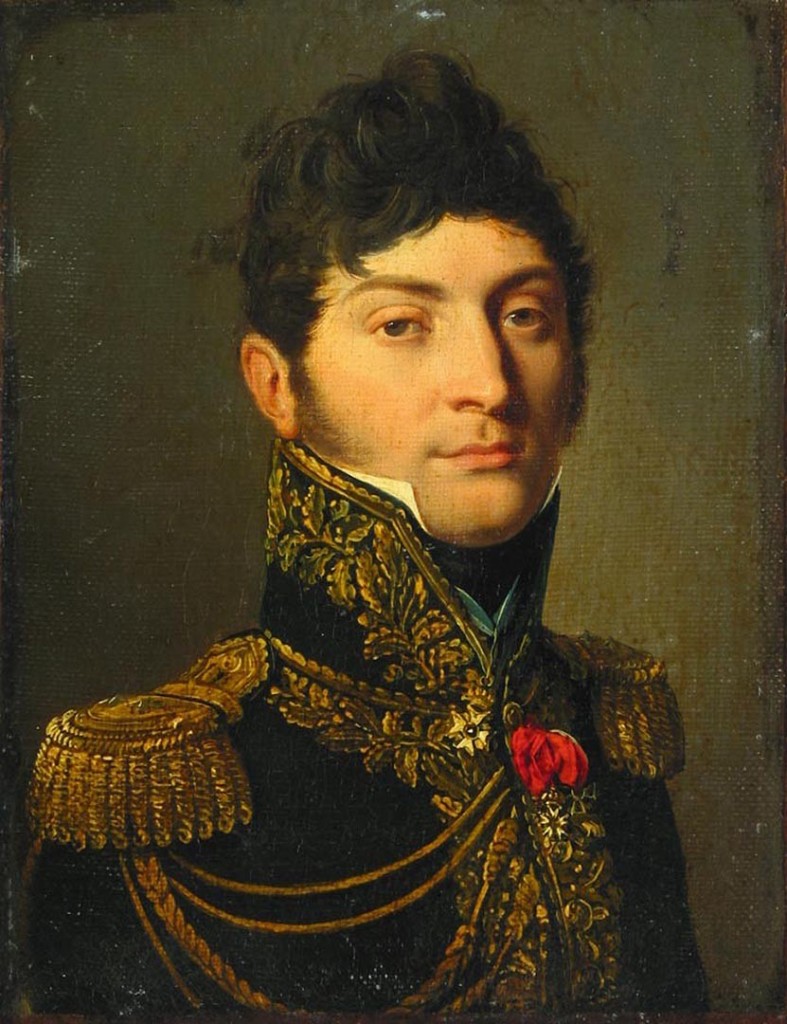
Géraud Christophe Michel Duroc de Troël (15 October 1772 Pont-à-Mousson-23 May 1813 Markersdorf), son of Colonel Michel Duroc, bore a particle bulletins willingly omitted: the name de Troël recalls a Lorraine gentle line the Revolution forced to prove loyalty by cannon service rather than court ribbons. He left the Metz artillery school to serve the Revolution on the Rhine then in Italy, where the raw material of a great officer was forged in fire rather than in treatises. The Egyptian expedition drew him close to Bonaparte through long bivouacs, damp maps and useful silences; on return he rose through Brumaire as indispensable aide-de-camp. Under the Consulate, Marengo then talks after Hohenlinden tested both sabre and diplomatic measure: Duroc knew how to speak to the defeated without humiliating them — rare virtue when Europe learned to dread Parisian ultimatums. The Empire named him Grand Marshal of the Palace: conductor of ceremony, admissions, travel, bridge between Berthier, Méneval, Constant and imperial will. Created Duke of Friuli in 1808, senator, Grand Eagle, he still bore delicate missions to Berlin and Saint Petersburg when courtesy had to mask treaty harshness. The Russian campaign tried him; the 1813 Saxon campaign killed him: on 22 May near Reichenbach on the margins of Bautzen, a shell fragment opened his abdomen; Napoleon watched hours; he died the next day. Bulletins broke their dryness; Constant described tears on a face thought insensible. Heart at the Invalides, entrails at Nancy, remains at the Panthéon in 1847 — the Third Republic celebrated the soldier of the fatherland; transfer decrees inscribed a France rewriting memory of Napoleonic wars as civic lessons. Scattered private letters hint at a man more literate than pure executor image suggests; with Berthier, Household circulars he co-signed fed grey literature as decisive as some visible decrees. For Empire Napoléon Duroc embodies the blurred line between servant of state and intimate: never minister, never battle marshal ranked like Austerlitz names, yet present at every spring of domestic power; his death cut a direct thread between the Emperor and the quiet daily gestures that ran the machine without noise.
Pont-à-Mousson, Metz, and the Young Republic’s Wars
Born 15 October 1772 at Pont-à-Mousson in Lorraine, Géraud belonged to the military nobility of the Duroc de Troël: his father Michel Duroc, artillery officer, passed taste for precision instruments and discipline without swagger. The Metz artillery school trained an engineer of fire — ballistics, sieges, mathematics of shooting — before the Revolution reshuffled the cards.
He joined Republican armies, fighting on the Rhine then in Italy: not yet the glory titles of imperial bulletins, but apprenticeship in forced marches, fever losses, officers replaced overnight by section elections.
Late Directory Italian campaigns placed him in orbit of generals already preparing the Mediterranean leap: artillery proved a Lorrainer could serve Bonaparte without swearing an ideology — only a method. Sieges, col crossings, negotiations with sister republics or frightened monarchies taught him to juggle cartridge and dispatch.
The Revolution gave rapid promotion by apparent merit; it also imposed purge mistrust, decrees on nobles, swings between suspicion and recall to fire. Duroc crossed those years with verbal sobriety that would become his hallmark.
When the Egyptian expedition took shape, competent gunners were few; his name was among those Bonaparte embarked not for eloquence but reliability of calculation under sand.
For Empire Napoléon this revolutionary base explains why Duroc would never be a drawing-room courtier: his first legitimacy came from sieges and muzzles, even when the Empire dressed him in velvet.
Egypt, Brumaire, and the Birth of Trust
From 1798 to 1799 the Egyptian expedition turned officers into companions of fortune: Duroc wrote no manifestos; he settled logistical details — caissons, routes, water — the commander-in-chief had no time to see. Under sun and dust, closeness came from shared risk rather than speeches.
He received the Order of the Nile: oriental camp honour, symbolic marker of a chosen elite. This was no court decoration; it recognised a man useful when colonial mapping and negotiations with Mamluks demanded patience and firmness.
After naval defeat at Aboukir and the army’s relative isolation, Bonaparte’s return to France placed Duroc aboard the frigate carrying the future First Consul: nights at sea sealed a complicity Paris salons would not imitate.
18 Brumaire Year VIII integrated him as reliable aide-de-camp: not noisy tribune, but executor of orders when bayonets entered the Legislative Body. The Consular transition needed capable silences.
Under the Consulate Duroc rose through military ranks without seeking media spotlight: captain, battalion chief, colonel, brigadier general — each step followed a campaign or mission where outcome trumped phrase.
For Empire Napoléon Egypt remains the psychological matrix of the tie: before crowns, before senatus-consulte, there was desert — and men who held without talking too much.
Marengo, Hohenlinden, and the Art of Speaking to the Defeated
On 14 June 1800 at Marengo Duroc was in the fight where the Consular Republic saved its political existence: artillery, Desaix’s counter-attack, chaos of a day that tipped at the last hour. He drew no personal bulletins from it; he drew proof he held the field until evening.
In 1801 after Hohenlinden the First Consul sent him to negotiate with Austrian representatives: thankless task where every word weighed on future demarcation lines. Duroc could hold a room without humiliating the opponent — quality Napoleon tested like steel.
Peace preliminaries leading to Lunéville and European reorganisation also passed through those antechambers where French uniform must both impress and reassure. Duroc embodied measured voice when others preferred fanfare.
Promoted divisional general, he now combined military missions and diplomatic representation: double hat foreshadowing Grand Marshal of the Household without yet bearing the title.
Campaign wounds — details often erased by hagiography — remind he was no simple usher in epaulettes: fire marked him before Tuileries carpets.
For Empire Napoléon this chapter fixes Duroc’s specificity: an officer able to translate victory’s violence into treaty language without betraying the victor’s necessary arrogance.
Grand Marshal of the Palace — The Empire at Home
The Empire’s proclamation in 1804 turned the Emperor’s Household into a protocol machine: Duroc received the title Grand Marshal of the Palace, supreme post of sovereign domestic stewardship. He saw to travel, palace admissions, ceremonies where every step, every order of precedence politicised intimate throne space.
In a regime where spectacle of power partly offset lack of old hereditary legitimacy, ordering of rooms and banquets was not vanity: a badly closed door became court rumour; carriage lateness became diplomatic insult read in Vienna or Madrid.
Duroc coordinated Berthier for military parades, Méneval for improvised audiences, Constant for rising and retiring: he held the score of a daily life where hundreds of servants, guards and secretaries converged on one will.
Witnesses noted complicity: Napoleon rarely used tu; with Duroc distance shortened — not vulgar familiarity, efficiency mistaken for affection.
In 1808 the Emperor created him Duke of Friuli: honour title tied to Italian geography of memory rather than governed fief; he entered the Senate, received Grand Cross of the Legion of Honour, wore court gold without ceasing to rejoin armies when campaign demanded.
For Empire Napoléon the Duroc Grand Marshal embodied domestic counterpoint to battle marshals: less cannonade, more hinges — those that turned power’s doors without audible creak.
Envoys, Berlin, Saint Petersburg, and the Russian Storm
The Grand Marshal was not locked in antechambers: Napoleon still sent him to Berlin and Saint Petersburg when official channels burdened the message. Frederick William III watched this envoy who embodied imperial will without raising voice; Alexander I, more charming, liked bearing and measured frankness.
Between Tilsit and continental escalation Duroc moved through Europe of congresses and secret meetings: he carried proposals ministers summarised differently on paper — his body guaranteed speech believed close to the Emperor’s ear.
The 1812 Russian campaign tore him from Paris winter festivities: retreat, cold, disorganisation — he returned with Grande Armée prestige dented but personal credit intact with Napoleon, who knew who had followed to Berezina’s limbo.
1813 reopened the German theatre: coalition reconstituted, princesses fled, bulletins lied by omission. Duroc remained man of transitions between imperial quarters and front line — he who could tell the Emperor what marshals hesitated to phrase.
In May the French army faced Coalition forces in Saxony: on 20-21 May the Battle of Bautzen pitted huge masses; nearby, in folds of ground between Reichenbach and Markersdorf, Coalition and French artillery traded salvos that forgave no positioning error. Battery thunder marked days where each hectare bought cost thousands of lives.
On 22 May near Reichenbach and Markersdorf, while the Battle of Bautzen raged nearby, Duroc spoke with Napoleon amid the guns: a shell splinter or roundshot — sources hesitate on exact projectile — tore his belly. Carried to a neighbouring farm, he lingered; surgeons could not close so wide a wound. For Empire Napoléon that day ended a human bridge between total war and command intimacy.
Imperial Vigil, Nancy, Invalides, and Panthéon
The night of 22-23 May saw Napoleon stay hours at the bedside: concordant testimony of rare personal pain — Constant, in his Memoirs, spoke of tears on a face the Guard thought insensible to common tears.
Duroc died on 23 May, aged forty: neither minister nor Marshal of the Empire in the baton-eve-of-Austerlitz sense, but companion whose absence disorganised rhythm of audiences and travel. Imperial bulletins, usually dry, let restrained emotion show.
The funeral at Nancy gathered town and garrison: family, Lorraine, army celebrated a local child become the Emperor’s right arm. The heart was laid in the Invalides dome in Paris — national military symbol — entrails remained at Nancy per custom of partial burials of great captains.
Long the body rested at Nancy; in 1847, under July Monarchy then memorial logic toward the Third Republic, transfer to the Panthéon inscribed Duroc among the nation’s “great men” — political gesture as much as filial piety toward cooled Napoleonic legend.
Legend ran — fed by Hortense de Beauharnais and court gossip — of romantic attachment between Queen of Holland and Grand Marshal; historians distinguish rumour, 1802 marriage strategy and documents: Duroc remains a shadow figure novelists love, defended by military archives’ gravity.
At Markersdorf a stele reminds the passer-by of the place tied to his death — discreet stone beside schoolbooks that prefer battle marshals’ names. For Empire Napoléon Duroc remains lesson of the sovereign domestic: without whom the Tuileries were but an empty palace, and without whose death Napoleon mourned not only an office but a presence.
Discover other characters
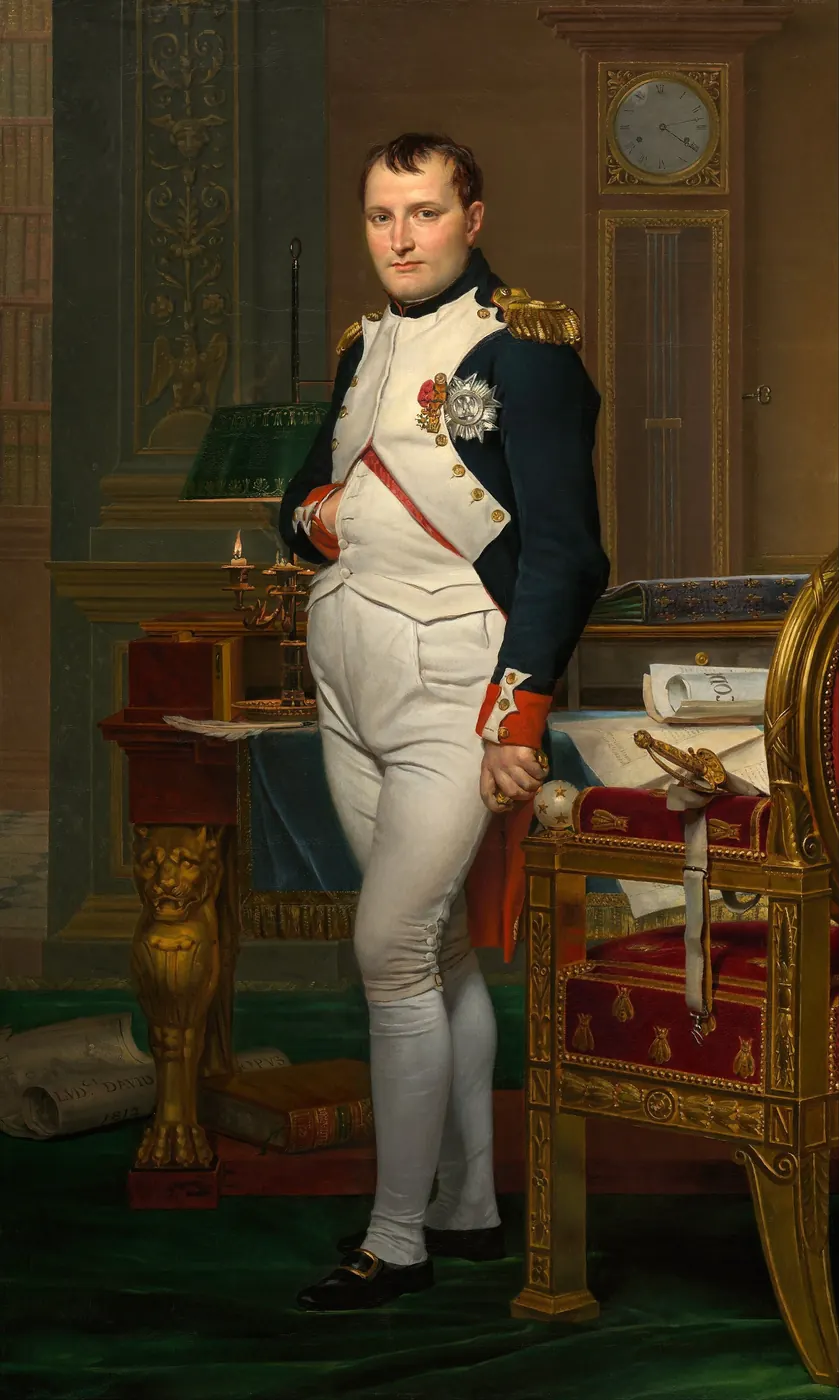
Napoleon Bonaparte
Emperor of the French
Louis-Alexandre Berthier
Marshal of the Empire, Prince of Neuchâtel and of Wagram, major-general of the Grande Armée (1805–1814)
Claude-François de Méneval
Private secretary to Napoleon (1802–1813), Baron of the Empire; then secretary of the orders of Empress Marie Louise
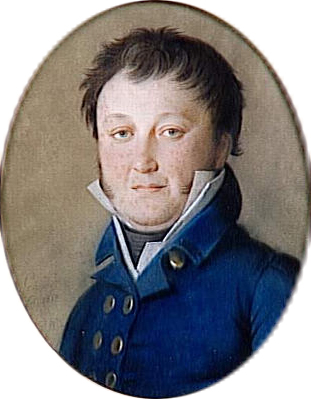
Louis Constant Wairy
First valet de chambre to Napoleon (1806–1814); memorialist (Memoirs, 1830)
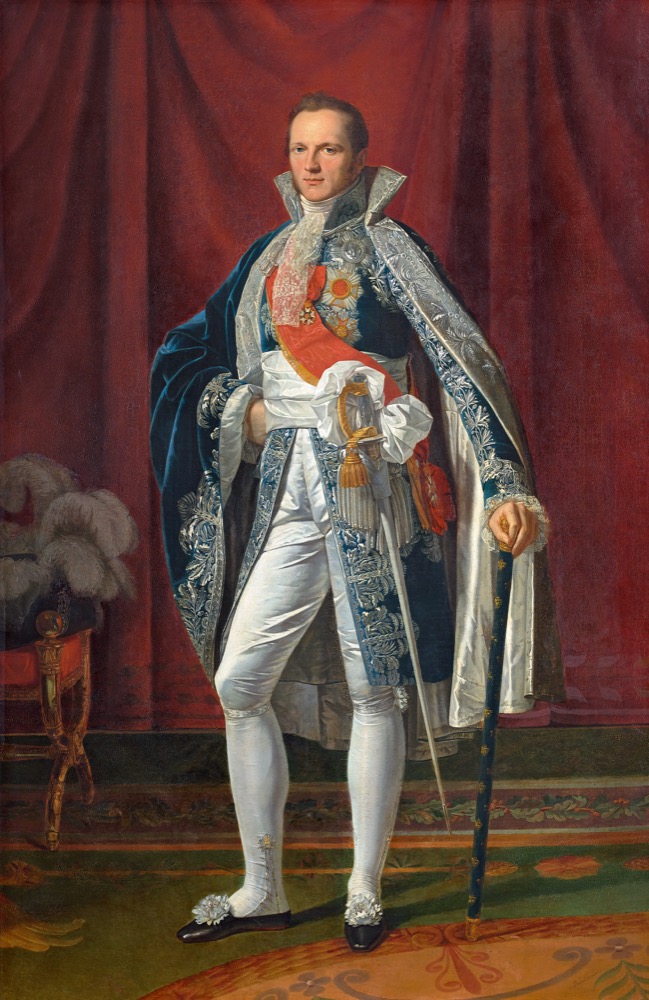
Armand-Augustin-Louis de Caulaincourt
Master of the Horse, ambassador to Saint Petersburg, Minister for Foreign Affairs
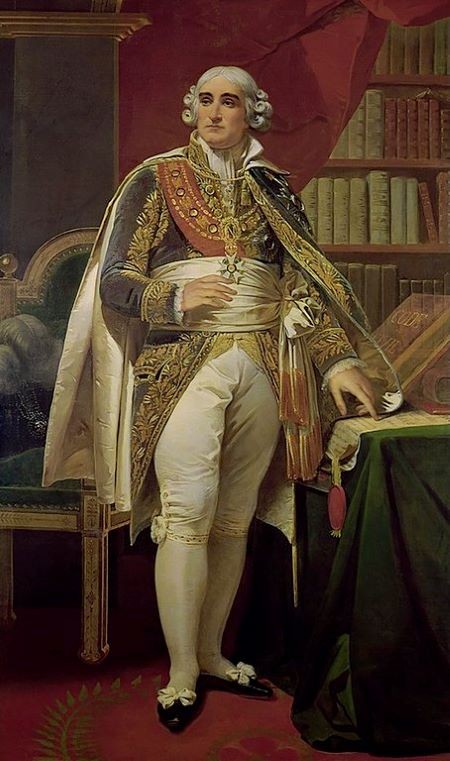
Jean-Jacques Régis de Cambacérès
Second Consul, Archchancellor of the Empire, principal architect of the Civil Code (1804)
Go further
Recommended books to dig deeper (affiliate links)
Napoleon the Great
Andrew Roberts · 2014
A monumental biography drawing on Napoleon’s 33,000 surviving letters, admiring but rigorous.
See on Amazon
Napoléon ou le mythe du sauveur
Jean Tulard · 1977
The book that reshaped how the man is read: how France gave itself a saviour, and what it cost.
See on Amazon
Nouvelle histoire du Premier Empire
Thierry Lentz · 2002-2010
Four reference volumes on institutions, diplomacy and collapse: the scholarly synthesis of the subject.
See on AmazonAs an Amazon Associate, this site earns from qualifying purchases.
Support the encyclopedia
Napoleon Empire is an independent project. Your contribution helps grow the content and keep the site running.
DonateSecure payment on the platform you choose.