Origins and creation
The foot chasseurs of the Guard, continuing the Consular Guard chasseurs, became from 1804 the other pillar of Old Guard infantry. Where the grenadier embodied mass and stature, the foot chasseur embodied a slightly more flexible elite, equally selected for service and conduct.
The 1st Foot Chasseur Regiment of the Imperial Guard formed the historic core. A 2nd regiment appeared later, on the same model as for the grenadiers, to accompany Guard growth without abandoning selection.
In Napoleon’s mind grenadiers and foot chasseurs were not redundant: they formed a complementary pair, able to hold fire in line or advance in column when the reserve was finally released.
Organisation and strength
Organisation followed the Guard infantry regimental pattern: battalions, companies, experienced cadres. Strengths followed the same constraints as the grenadiers — campaign attrition, cautious replacement of ranks.
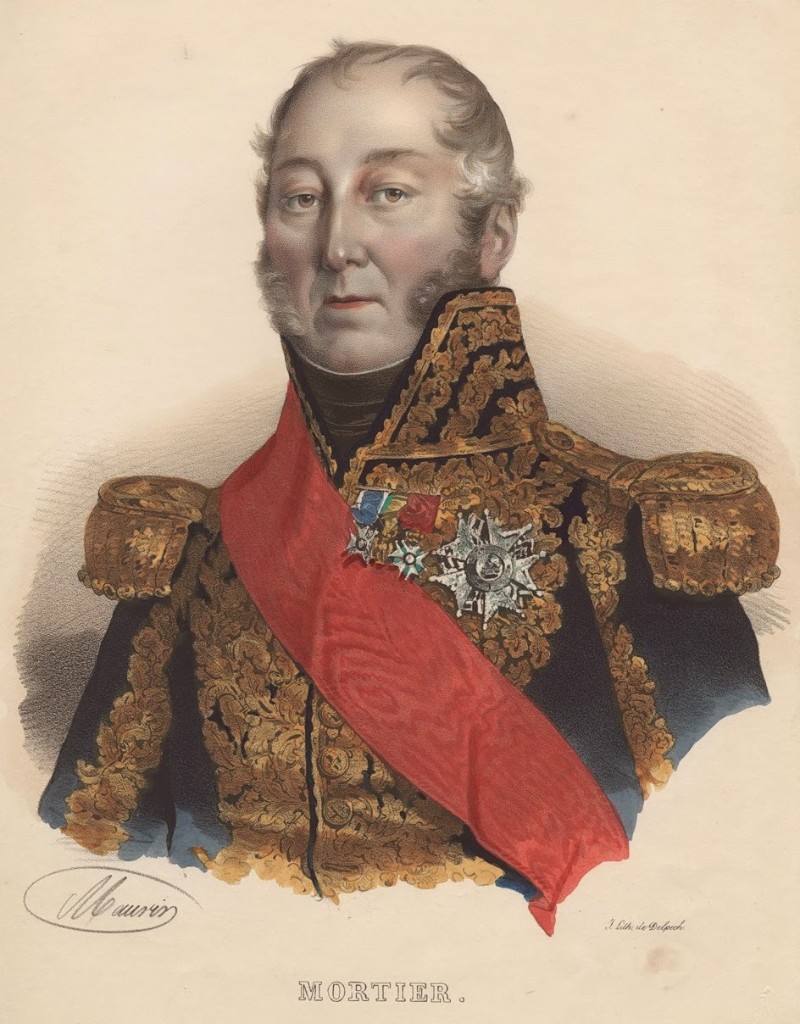
In the field foot chasseurs often operated alongside grenadiers in reserve dispositions. Mortier and Guard infantry generals — Curial among others — coordinated their use. Bessières, though chief of Guard cavalry, took part in decisions on committing the whole imperial reserve.
Place in the Old / Middle / Young Guard hierarchy was clear: foot chasseurs belonged to the Old Guard on the same footing as grenadiers, above the fusiliers and far above Young Guard tirailleurs.
Uniform, arms and recruitment
Contrary to a frequent confusion with the horse chasseurs, Guard foot chasseurs were not defined by an entirely green tunic. Their coat remained in the blue range of Guard infantry; mainly the plume, collar and cuff distinctions, and certain bearskin details, differentiated them from the grenadiers.
Recruitment criteria were close to the grenadiers’: seniority, campaigns, good conduct. Minimum height was sometimes set slightly below that required for grenadiers, widening the pool a little without opening the door to any infantryman.
Arms were those of elite infantry: regulation musket, bayonet, briquet sabre. Training stressed disciplined fire and solidity in square against cavalry — vital skills in 1813-1815.
Deeds of arms
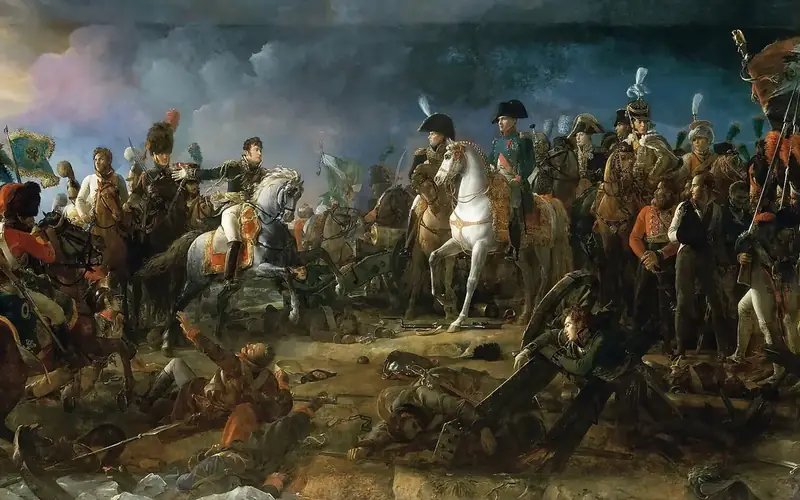
At Austerlitz the foot chasseurs shared the central reserve role. Their direct commitment varied by phase; their presence counted as much as their volleys.
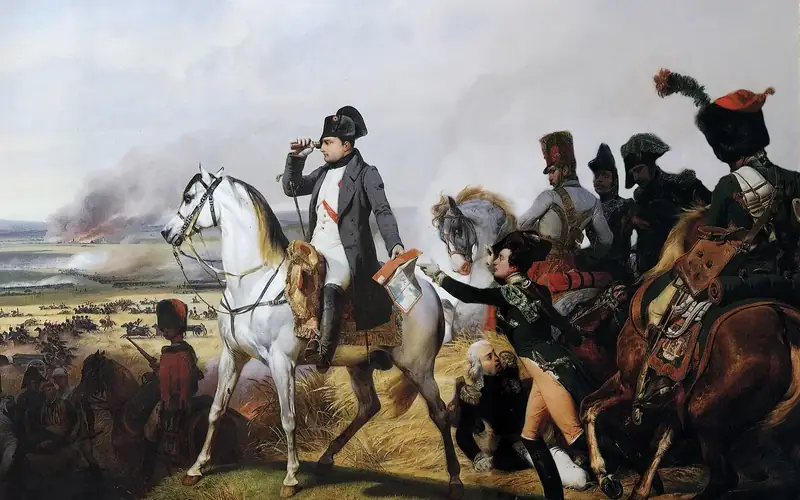
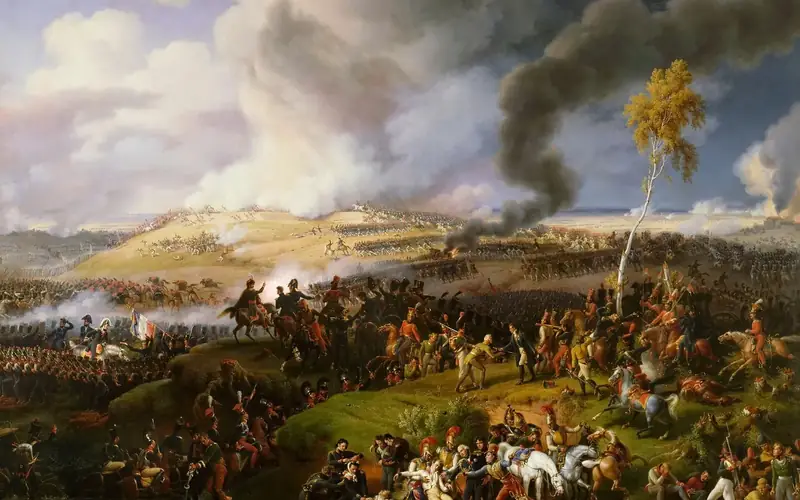
During the Prussian and Polish campaigns, then at Wagram, they followed the common destiny of the Old Guard: rarely worn down in the front line at the start of a battle, decisive when Napoleon judged the moment had come. At Borodino, like the grenadiers, they remained long in the rear while the line bled on the redoubts.
The 1812 retreat and the German battles tested already seasoned cadres. In 1814, on French soil, the foot chasseurs took part in defensive fights where the Guard still served as last rampart.
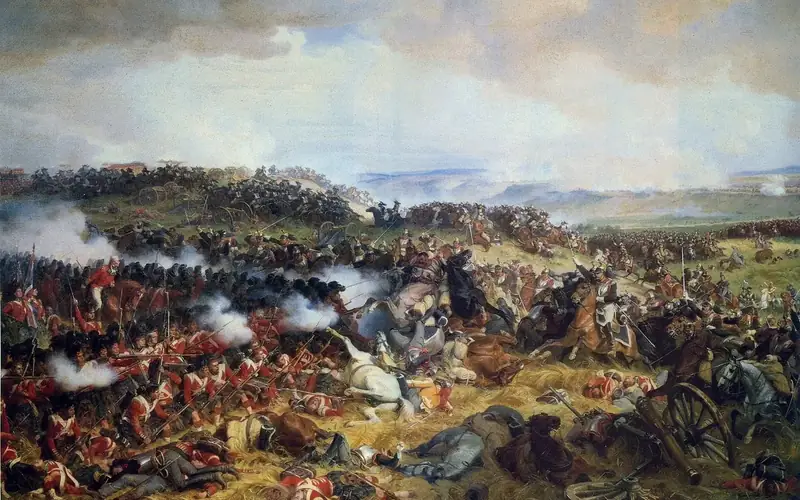
At Waterloo they shared the Old Guard’s fate: participation in final resistance more than in the failed Middle Guard breakthrough. Their orderly withdrawal — as far as possible in the rout — fed the image of infantry that yielded ground without yielding honour.
Legacy and memory
Less ‘iconic’ than the grenadiers in popular imagery, the foot chasseurs are no less essential to understanding the Old Guard. Without them the picture of elite infantry would be truncated.
Uniform collections and modern re-enactments stress the details that distinguish them from grenadiers: proof that the contemporary eye, like that of 1810, could read a hierarchy in the colour of a plume.