On 26 and 27 August 1813 Napoleon hurried to the rescue of Dresden, threatened by Schwarzenberg's great Army of Bohemia. In pouring rain he crushed the Austrian left wing and drove the Allies back towards Bohemia: it was his last great victory in Germany, promptly cancelled out by the defeats of his lieutenants.
Forces at play
Outcome: French victory

France · Saxony
- Napoléon
- Murat
- Ney
- Saint-Cyr
- Victor
100,000 to 135,000 men according to the sources
Casualties: About 10,000 killed and wounded

Austria · Russia · Prussia
- Schwarzenberg
- Barclay de Tolly
- Wittgenstein
- Moreau
200,000 to 215,000 men
Casualties: 38,000 to 40,000 men, mostly prisoners, and some forty guns
Flags: David Liuzzo, Wikimedia Commons
Battle coordinates
Dresden
Coordinates 51.0500° N · 13.7380° E
Battle narrative
Summer 1813
After the catastrophe in Russia, Napoleon had rebuilt an army, largely of young conscripts, and in the spring of 1813 had won the battles of Lützen and Bautzen. When the armistice ended in August, Austria joined the coalition: Russians, Prussians, Swedes and Austrians now fielded more fighting men than he did. Their strategy, agreed at Trachenberg, was to avoid the Emperor in person and to beat his lieutenants separately.
On 16 August Napoleon ordered Marshal Gouvion-Saint-Cyr to fortify and hold Dresden, capital of his ally the King of Saxony and a great army depot. He then marched towards Silesia against Blücher. That was the moment chosen by Prince Schwarzenberg's great Army of Bohemia, accompanied by Tsar Alexander, Emperor Francis and the King of Prussia, to come down from the mountains and march on Dresden.
Dresden threatened
Saint-Cyr had only about 20,000 men, French and Saxon, to defend a city too large for them, protected by a few redoubts. On 25 August the three monarchs surveyed the place from the heights. The Tsar and General Moreau — Bonaparte's old rival, back from exile in the United States to advise the Allies — wanted to attack at once; Schwarzenberg preferred to wait for his reinforcements and complained bitterly about the interference of the sovereigns' entourage. The delay worked in Napoleon's favour. Warned, the Emperor turned back: his Guard covered some 140 kilometres in three days of forced marches.
26 August: Napoleon arrives
On 26 August more than 200,000 Allied troops deployed around the city: the Austrians on the left, the Russians and Prussians of Wittgenstein and Kleist on the right, Barclay de Tolly's reserves in the centre. From the morning they probed the defences. At about 10 a.m. Napoleon entered Dresden from the north with the infantry of the Guard, followed by Murat's cavalry. The Allies saw the French columns streaming in and hesitated until mid-afternoon. At about 3 p.m. they finally launched a general assault on the southern suburbs. The Prussians took the Großer Garten and the Austrians a lunette; but the attacks broke down on the outskirts of the city.
At about 5.30 p.m. Napoleon counter-attacked everywhere at once: the cavalry on the right, Ney and part of the Young Guard in the centre, Mortier and the other Young Guard corps on the left. By nightfall the French had retaken almost all of Saint-Cyr's positions. Torrential rain began to fall and did not stop all night.
27 August: in the rain
Reinforced overnight by the corps of Victor and Marmont and by the Guard cavalry, Napoleon attacked on the morning of the 27th in pouring rain. The Weißeritz, swollen by the storm, cut off the Austrian left wing under Klenau and Gyulai from the rest of the army. Murat, at the head of the carabiniers and cuirassiers, fell upon it. The Austrian infantry's muskets, their powder soaked, would no longer fire: whole battalions had to lay down their arms, and General Mesko's division was captured entire. It is said that General Bordesoulle, facing an Austrian square that refused to surrender, brought up six guns to within thirty paces before obtaining its surrender.
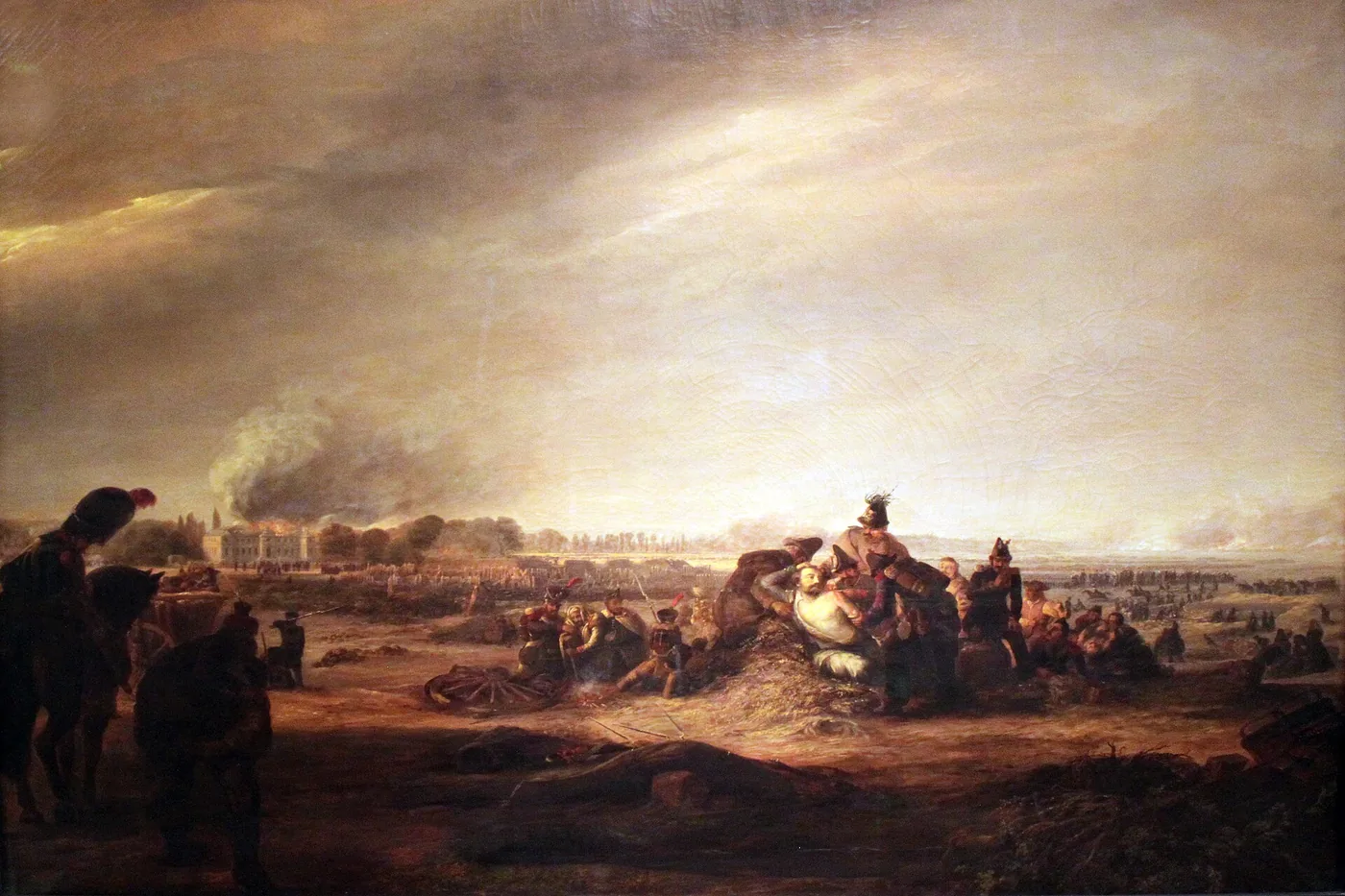
On the other wing, Ney, Mortier and Saint-Cyr gradually drove back the Russians and Prussians despite desperate charges by their cavalry; in the centre Marmont held the line and the artillery of both sides exchanged fire. At about 5 p.m. the whole Allied army began to withdraw, even though Schwarzenberg's reserves had not been committed.
The death of Moreau
During the battle, while talking with the Tsar, General Moreau was badly wounded by a French cannonball. He died on 2 September at Louny, in Bohemia. The victor of Hohenlinden, once one of the Republic's most famous generals, ended his life in the ranks of France's enemies; Louis XVIII would make him a Marshal of France posthumously.
Outcome
The Allies lost 38,000 to 40,000 men, most of them prisoners and missing, and some forty guns; the French about 10,000 killed and wounded. It was Napoleon's last great victory in Germany. But the rain, the state of the roads and an effective rearguard allowed Schwarzenberg to withdraw in good order into Bohemia. Napoleon, unwell — suffering from violent colic, according to some of his officers — did not direct the pursuit himself.
A victory without a sequel
Sent after the Allies into the mountains, Vandamme's corps pushed too far: it was surrounded and destroyed at Kulm on 30 August, and Vandamme was taken prisoner. Elsewhere, as the Allied plan intended, Napoleon's lieutenants were beaten: Oudinot at Großbeeren on 23 August, Macdonald on the Katzbach on the 26th, Ney at Dennewitz on 6 September. These setbacks wiped out the success of Dresden and paved the way for the great battle of Leipzig in October. The writer E. T. A. Hoffmann, who was in the city during the fighting, afterwards walked the battlefield and drew from it a piece, Vision on the Battlefield of Dresden.
Go further
Recommended books to dig deeper (affiliate links)

Napoleon the Great
Andrew Roberts · 2014
A monumental biography drawing on Napoleon’s 33,000 surviving letters, admiring but rigorous.
See on Amazon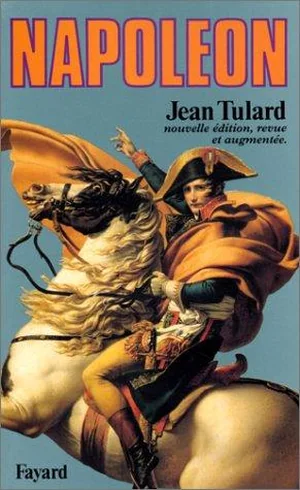
Napoléon ou le mythe du sauveur
Jean Tulard · 1977
The book that reshaped how the man is read: how France gave itself a saviour, and what it cost.
See on Amazon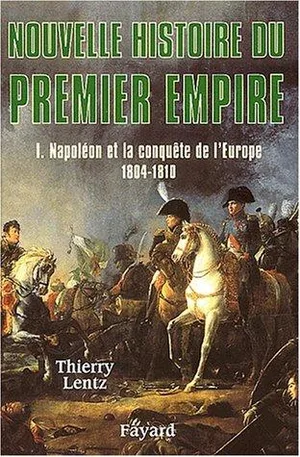
Nouvelle histoire du Premier Empire
Thierry Lentz · 2002-2010
Four reference volumes on institutions, diplomacy and collapse: the scholarly synthesis of the subject.
See on AmazonAs an Amazon Associate, this site earns from qualifying purchases.
Support the encyclopedia
Napoleon Empire is an independent project. Your contribution helps grow the content and keep the site running.
DonateSecure payment on the platform you choose.