On 2 May 1813, Wittgenstein and Blücher surprised Ney's corps south of Lützen, in the villages of Gross-Görschen and Kaja. The young conscripts held out all afternoon, until Napoleon, who had hurried to the field, broke the Allied line with Drouot's artillery and the Young Guard. Lacking cavalry, he could not follow up his victory.
Forces at play
Outcome: French victory

France
- Napoléon
- Ney
- Marmont
- Bertrand
- Macdonald
78,000 to 145,000 men according to estimates
Casualties: 19,655 to 22,000 killed and wounded (2,757 killed and 16,898 wounded according to Ney)


Russia · Prussia
- Wittgenstein
- Blücher
- Yorck
- Scharnhorst
70,000 to 96,000 men according to estimates
Casualties: 11,500 to 20,000 men according to most estimates
Flags: David Liuzzo, Wikimedia Commons
Battle coordinates
Lützen
Coordonnées 51.2162°, 12.1832°
Battle narrative
After Russia
After the retreat from Russia, Tsar Alexander's army crossed the Niemen as early as December 1812 and drove the remnants of the Grand Army westwards, first behind the Oder and then behind the Elbe. Prussia changed sides: at the end of February 1813 Frederick William III allied himself with Russia; he declared war on France on 16 March and called his people to arms the next day. In Germany, Prince Eugène, who had taken command after Murat's departure, held the line of the Elbe.
Napoleon, for his part, rebuilt an army in a few months. He raised some 200,000 men, most of them young, inexperienced conscripts, but he was badly short of cavalry, which had been lost in Russia. On 26 April he left Mainz to take charge of operations. On the 30th he crossed the Saale at Weissenfels; on 1 May, at Rippach, Marshal Bessières was killed by a cannonball.
Wittgenstein's surprise attack
Napoleon marched on Leipzig in several columns. To cover his right flank, Ney's corps, five divisions and about 45,000 men, settled around Lützen and in four villages to the south-east: Kaja, Klein-Görschen, Gross-Görschen and Rahna. For want of cavalry, French reconnaissance was poor, and the Emperor believed the Allied army to be scattered further south.
The Russian general Wittgenstein, who commanded the Russo-Prussian army, was counting instead on his superior cavalry and on the experience of his veterans. Convinced that the French flank was guarded only by a weak detachment at Kaja, he decided to surprise it, break through to Lützen and cut Napoleon's army in two while it was on the march. On 2 May Blücher's Prussians led the advance.
Ney holds the villages
The Prussian attack started late, around 11:30. Finding a whole division in front of Gross-Görschen instead of the weak outpost they expected, Blücher halted to bring up his artillery; the delay gave General Souham time to occupy the village and General Girard time to gather his men. The fighting became general shortly after noon. Souham had to give way under the fire, but Ney arrived at the gallop and launched a fierce counter-attack. The villages were taken and retaken, and the young conscripts of III Corps suffered heavy losses.
Napoleon, who was at Markranstädt on the Leipzig road, heard the cannonade. He ordered Ney to hold at all costs and sent to the field Marmont's corps, Bertrand's against the Allied left, Macdonald's against its right, and the Guard towards Kaja. He arrived himself at about 14:30.
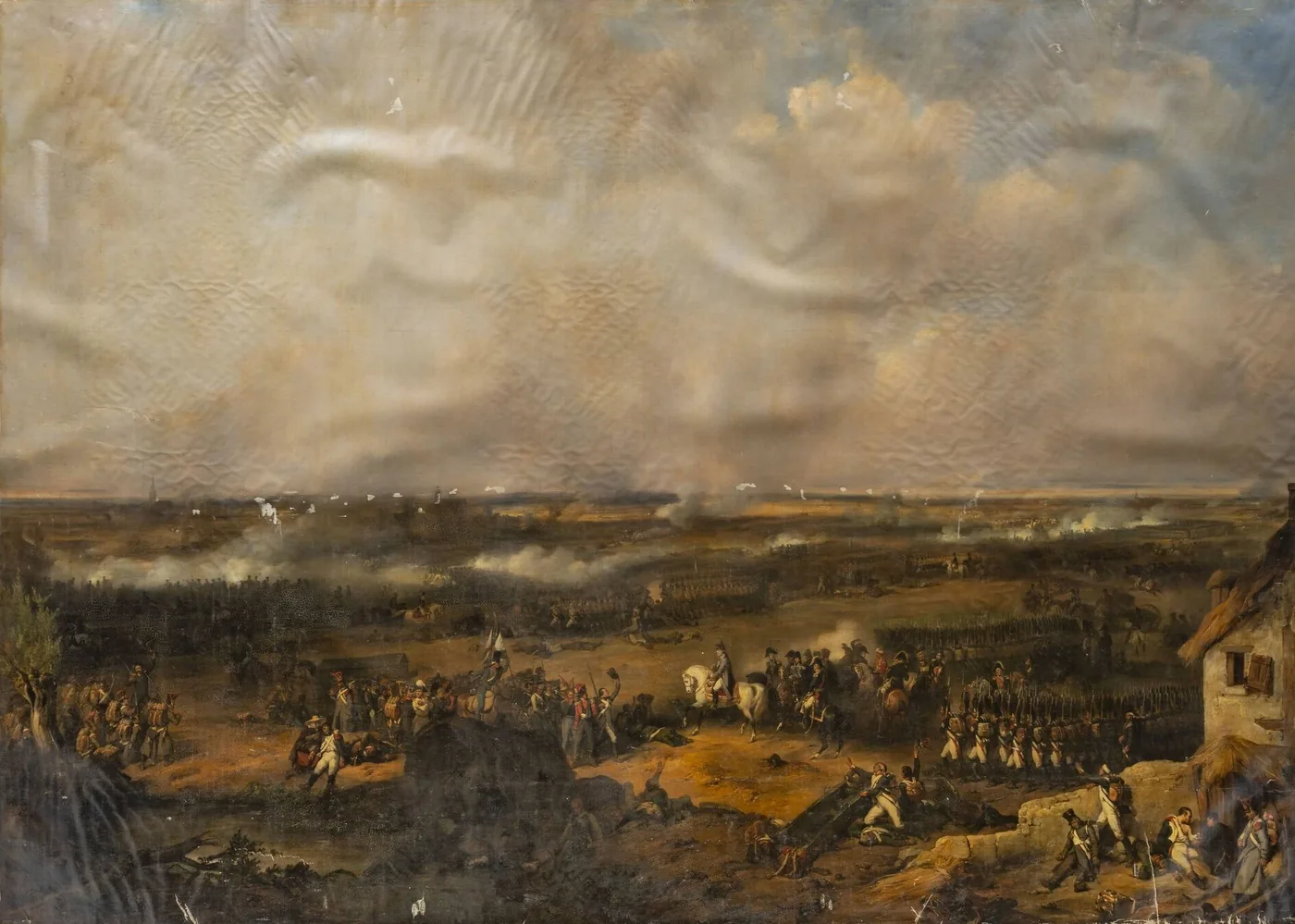
Napoleon under fire
The situation was critical: Ney's exhausted corps was close to breaking, and Marmont was hard pressed. Napoleon rode among the disordered conscripts, rallied them and led them back to the charge himself. Marmont would write that this was probably the day, of his whole career, on which Napoleon ran the greatest personal danger on a battlefield. Yet he refused to commit the Guard too early, so as to give Bertrand and Macdonald time to reach the enemy's flanks.
On the Allied side, setbacks piled up. Blücher was wounded; General Scharnhorst, one of the architects of the reform of the Prussian army, was also hit. His wound was slight, but the retreat prevented it from being properly treated: it became infected, and he died of it in Prague on 28 June. The Tsar held back the Russian reserves in order to lead the final assault himself. At about 16:00 Yorck's Prussians came close to Kaja, but a counter-attack by the Young Guard restored the French line.
"La Garde au feu"
At about 17:30 Macdonald took Eisdorf, on Ney's left, and Bertrand linked up with Marmont's right: Napoleon now had the numerical advantage. At 18:00 General Drouot lined up seventy guns south-west of Kaja and pushed them forward almost to point-blank range. The Young Guard went in, in four columns, supported by the Old Guard and the Guard cavalry, while Marmont, Bertrand and Macdonald attacked on the wings. Rahna, Klein-Görschen and Gross-Görschen were retaken, and the Allied line began to break up. But night was falling, and it ended the fighting.
Outcome
The victory was costly: according to Ney's figures, the French lost 19,655 men, 2,757 killed and 16,898 wounded, and up to 22,000 according to other estimates. Most authors put Allied losses between 11,500 and 20,000 men, some higher still. That evening the Tsar and Wittgenstein did not consider themselves beaten; it was on learning that Leipzig had fallen that they ordered the retreat, and they fell back across the Elbe. Without cavalry, Napoleon could not pursue them. He had nonetheless regained the upper hand in Saxony, and he caught up with the coalition on the Spree, at Bautzen, eighteen days later. The Germans call this battle Gross-Görschen.
Go further
Recommended books to dig deeper (affiliate links)

Napoleon — A magisterial biography
An exhaustive biography of the Emperor, the fruit of rigorous research.
≈ £14.99 Napoleon's Army
Organization, tactics and daily life of the Grande Armée soldiers.
≈ £18.00 Austerlitz 1805
The detailed account of the Battle of the Three Emperors.
≈ £12.99As an Amazon Associate, this site earns from qualifying purchases.
Support the encyclopedia
Napoleon Empire is an independent project. Your contribution helps grow the content and keep the site running.
Donate