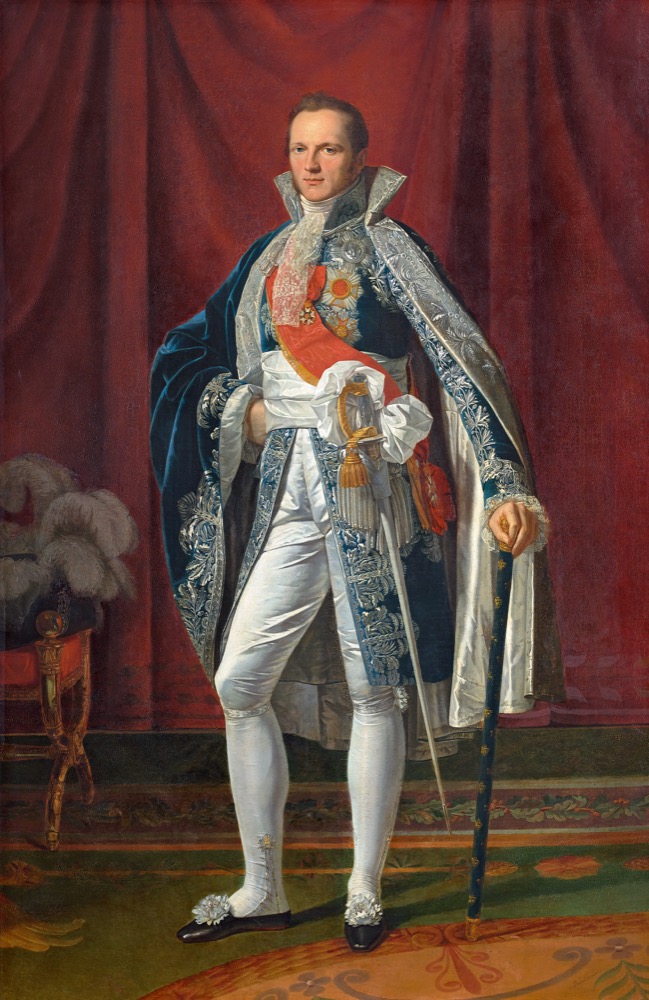
Armand-Augustin-Louis de Caulaincourt (9 December 1773 Caulaincourt, Aisne-19 February 1827 Paris) bore a Picard place-name the Empire turned into an Italian ducal title: Duke of Vicenza (1808), as Napoleon handed out geographic souvenirs to those who held rein or pen. Son of Marquis Gabriel Louis de Caulaincourt, lieutenant general and senator, he learned light cavalry early, Revolutionary skirmishes and staff discipline replacing unpaid noble battalions. He rose through Italian and German campaigns, survived purges and reshuffles, drew close enough to Bonaparte to be present at 18 Brumaire as trusted officer — not tribune, but man of the sword able to execute a political move without versifying it. Under the Empire Grand Master of the Horse was no decorative office: he organised travel on horseback, reviews, immediate security of the Emperor, haunted antechambers like Duroc or Constant, with a reputation for measured coldness masking stubborn loyalty. The embassy at Saint Petersburg (1807-1811) made him the clearest reader of the Franco-Russian alliance: he described what Paris refused to hear on the Continental Blockade, trade tensions and the Tsar’s pride. Recalled before the 1812 invasion, he had warned of risk — testimony his posthumous Memoirs would crystallise for historiography. Minister for Foreign Affairs in 1813-1814, he negotiated while armies retreated; he was at the heart of Fontainebleau talks without treason, bearing an abdication imposed by coalition. Louis XVIII kept him; the Hundred Days brought him back to the Quai d’Orsay until Waterloo and second Restoration. Peer of France, he died aged fifty-three at Père-Lachaise, leaving Memoirs edited by his brother Auguste — inner chronicle indispensable on 1812-1814, showing a Napoleonic servant who doubted without deserting. For Empire Napoléon Caulaincourt embodies diplomacy when war no longer suffices: the realism of the Grand Squire become minister, caught between Talleyrand, Maret and the Emperor’s lone voice.
Picardy, Revolution, and First Campaigns
Born 9 December 1773 at the family château of Caulaincourt in Thiérache, Armand-Augustin-Louis belonged to nobility mixing robe and arms: his father Gabriel Louis, Marquis de Caulaincourt, lieutenant general, senator and Count of the Empire, served Revolution and Consulate; he took his son very young as aide-de-camp, passing staff school before embassies.
The young man entered light cavalry; the 1790s taught column rhythm, losses to disease, promotions following brigade success rather than drawing-room genealogy. He served with generals whose names still cross textbooks — Houchard, then Kléber — and acquired habit of dry dispatches, hastily annotated maps, horses to change before dawn.
Italian campaigns and march toward Germany trained him in close contact between screening cavalry and staff: not yet the diplomat in court dress; the officer who knows a badly held front line voids any verbal note. The Revolution also imposed purge mistrust, swings between suspicion and recall to fire; he crossed Thermidor and the Directory without burning at the noisiest factions.
Closeness to Bonaparte built through military service rather than tribune: when General Bonaparte returned from Egypt and prepared the 18 Brumaire coup, Caulaincourt was among officers deemed reliable for troop movements and mute complicity of corridors. He wrote no manifestos; he saw squadrons were where the political calendar demanded.
Under the Consulate cavalry ranks accumulated; personal trust showed in confidential missions, travel, audiences where voices stayed low. Caulaincourt lacked rhetors’ verbosity; he bore a reputation for cold lucidity that would serve when he must tell the Emperor what court preferred to silence.
For Empire Napoléon this revolutionary and Italian base explains why Caulaincourt would never be pure courtier: his first legitimacy came from sabre and staff, even when ducal titles and embassies dressed him in diplomatic velvet.
Empire, Master of the Horse, and Proximity to the Throne
The Empire’s proclamation in 1804 redistributed Household offices: Grand Master of the Horse became pivot of equestrian ceremonial, official travel, reviews where the Emperor displayed Guard and line regiments as political argument. Caulaincourt was no simple stable-master: he organised sovereign’s horse logistics, close security at parades, coordination with marshals of the lodgings and mouth domestics.
This function placed him among familiars: he saw Napoleon tired, irritable, sometimes attentive to saddle or bridle detail while all Europe discussed ultimatums. Familiarity forged rare speech: when Caulaincourt dared contradict, it was with credit of the man who held the rein for years without trading it in salons.
In 1808 creation of the duchy-grand-fief of Vicenza inscribed in title marble a typically imperial reward — Italian souvenir, campaign memory, social rank compatible with future embassies. Senator, peer, crosses followed; the officer became man of state without leaving the world of spurs.
Occasional diplomatic missions preceded the Russian post: Caulaincourt moved through Europe of congresses and veiled threats, carried messages official channels burdened. He rubbed Talleyrand and Maret without confusing them: one played several boards, the other drafted governmental transitions; Caulaincourt often embodied hard line of military fait accompli translated into court language.
When the Spanish war erupted and the continental knot tightened, the Grand Squire stayed in Paris long enough to gauge distance between triumphal bulletins and armies’ reality; that double perspective prepared his future role at the Quai d’Orsay.
For Empire Napoléon the Caulaincourt of Grand Squire is hinge between military Household and diplomacy: less visible than Berthier on maps, more intimate than many passing ministers.
Tilsit, Saint Petersburg, and the Ice of the Alliance
The Treaties of Tilsit (July 1807) froze a Franco-Russian alliance economic interests and court pride soon made discordant. Caulaincourt negotiated before and after clauses; named ambassador extraordinary at Saint Petersburg, he inherited a thankless mission: maintain understanding with Alexander I while the Continental Blockade strangled Russian trade and dynastic marriages failed on Anna’s refusal of Napoleon.
At the Tsars’ court the Frenchman who spoke with restraint without flattery won lasting esteem: Caulaincourt’s dispatches mixed cold analysis and lucid worry; he described merchants’ impatience, landed nobles’ discontent, growing distance between two sovereigns still saluting in uniform.
His later testimony — especially via Memoirs — stressed ignored warnings: the 1812 campaign appeared as geopolitical imprudence as much as logistical error. Historians debate exact degree of anticipation; in any case Caulaincourt embodied voice of realism facing military megalomania.
Recalled in 1811, he left a Russia already murmuring against the Emperor of the French; in Paris his presence drew close to intimate counsel without dominating it. Talleyrand, Vienna and London played other scores; Caulaincourt remained man of personal tie with Alexander, now broken on treaty paper before broken by cannon.
Gosse’s canvas on Tilsit — Napoleon receiving the Queen of Prussia — symbolises dazzle of continental apogee: deceptive dazzle for whoever read embassy dispatches. For Empire Napoléon’s reader the image recalls parade diplomacy often precedes mass war.
Between soldierly loyalty and observer lucidity Caulaincourt had seen steppes on maps before measuring cost in Memoirs; his line holds without excusing Tsar or canonising Emperor.
The Quai d’Orsay in Defeat (1813-1814)
In August 1813 Napoleon replaced Hugues-Bernard Maret with Caulaincourt at the Ministry for Foreign Affairs. Timing was cruel: Leipzig approached, Austria slid toward coalition, Metternich imposed conferences where French speech was no longer law. The minister inherited a portfolio empty of margin: every verbal note arrived after a lost battle or prince pondering betrayal.
Caulaincourt negotiated with a soldier’s firmness and patience of one who knows cards are played on geographic maps too. He tried to preserve a throne by speech when cannon no longer sufficed; allies demanded guarantees the Emperor long refused, then accepted in pain.
1814 talks mixed figures the site already crosses — Alexander, Austrian and Prussian representatives, generals holding Paris — in a game where Caulaincourt was both executor and adviser. He was not Talleyrand selling a Bourbon ticket; he carried imperial instruction to realism’s end.
Fontainebleau became theatre of abdication: Caulaincourt attended drafting of acts, power transitions, both witness and actor of an end bulletins had not announced. His historiographic role exceeds black-or-white legend: he shows minister faithful to military fate rather than personal treason.
Louis XVIII, returned to throne, kept the former imperial diplomat: sign Restoration knew how to use skills without depriving itself of treaty memory. Caulaincourt survived politically a first fall others paid with exile or ostracism.
For Empire Napoléon this chapter fixes Caulaincourt specificity: translate into chancellery language a defeat marshals named retreat or disaster, without breaking moral chain of command while the Emperor decided.
Fontainebleau, Hundred Days, and Second Restoration
The 1814 deposition did not end the career: Caulaincourt saw the Emperor’s Elban exile as diplomatic as much as personal parenthesis. When Napoleon landed at Golfe-Juan in March 1815, the Hundred Days Minister for Foreign Affairs found a Quai d’Orsay where all Europe already prepared third moral coalition against resurrected eagle.
Political space was narrow: every note was read in Vienna, London, Saint Petersburg as provocation or last respite. Caulaincourt tried to open talks, limit escalation; Waterloo closed debate by iron. Second abdication, second Restoration — the minister rode the wave without being most visible target of proscriptions.
Delaroche’s canvas on Fontainebleau (31 March 1814) fixed cultural image of overwhelmed Napoleon alone before history: dated 1846, it sums atmosphere Caulaincourt lived at power’s edge — moment diplomacy could do nothing without allied bayonets’ accord.
Under restored Bourbons Caulaincourt remained peer of France, frequented assemblies, bore respectability of state servant who crossed two regimes without changing name. His death in Paris 19 February 1827, aged fifty-three, closed a trajectory short in years but dense in responsibility.
Père-Lachaise cemetery received his tomb — stone among graves of elite who saw three government forms in one generation. Official funerals underlined Duke of Vicenza’s social weight without making him Napoleonic chapel hero.
For Empire Napoléon this segment ties military fall to written memory: Caulaincourt left stage before great romantic epics of imperial cult, but bequeathed pages those epics would use as source.
Memoirs, Historiography, and Legacy
Memoirs of the Duke of Vicenza appeared in several volumes after the author’s death, edited notably by his brother Auguste de Caulaincourt; they cover especially 1812-1814 with detail of talks, counsel, imperial silences archives alone do not always give.
Nineteenth-century historians cited them as firsthand source on Russian campaign seen from diplomatic staff; modern debates discuss occasional reliability but recognise consistency of witness who served without idolatry. Caulaincourt appears as man who dared say “no” softly when others wrote “yes” on official paper.
Napoleonic literature — novels, plays, films — sometimes borrows image of Grand Squire-minister as cold conscience figure; historical man remains more prosaic: elite bureaucrat, court cavalryman, negotiator exhausted by endless conferences.
On genealogical and social plane Caulaincourt family prolonged alliances in July Monarchy nobility; name survives in studies of First Empire diplomacy more than in broad public, where Talleyrand and Metternich hold the poster.
For Empire Napoléon cross-linked entries Caulaincourt ties Napoleon, Talleyrand, Maret, Duroc, Berthier and Méneval: network of Household, ministry, embassies where sometimes as much is decided as on battlefield.
In conclusion Armand de Caulaincourt embodies transition from companion in arms to treaties minister: costly lucidity, loyalty to edge of collapse, written memory that still lets us read imperial fall other than by casualty statistics alone.
Discover other characters
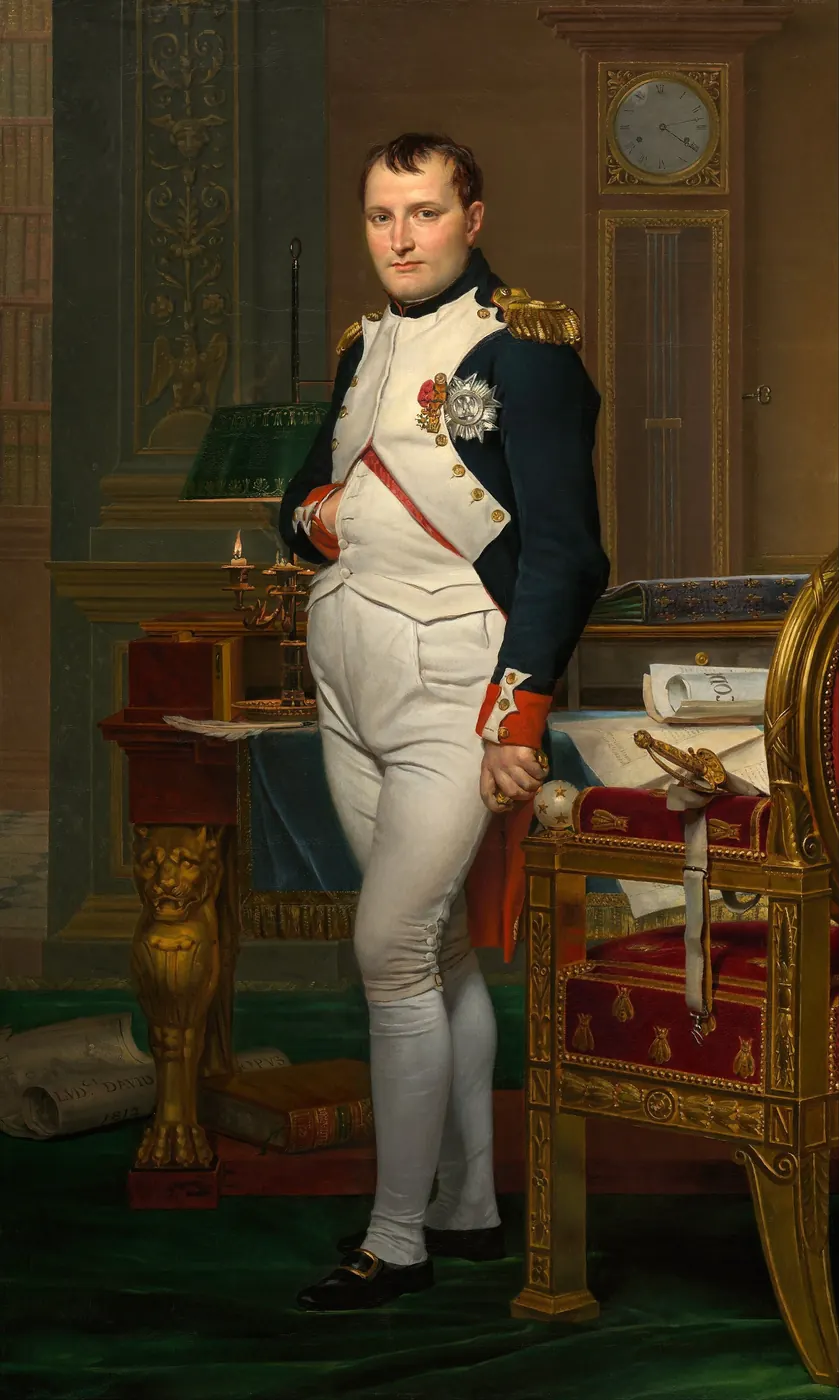
Napoleon Bonaparte
Emperor of the French
Charles-Maurice de Talleyrand
Minister for Foreign Affairs, Prince of Benevento, diplomat
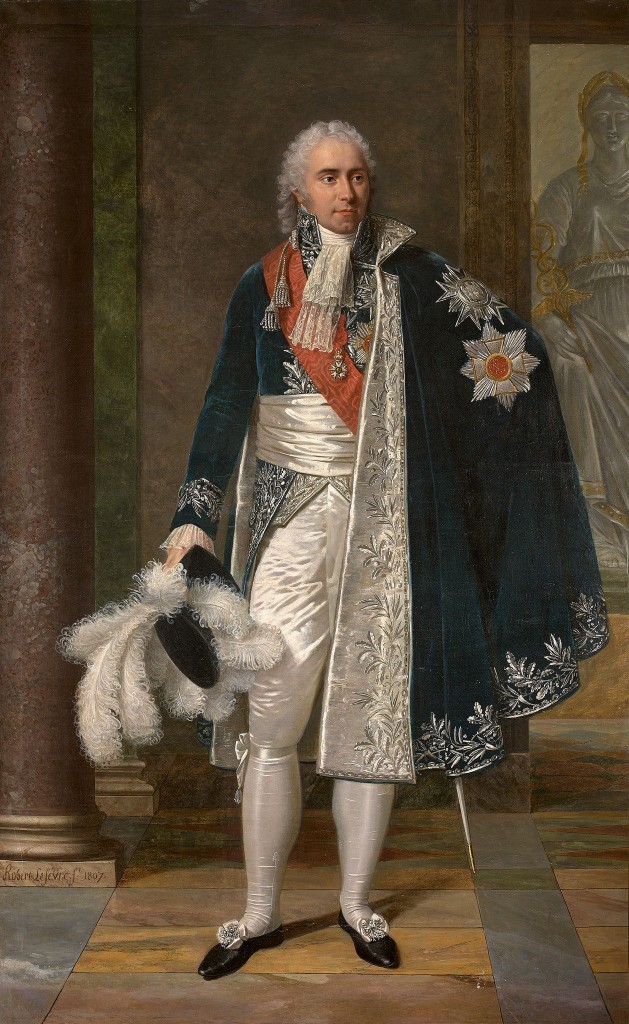
Hugues-Bernard Maret
Duke of Bassano, Secretary-General of the Government then Minister for Foreign Affairs and Secretary of State (1811–1813)
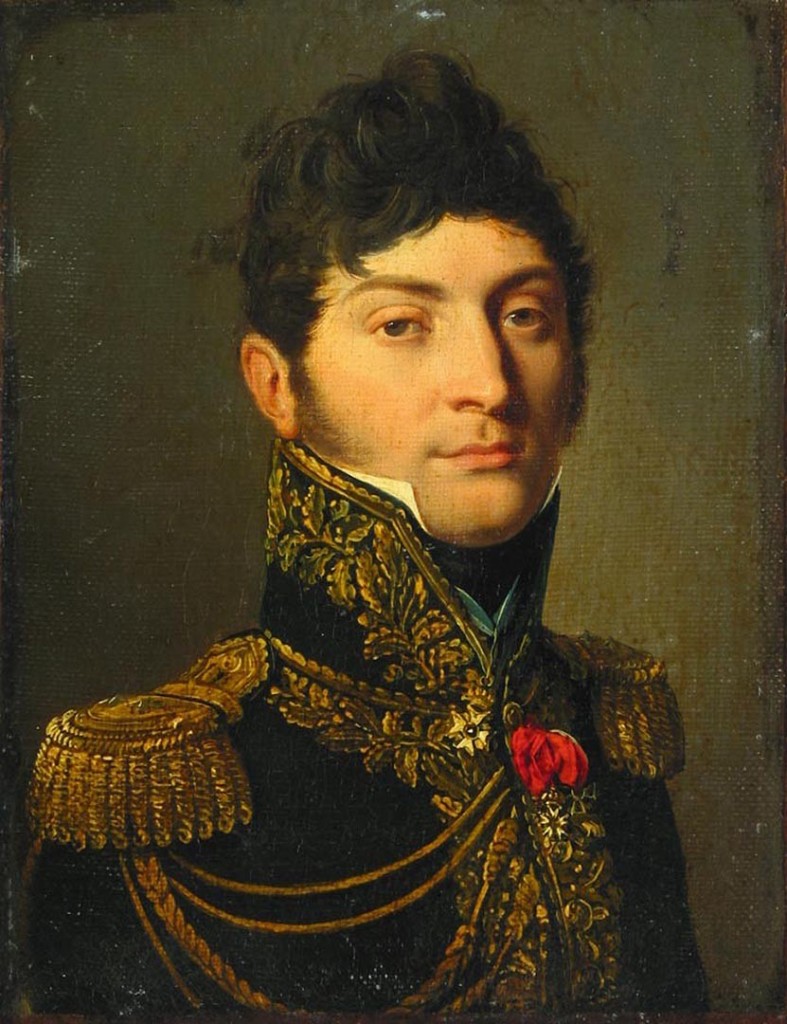
Géraud Christophe Michel Duroc de Troël
Divisional general, Grand Marshal of the Palace, Duke of Friuli
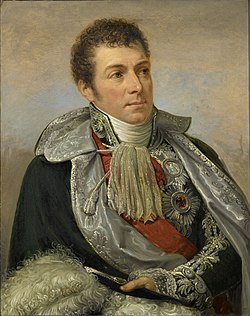
Louis-Alexandre Berthier
Marshal of the Empire, Prince of Neuchâtel and of Wagram, major-general of the Grande Armée (1805–1814)
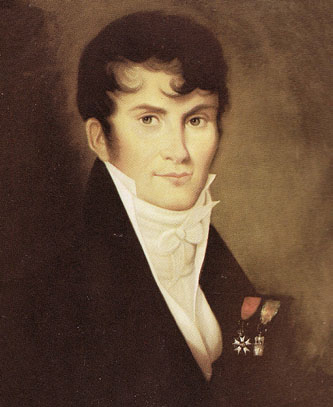
Claude-François de Méneval
Private secretary to Napoleon (1802–1813), Baron of the Empire; then secretary of the orders of Empress Marie Louise
Go further
Recommended books to dig deeper (affiliate links)
Napoleon the Great
Andrew Roberts · 2014
A monumental biography drawing on Napoleon’s 33,000 surviving letters, admiring but rigorous.
See on Amazon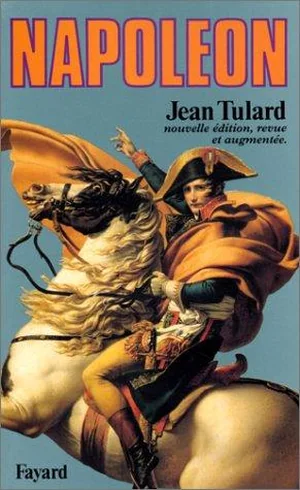
Napoléon ou le mythe du sauveur
Jean Tulard · 1977
The book that reshaped how the man is read: how France gave itself a saviour, and what it cost.
See on Amazon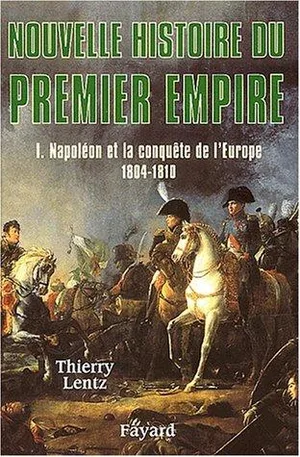
Nouvelle histoire du Premier Empire
Thierry Lentz · 2002-2010
Four reference volumes on institutions, diplomacy and collapse: the scholarly synthesis of the subject.
See on AmazonAs an Amazon Associate, this site earns from qualifying purchases.
Support the encyclopedia
Napoleon Empire is an independent project. Your contribution helps grow the content and keep the site running.
DonateSecure payment on the platform you choose.