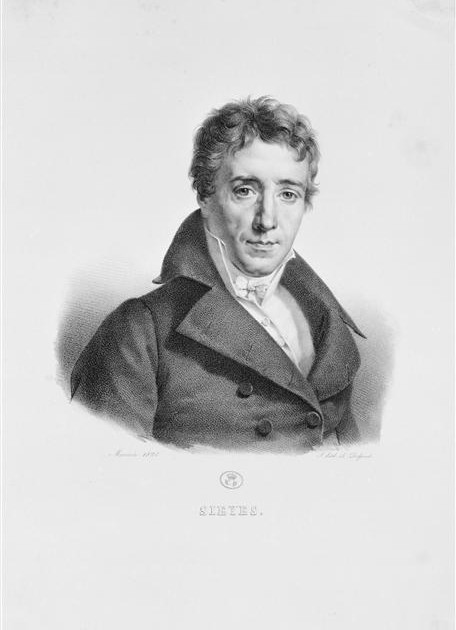
Born in Fréjus in 1748, Emmanuel Joseph Sieyès embodied as few others the passage from the Old Regime to the Revolution through the pen: a priest formed by the Enlightenment, in January 1789 he became author of the pamphlet « What is the Third Estate? », a short, striking text that crystallised the nation's claim against corporate privilege. Deputy of the Third for Paris, he took part in the Tennis Court Oath and the 1791 Constitution, forged the distinction between active and passive citizens, sat in the Convention voting the king's death with reprieve, then lived through Thermidor and the Directory. In 1799, a short-lived Director, he sought a « sword » to reform the state: on 18 Brumaire Year VIII, with Bonaparte and Ducos, he overthrew the Directory — only to be immediately eclipsed by the First Consul. Count of the Empire without real influence, a regicide in royalist eyes, he ended his life in 1836 after Brussels exile and return under the July Monarchy. His legacy mixes admiration for the theory of national sovereignty with criticism of the path to personal power.
Provence, ecclesiastical career and the genesis of political Enlightenment
Emmanuel Joseph Sieyès was born on 3 May 1748 in Fréjus, into a family of the small merchant and administrative bourgeoisie of Provence: his father, a tax controller, wished his son a stable career in the orders. The young man entered the seminary of Saint-Sulpice in Paris, was ordained in 1772 and taught theology in religious houses, without ever becoming passionate about pastoral care or mysticism. What he read were Montesquieu, Locke, the physiocrats and the Encyclopédists; what he frequented were salons where fiscal reform, representation and the limits of despotism were debated. His temperament was that of a cold analyst, little talkative in public, formidable when he wrote: contemporaries described him as reserved, almost icy, but capable of legal syntheses of cutting clarity.
The convocation of the Estates General for 1789 finally offered a stage worthy of his preparatory writings. From 1788 he reflected on representation: who speaks for the nation? Separate orders or an assembly of productive citizens? In January 1789 appeared the pamphlet « What is the Third Estate? » — a few dozen pages whose print runs exploded. The answer to the three ritual questions — « Everything », « Nothing », « To become something » — was not only a slogan: it redefined political legitimacy. For Sieyès, nobility and clergy did not constitute the nation; only the useful workers of the Third Estate counted, whose representation must be doubled and whose vote must be by head. The text circulated throughout France, from clubs to barracks; it gave language to the legal insurrection of 17 June, when the Third Estate deputies proclaimed themselves the National Assembly.
Sieyès was not a street agitator but a procedural architect: he drafted motions, proposed formulas, took part in commissions preparing the abolition of privileges on the night of 4 August. His hostility to old corporatisms did not stop him remaining a priest: he accepted the Civil Constitution of the Clergy with a logic of state — the Church must serve the united nation — while keeping his distance from the anti-religious excesses of some municipalities. This intermediate position, at once revolutionary and attached to order, foreshadowed his whole trajectory: modernise institutions without yielding either to feudal nostalgia or to popular drifts he would always judge dangerous for property and law.
National Assembly, 1791 Constitution and the experience of the Terror
Elected deputy of the Third Estate for Paris, Sieyès sat among the most listened-to constituents when he spoke — which remained rare. He was one of the drafters of the Tennis Court Oath and argued that the Assembly alone had the right to vote tax and constitution. On the text of 1791, he insisted on indivisible national sovereignty: the king was no longer the mystical holder of the body politic but the supreme functionary of a law delegated by representatives. It was in this framework that he theorised the distinction between active citizens — property owners or contributors wealthy enough to vote — and passive citizens, excluded from suffrage but protected by law. Later critics would see a betrayal of the egalitarian promises of 1789; for Sieyès it was a matter of guaranteeing an « enlightened » electorate able to resist mass passions and club manipulation.
The Civil Constitution of the Clergy placed him in a delicate position: as a sworn priest he was hated by part of the refractory lower clergy and suspect to dechristianisers. He did not resign his status but henceforth lived chiefly as a lay politician in practice. When the monarchy faltered in 1792, he entered the Convention as deputy for Paris. At Louis XVI's trial he delivered no grand speech but voted for death with reprieve — a compromise that saved his head under the Terror while marking his card for the Restoration: royalists would never forgive that vote, however mitigated. During the rise of factions, Sieyès held back, avoided committees where reputations were ground down, observed Robespierre and Danton with the same polite mistrust.
On 9 Thermidor Year II he was not in the plot against Robespierre, but he welcomed the end of the Terror as a restoration of the « republic of laws » against the « republic of virtues ». The Thermidorian period saw him defend more stable representative institutions, criticising Jacobins and royalists with symmetry. In 1795 he took an active part in the Constitution of the Year III: bicameralism, executive Directory, tightened census suffrage. For Sieyès, the Revolution had accomplished the essentials — destruction of privileges, civil equality, sale of national property —; the task was now to « enclose » the people in forms that prevented both the return of the French Stuarts and the tyranny of tribunes. This governmental philosophy, aristocratic in Montesquieu's sense rather than birth, would directly feed his quest for a strong executive four years later.
The Directory: institutional deadlock and the search for a « sword »
Sieyès entered the Council of Five Hundred in 1795 without resounding fanfare: for several years he lived rather as an observer, publishing little, intriguing in the silence of Directory antechambers. The coups of Prairial and Floréal showed the regime's fragility: assemblies overthrew directors, armies sometimes decided faster than laws. Financial crisis, paper money, subsistence riots and generals' incomplete victories fed a general sense of deadlock. Sieyès, elected Director in May 1799 to replace Jean-François Reubell, returned to the fore at the worst moment: Italy threatened, coalitions reconstituted, royalists and Jacobins each betting on the Directory's fall.
Convinced that only radical constitutional overhaul could save the Republic, he no longer believed in the omnipotent assemblies of the 1795 model. He dreamed of a stable executive, a neutralising power that « guarded » the constitution without letting deputies dissolve it by faction. In his confidential writings and conversations with constitutionalists he sketched complex institutions — tribunate, fragmented legislature, framed collegial government — that recall in some features the future imperial sénatus-consulte without yet bearing the name. The problem was the instrument: to impose a new fundamental law required force. Sieyès sought a republican general, respected by the army, little tied to royalists. Bonaparte's return from Egypt in October 1799, suggested also by Talleyrand and Louvre financial circles, seemed the pragmatic solution — even if, it was said, he judged the Corsican « too big to be a valet » and already feared personal ambition.
Negotiations between Sieyès, Bonaparte and Roger Ducos took place in the secrecy of Luxembourg offices and town houses. Barras had to be neutralised; councils forewarned; National Guard and Paris line troops won or neutralised. Sieyès thought he held the thread: he supplied apparent legality — concerted resignation of directors, vote of the Council of Ancients transferring the assemblies to Saint-Cloud to « protect » the Republic from a fictitious Jacobin plot; Bonaparte supplied the bayonet. What he had not foreseen was the brutality of 19 Brumaire at Saint-Cloud nor Lucien Bonaparte's theatrical talent for unlocking the situation when Five Hundred deputies threatened to outlaw the general. By day's end, the theorist of national sovereignty had opened the way to the man who would soon embody sovereignty of one alone.
The days of 18 and 19 Brumaire Year VIII
On the morning of 18 Brumaire (9 November 1799), Sieyès and Ducos handed in their resignation as directors; Barras, isolated and cornered, agreed to leave power with indemnities. The Council of Ancients, where conspirators had prepared the necessary votes, decided to transfer the legislature to Saint-Cloud on security grounds. Bonaparte occupied the Tuileries amid a calculated military staging meant to reassure the bourgeoisie and intimidate the last Directory loyalists. Sieyès, in civilian dress, observed: for him the day had to remain a « legal » coup — a constitutional change by forewarned representatives, not a mere putsch. The reality of 19 Brumaire partly contradicted that scheme: at Saint-Cloud, in the damp overheated orangery, Council of Five Hundred deputies understood they were to be constrained; shouts, threatening gestures, attempts to outlaw Bonaparte nearly capsized everything.
It was Lucien Bonaparte, president of the Five Hundred, who saved the situation by going out to harangue the troops, sword in hand, and letting grenadiers disperse the assembly. Sieyès, present but without military authority or tribune charisma, could only watch the collapse of his initial plan: a reduced commission of « docile » deputies ratified that evening the end of the Directory and the installation of a provisional tripartite Consulate — Bonaparte, Sieyès, Ducos. The moral contract was broken: parliamentary legitimacy of the coup was weak, military legitimacy glaring. Royalists hoped for monarchy's return; Jacobins cried treason; the silent majority, exhausted by ten years of turmoil, welcomed Bonaparte as arranger of public safety.
In the following weeks Sieyès still thought he could impose his « Constitution of the Year VIII » with a decorative Grand Elector and a tight collegial executive. Bonaparte categorically refused any figurehead role: after hard negotiations with jurists such as Roederer and the general's allies, the final text consecrated a First Consul with extensive powers — himself — and relegated Sieyès to second consul, then pushed him toward the honorary presidency of the Conservative Senate. The theorist who had wanted to place France under elegant constitutional tutelage found himself marginalised by the man who would use the same institutions to build a personal empire. An irony often noted by scholarship: the intellectual father of 18 Brumaire was not its political beneficiary.
Senate, Empire, royalist exile and final years under Louis-Philippe
From 1800 Sieyès understood he had been used as republican window-dressing for a Napoleonic regime. Appointed president of the Conservative Senate, he presided over sessions that endorsed sénatus-consultes increasingly derogatory to the letter of the Year VIII. In 1802 he voted for life consulate; in 1804 for hereditary Empire — gestures he no doubt justified by European stability and the end of French civil wars, but which finished tarnishing his image as pure legislator. Count of the Empire, owner of the Crosne estate acquired as reward, he lived withdrawn, without ministry or embassy, frequenting a few salons of old constitutionalists who muttered about the concentration of power.
The Hundred Days found him in Paris: he played no part in Napoleonic interlude government, too compromised for ultras as for zealous Bonapartists. After Waterloo, the Second Restoration classed him among regicides to pursue or exile. Sieyès preferred Brussels to an amnesty approach he found demeaning. At sixty-seven he led a discreet life as philosopher-rentier, corresponded with jurists, reread old manuscripts on representation, refused to become public opposition. The July Revolution of 1830 and Louis-Philippe's censitary regime changed things: a law on indemnity and reintegration of surviving conventionnels allowed him to return to Paris.
He died on 20 June 1836, aged eighty-eight, in relative public indifference but with the attention of historians and constitutionalists. « What is the Third Estate? » remains a classic of political studies libraries; posthumous manuscripts on « constituent power » and the distinction orders / nation still feed comparative constitutional law. Sieyès appears as the ambiguous symbol of French representative modernity: he who named the nation before the Republic and handed the keys of the coup to the man who would make France an empire. Neither revolutionary saint nor thoroughgoing cynic, he embodies the constant tension in the Revolution between the words of liberty and the instruments of power.
Discover other characters
Napoleon Bonaparte
Emperor of the French
Lucien Bonaparte
French prince
Charles-Maurice de Talleyrand
Minister for Foreign Affairs, Prince of Benevento, diplomat
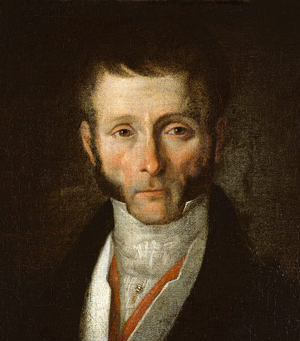
Joseph Fouché
Minister of Police, Duke of Otranto, president of the provisional government (1815)
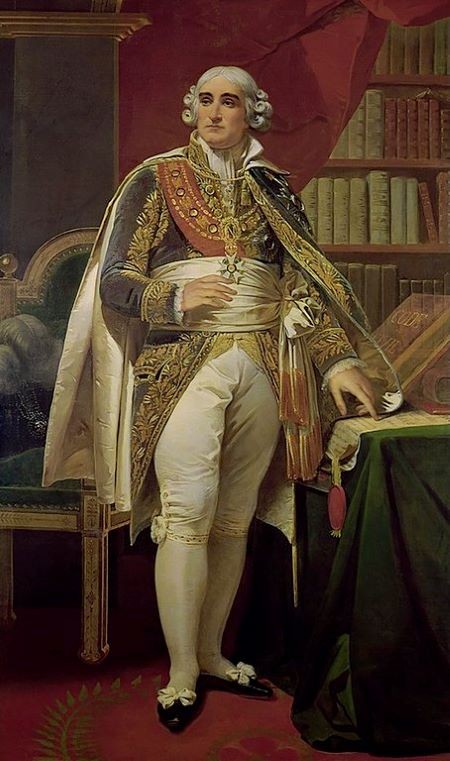
Jean-Jacques Régis de Cambacérès
Second Consul, Archchancellor of the Empire, principal architect of the Civil Code (1804)
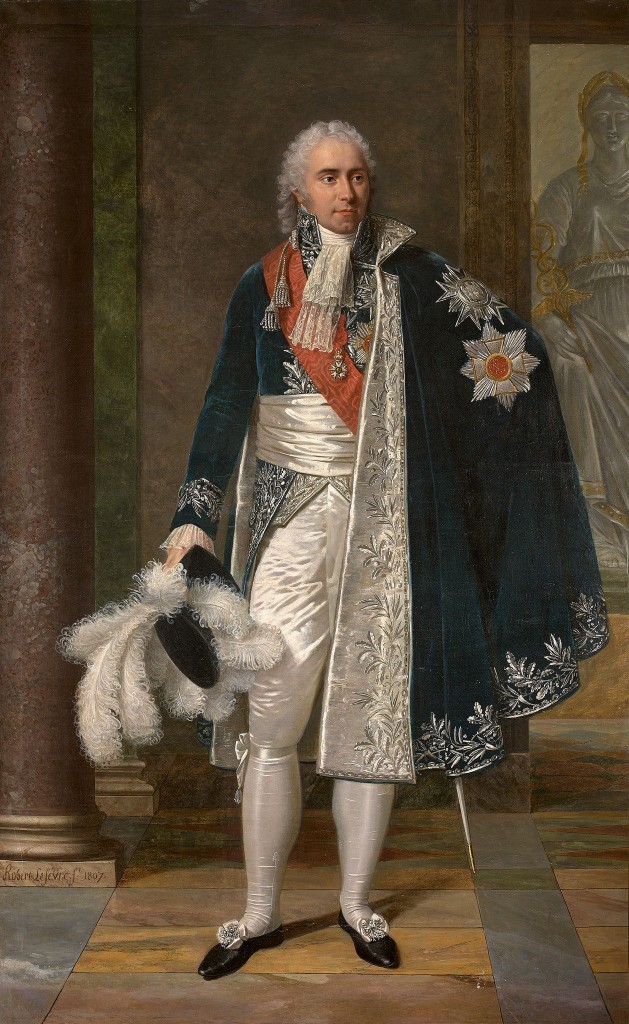
Hugues-Bernard Maret
Duke of Bassano, Secretary-General of the Government then Minister for Foreign Affairs and Secretary of State (1811–1813)
Go further
Recommended books to dig deeper (affiliate links)
Napoleon the Great
Andrew Roberts · 2014
A monumental biography drawing on Napoleon’s 33,000 surviving letters, admiring but rigorous.
See on Amazon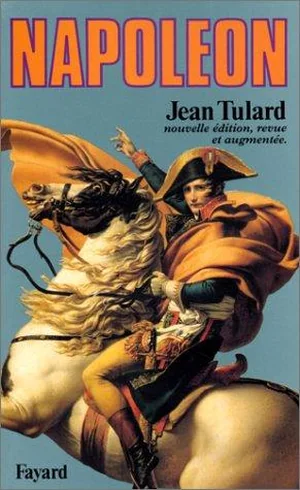
Napoléon ou le mythe du sauveur
Jean Tulard · 1977
The book that reshaped how the man is read: how France gave itself a saviour, and what it cost.
See on Amazon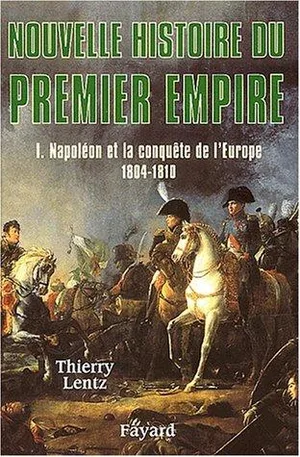
Nouvelle histoire du Premier Empire
Thierry Lentz · 2002-2010
Four reference volumes on institutions, diplomacy and collapse: the scholarly synthesis of the subject.
See on AmazonAs an Amazon Associate, this site earns from qualifying purchases.
Support the encyclopedia
Napoleon Empire is an independent project. Your contribution helps grow the content and keep the site running.
DonateSecure payment on the platform you choose.