Origins: inheritance of grenadier companies
The grenadier company dates to the Old Regime: traditionally placed on the battalion's right flank, it gathered the sturdiest soldiers for the hardest tasks — breaching assaults, river crossings, hand-grenade throwing recalled by the emblem of the flaming bomb.
The Revolution and Consulate kept this tradition within the new organisation of demi-brigades then regiments. The 1803 infantry decree confirmed one grenadier company per line battalion, distinct from fusiliers and, after 1805, complemented by a voltigeur company on the other flank.
These grenadiers were not a separate arm: they remained organically tied to their regiment, bore its number and defended its eagle. Their prestige came from selection and tactical role, not institutional status comparable to the Imperial Guard.
Organisation within the battalion
Each battalion fielded in principle four fusilier companies, one grenadier company and one voltigeur company. Grenadiers formed the battalion commander's immediate shock reserve: called when the line must pierce or carry a position.
Selection followed physical and moral criteria: height, seniority, proven bravery. Regulations and custom wanted men able to sustain assault-column pace and hold the front rank in attacks.
At regimental scale, grenadiers from each battalion could be temporarily merged into a grenadier battalion for a given operation — common practice before a decisive battle, concentrating elite without permanently removing them from parent units.
This tactical flexibility distinguished line grenadiers from permanent Guard corps: they belonged first to their line regiment, and only occasionally to provisional elite formations.
Uniform, headgear and tactical role
The line grenadier was marked by headgear: the bearskin (bonnet à poil) was the most visible badge, though periods and regulations sometimes imposed shako with plume or cord. The coat remained the regiment's — blue with white lapels in principle — with flaming-grenade insignia on shako or plate.
The short sabre often completed equipment, sign of an elite company. In the field the tall bearskin silhouette made the grenadier recognisable in smoke — an asset for command, a target for the enemy.
Tactically, grenadiers led assault columns, held captured strongpoints, reinforced sectors where the line wavered. They did not skirmish like voltigeurs: their trade was mass and impact at close quarters.
Austerlitz, Jena, Wagram, Borodino and Waterloo
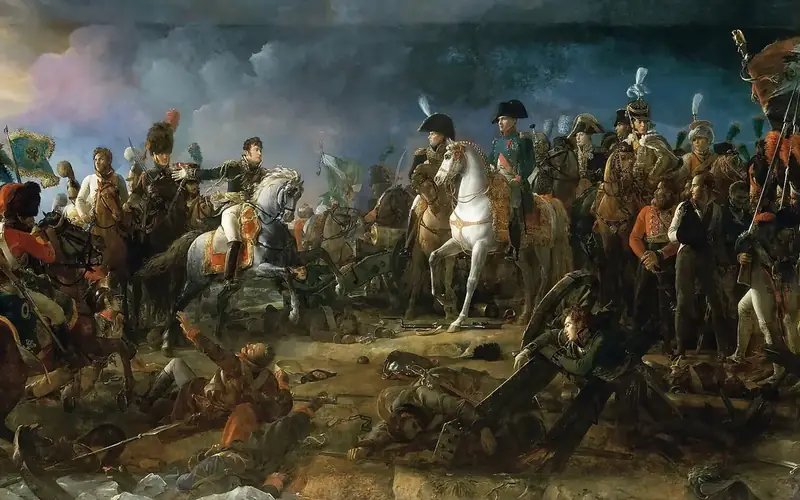
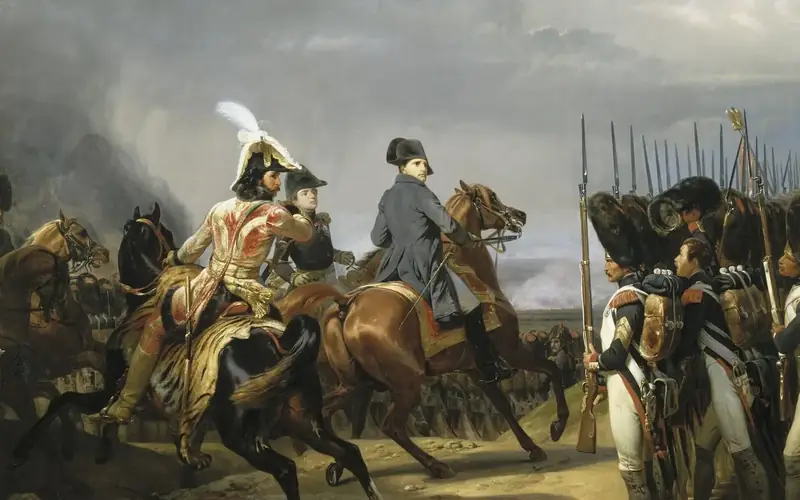
At Austerlitz (2 December 1805) grenadier companies of Soult's regiments took part in the climb to the Pratzen Heights and fighting that broke the Allied centre. Their place at the column head illustrated elite shock role in the decisive manoeuvre.
In 1806 at Jena (14 October) line grenadiers backed the methodical advance of French divisions against the routed Prussian army. Their endurance on rapid campaign marches often preceded engagement in villages and heights.
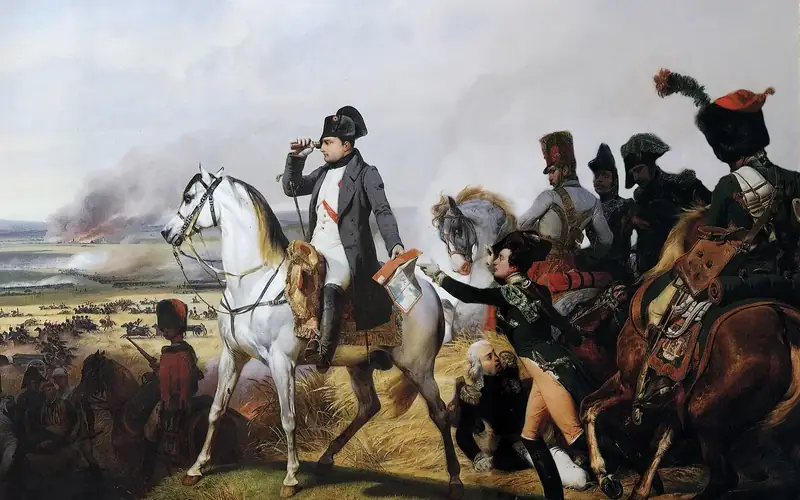
At Wagram (5–6 July 1809) the scale of conflict multiplied repeated assaults; grenadiers paid a bloody toll attacking Austrian positions. Davout and Ney, among others, commanded corps where these companies were regularly committed in the front line.
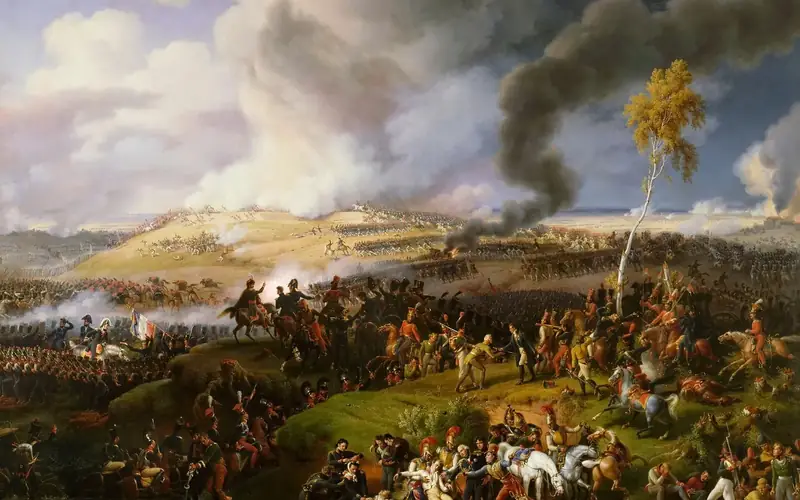
Borodino (7 September 1812) saw line grenadiers in assaults on Russian redoubts — notably around the Great Redoubt. Losses were heavy; decimated battalion shock elite could not be rebuilt in one campaign.
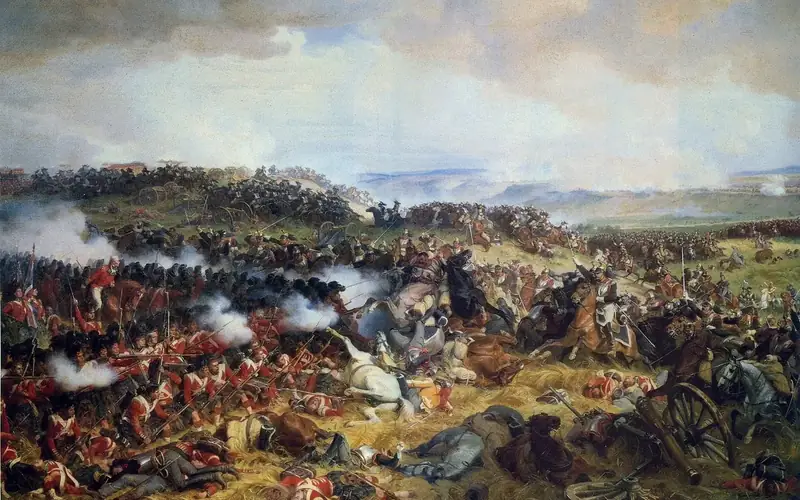
At Waterloo (18 June 1815) line grenadiers of engaged regiments supported attacks on Anglo-Allied positions — Hougoumont, La Haye Sainte farm, ridges held by Wellington. Distinct from Guard grenadiers who led the evening's last attack, they nonetheless formed the shock backbone of line infantry on the field.
Distinction from the Guard and legacy
Line grenadiers must be clearly distinguished from Imperial Guard foot grenadiers: the latter formed permanent regiments, recruited from the army's best soldiers, under the Emperor's direct authority. The former remained each line battalion's internal elite — less prestigious, but omnipresent.
The bearskin grenadier silhouette, inherited from the Old Regime and magnified by the Empire, fixed for the nineteenth century the image of elite foot soldiers. For Empire Napoléon this entry documents a typical company, not a numbered regiment: the invisible elite that, in each battalion, delivers shock where the line must hold or break through.