Origins and role
Light infantry regiments prolonged the traditions of Revolutionary foot chasseurs and light demi-brigades. Under the Empire they bore numbers distinct from the line and a reputation for agility — without becoming irregular troops.
Their usual missions: vanguard, rearguard, holding villages, woods and broken ground. Where the line sought rupture in mass, the light prepared, masked and delayed.
The Consulate and Empire unified equipment and doctrine, yet light esprit de corps remained: the soldier was expected to fight in open order as well as in close battalion.
Organisation
A light regiment organised battalions comparable to the line's, with chasseur companies (fusilier equivalent), carabiniers (shock elite, analogous to grenadiers) and voltigeurs.
Theoretical strengths matched the line's order of magnitude, but field employment more often dispersed companies. Attrition — forced marches, small actions — was frequent.
In an army corps, light regiments often headed the column or were detached to hold a strongpoint. They could also fight in line beside numbered "line" regiments.
Uniform and armament
Light uniform often differed in cut and colour details (shako, lace, piping) that varied by regulation and year. The popular image of the chasseur in a darker coat or distinctive ornaments partly matches this reality, without being uniform across the whole period.
The main weapon remained a Charleville 1777-type flintlock, sometimes with supply variants. Bayonet and cartridge pouch completed the kit; elite companies might carry the short sabre.
Training in individual fire and swarm movement (skirmishers) complemented battalion drill. That dual craft defined the arm's identity.
Tactics
Ahead of the line, detached companies formed a skirmish screen that fixed the enemy, forced batteries to reveal themselves and covered the columns' approach. Drum or bugle recall then regrouped the mass for assault or defence.
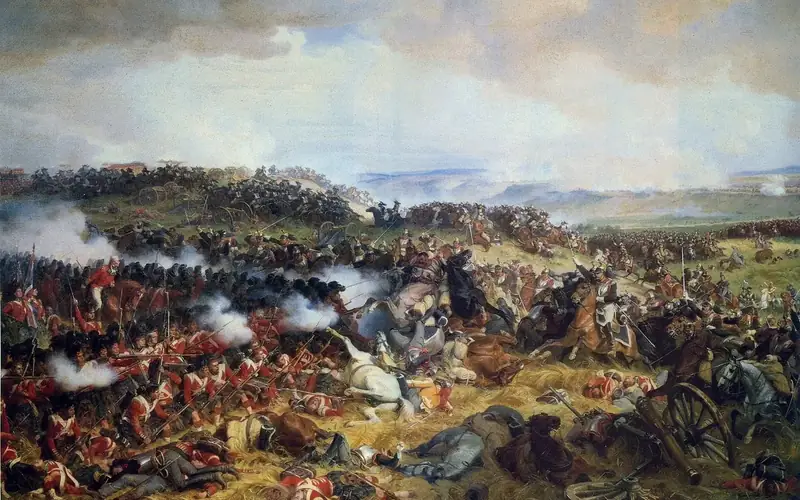
Against cavalry, light infantry formed square like the line. Against a fortified village, it often excelled in street and hedge fighting, where small-unit cohesion mattered more than open-field parade.
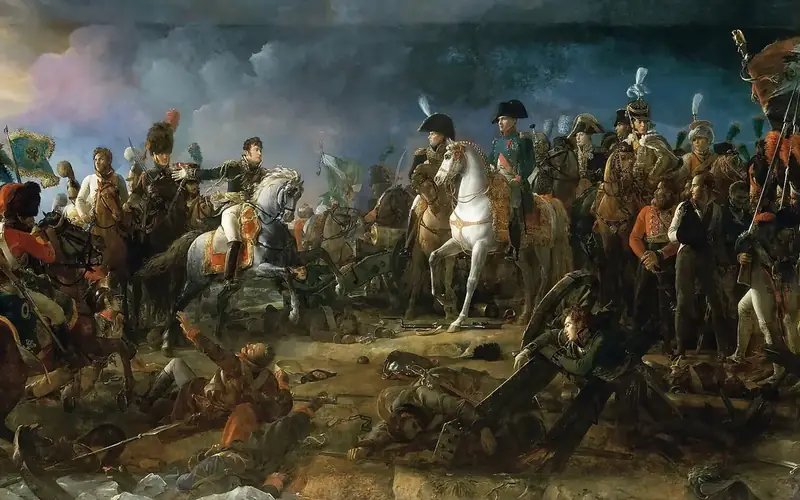
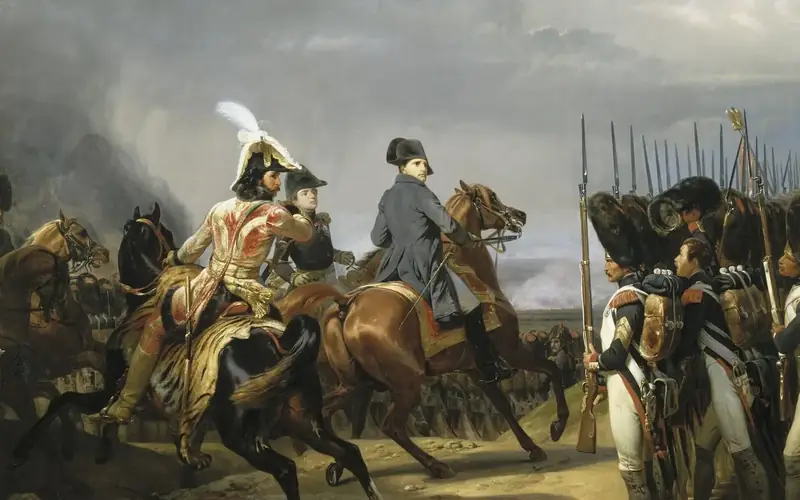
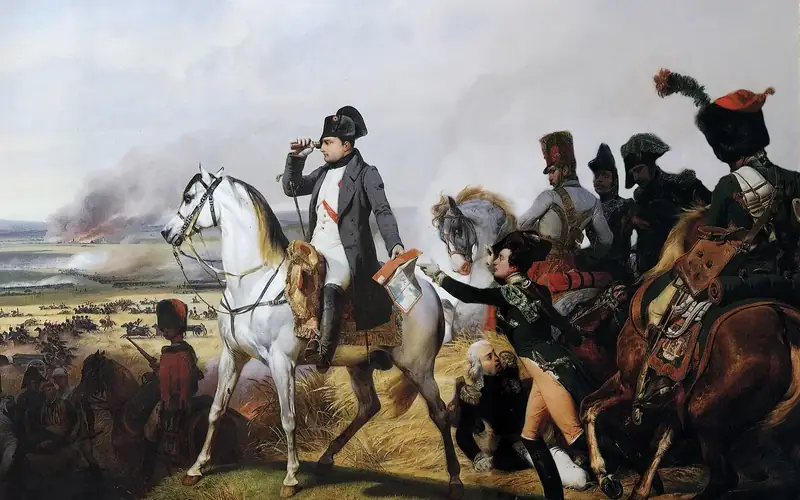
At Austerlitz, Jena and Wagram, light regiments took part in decisive manoeuvres by screening advance axes. Their role is less sung than the cuirassiers', yet bulletins and situation reports mention them constantly.
Battle honours
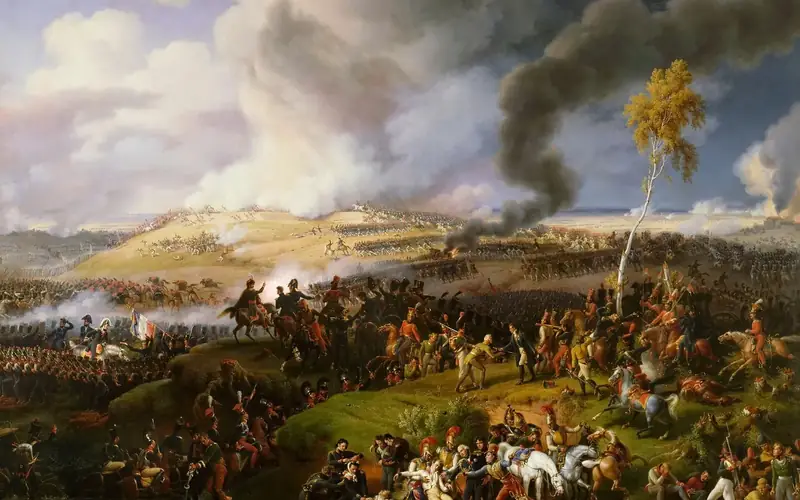
The German campaigns (1805-1809) offered the classic setting for light infantry: rapid marches, vanguard fights, seizure of villages. In Russia (1812), the same mobility was dearly paid in the retreat, where light rearguards often covered demoralised columns.
In Spain, partisan war and broken terrain both showcased and exhausted light qualities. Sieges and guerrilla fighting wore regiments as much as set-piece battles.
At Waterloo, French light infantry fought within the general order of battle; it alone could not offset the day's strategic rupture.
Legacy
Napoleonic light infantry influenced nineteenth-century European skirmisher doctrine. The idea that part of the infantry must fight in open order became a standard.
On this wiki it embodies the agile face of the Grande Armée: the arm that opens the road, holds the wood and prepares the shock of the line battalions.