Origins: from Polish legions to the Vistula Legion
At the start of the nineteenth century thousands of Poles already served in French armies: heirs of legions raised during Poland's partitions, they fought for a cause both French and national — restoration of a Polish state under Napoleon's aegis.
In February 1808 an imperial decree merged existing Polish units into a Vistula Legion (named after the Vistula river, symbol of Poland). The unit was integrated into the French army as line infantry, with its own colours, Polish officers and a cultural identity preserved in songs, uniforms and traditions.
The link with the national cause remained explicit: Polish soldiers saw service to Napoleon as a means to weigh on their homeland's fate. That ambivalence — fidelity to the tricolour and expectation of a sovereign Poland — runs through the legion's entire history.
Organisation and command
The Vistula Legion organised into regiments and battalions on French standards, with Polish cadres often trained in Imperial military schools or drawn from emigration. Strength varied by campaign: reinforcements, losses and incorporations altered figures year by year.
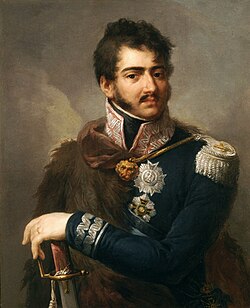
Prince Józef Poniatowski, nephew of Poland's last king Stanisław August, gradually became the leading figure of Poles in French service. Napoleon entrusted him with growing responsibilities; the legion benefited from this princely protection while remaining subordinate to Imperial hierarchy.
In 1809 during the Austrian campaign, legion elements took part in Danube operations. Polish presence in that theatre reinforced the political message: the Empire's allies also came from nations aspiring to independence.
The legion was not an autonomous army corps in the Napoleonic sense: it was detached, brigaded, integrated into divisions according to operational needs.
Uniform, identity and role
Vistula soldiers wore French line infantry uniform — blue coat, shako — with distinctions recalling Polish origin: headgear, belts, sometimes inscriptions or eagles in Polish style. Colours mixed French symbols and Polish legion heritage.
Their tactical role was ordinary line infantry: assault columns, firing lines, sieges. In Spain they met a war of attrition very different from Central Europe's great battles — guerrilla, ambushes, isolated garrisons.
Polish fidelity showed in endurance: despite losses and unkept promises on Poland, Vistula regiments remained largely loyal to France until the Empire's fall.
Wagram and the Russian campaign
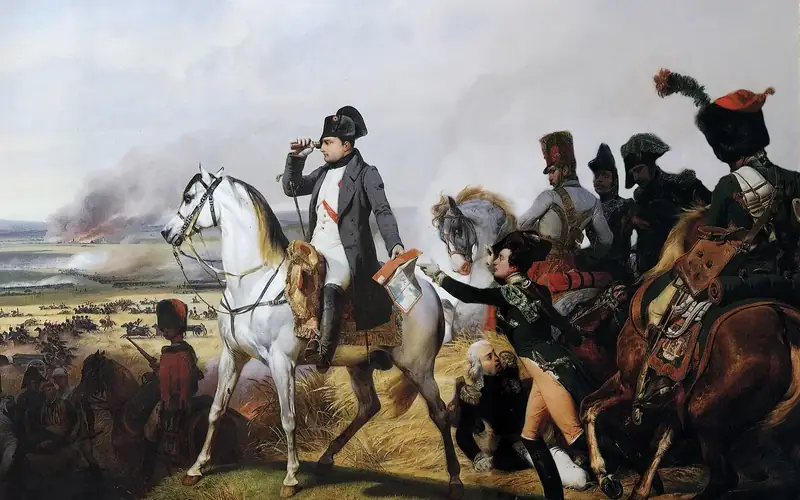
At Wagram (5–6 July 1809) Vistula Legion battalions were engaged in the decisive battle against Austria. Their conduct reinforced Polish troops' reputation: discipline under fire, tenacity in assaults.
The 1812 Russian campaign placed Poles at the expedition's heart — country crossed, hopes revived then disappointed. Legion elements marched with the Grande Armée; Poniatowski received command of V Corps, the only predominantly non-French corps of the 1812 Grande Armée.
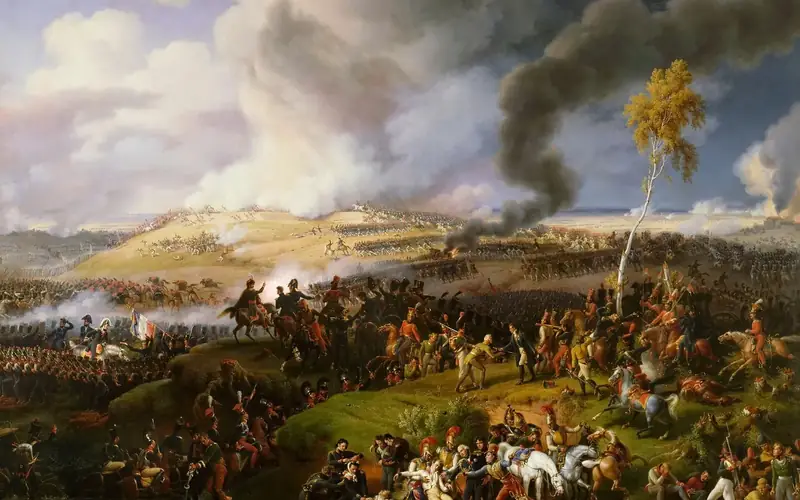
At Borodino (7 September 1812) Polish troops of Poniatowski's corps fought on the French army's right wing against Russian positions. Losses were heavy; the retreat that followed destroyed much of the strength built over years of service.
Survivors recrossing the Niemen in December 1812 were only a fraction of battalions that had left in spring. The legion had paid in blood for a campaign that did not restore Poland to its soldiers.
Legacy and Polish memory
In 1813–1814 the Vistula Legion's remnants followed the Empire's decline. The Congress of Vienna did not restore Poland; Vistula veterans entered memory both French and national — heroes of the Empire, martyrs of an unfulfilled cause.
For Empire Napoléon this entry links Poniatowski to Wagram and Borodino: two trials where Poles served France hoping to serve Poland, and where the legion's fidelity held until final collapse.