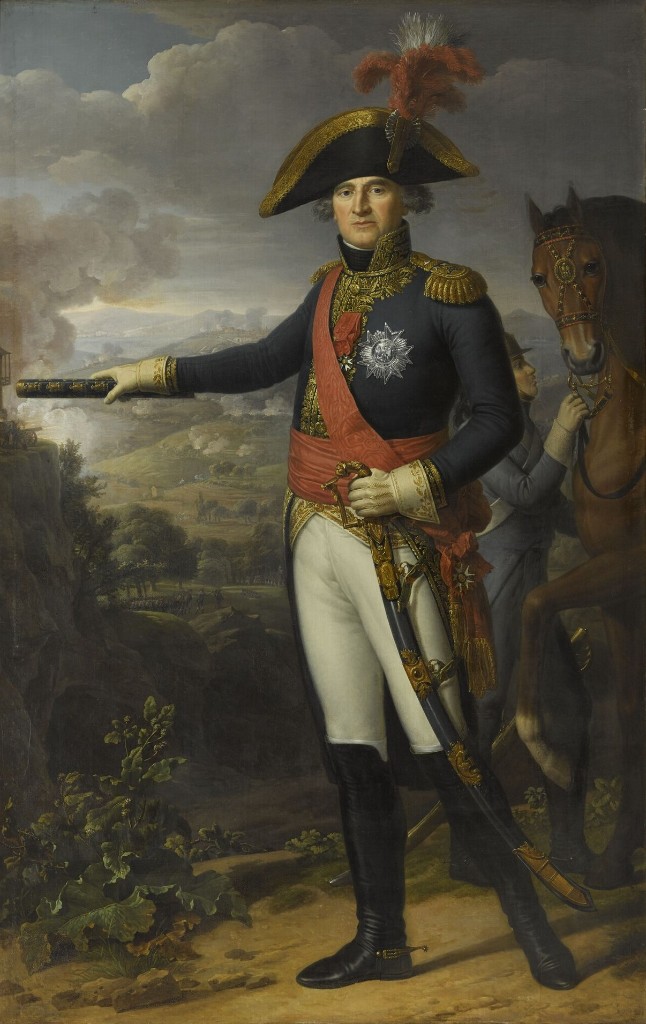
Jean-Mathieu-Philibert Sérurier (8 December 1742-21 December 1819), born at Laon in petty nobility tied to the royal stud farms and the robe, embodies the Ancien Régime officer who entered the Revolution through line regiments and rose, via the Army of Italy, to trusted lieutenant of Bonaparte without ever stealing the limelight from a Masséna or an Augereau. Some forty years of slow promotion — Seven Years' War, Corsican campaign, wounds and unanswered memorials to the ministry — forged the rigid figure historians liken to the pre-1789 « major » whom Napoleon, in the Memorial of Saint Helena, praised for Mondovi, the Siege of Mantua, Wurmser's surrender and the honourable mission of carrying captured flags to the Directory, while noting less dash than in others yet greater political morality. The 1796-1797 campaign gave him Mondovi, the investment of Mantua, blocking Provera after Rivoli, then the ambiguous glory of the Venetian governorship where he had to execute pitiless evacuation of a city given over to institutional plunder without enriching himself — source of the ironic, admiring nickname « Virgin of Italy ». The War of the Second Coalition broke that rise: Magnano, Cassano, isolation at Verderio and capitulation after resistance Austrian reports called desperate; meeting with Suvorov, parole not to fight the Coalition again, return to Paris where Moreau at first blamed rigid execution. The 18 Brumaire found him won over by Bonaparte rather than enthusiastic; senator from December 1799, vice-president of the Senate, governor of the Invalides in April 1803, he received in May 1804 the baton of Marshal of the Empire as honorary rank — the face of the veteran assigned to arms' memory rather than German or Spanish plains. The national Hôtel became his stage: ceremonies for the Legion of Honour, reception of Pius VII, deposit of hearts of Vauban, Lannes, Éblé and Lariboisière, Frederick II's sword, 1811 decree extending his powers. On 30 March 1814, as guns of the Battle of Paris thundered, he had some fifteen hundred captured colours gathered and burned in the courtyard so they would not fall to the Coalition — extreme gesture of trophy-keeper as much as soldier loyal to a belated order. Under the Restoration he voted the Emperor's deposition, accepted the peerage, returned briefly during the Hundred Days without military stake, was relieved of the governorship late 1815, voted death at Ney's trial, regained titles and pay in his last years. He died rue Duphot in 1819; buried in Père Lachaise, he would symbolically rejoin the Invalides in 1847. For Empire Napoléon Sérurier sums the hinge between the Republic of Italian campaigns and the regime of civil honours, between divisional probity and administration of a living necropolis.
Laon, Champagne Cadet, and Slow Advance under the Ancien Régime
Jean Mathieu Philibert Sérurier was born on 8 December 1742 at Laon, in a household where royal service — stud farms, municipal offices, robe alliances — tightly mixed honour and slender fortune: the young man took not Parisian salons' shortcut but provincial militias and infantry regiments, lieutenant's brevet at Laon militia in 1755, passage through Soissons, first campaigns on the Lower Rhine and a bayonet wound near Ruremonde.
The Seven Years' War took him to Germany in Broglie's corps; at Warburg a shot to the jaw left a scar portraits and memoirs tied to his stern air. Lieutenant in 1762, Portugal without special glory, demotions and instructor years further slowed a career already stifled by swollen royal staffs.
Corsica from 1770 to 1774 under Marbeuf taught war against rebel islanders; back in metropolitan France, captain only in 1778, Saint-Louis cross in 1781, he struggled for the major's rank the ministry denied despite colonels' support — classic symptom of an army where birth and intrigue counted as much as fire seniority.
Major in the Médoc Regiment on 17 March 1789, after a retirement request from « disgust » at blocks, he entered the Revolution as lieutenant-colonel then colonel of the 70th Line: Perpignan episodes, foiled Spanish plot, aristocrat suspicion, dismissal then reinstatement, 1793 column on Authion show a man capable of frontal courage yet ill at ease in camps' political violence.
Noticed by Barras, he became brigadier general in the Army of Italy in June 1793; 1794 operations on the cols, Saorge, Colle del Finestre, then promotion to divisional general in December 1794 fixed him on the Alpine theatre where Kellermann, Dumerbion, Schérer and soon Bonaparte would succeed one another.
For Empire Napoléon this first third of life explains the age and style gap that would strike Masséna or Marmont when the 1796 commander-in-chief lined up often much younger divisional generals: Sérurier brought slow maturation of Louis XV's wars to the accelerated tempo of the Republic in arms.
1796-1797: Mondovi, Mantua, and the Manoeuvre around Rivoli
On 27 March 1796 Bonaparte took the Army of Italy: Sérurier, fifty-three, considered retirement, met the commander-in-chief, stayed. The campaign from Montenotte to Mondovi saw his division break the Sardinians after partial failure at San Michele; Marmont described the old general at the head of the centre column, sword high, spectacle of energy revived by the enemy.
The Armistice of Cherasco took Piedmont out of the coalition; on the Mincio, Borghetto then the Siege of Mantua kept Sérurier busy until Wurmser's push forced momentary lifting of the siege and withdrawal behind the Oglio. Malaria laid him low in France during Castiglione; Bonaparte noted confidentially: he fights as a soldier, is firm, steals not, but trusts his men too little and is ill.
Recovered, he resumed the siege in December 1796; on 14-15 January 1797 Rivoli crushed Alvinczi while under the walls Provera tried to link up. At La Favorite Sérurier with fifteen hundred men blocked the Austrian push; on 16 January Provera surrendered with thousands of prisoners and guns. Wurmser negotiated Mantua's capitulation on 2 February: scene where the Austrian marshal passed before the victor, moment fixed by period painting as much as Napoleonic legend.
The 1797 campaign on the Adige and Isonzo saw the 3rd Division hold the right wing, take Gradisca by turning movement, join pursuit to the Treaty of Leoben. In June Bonaparte entrusted Sérurier with twenty-two flags delivered to the Directory and wrote a letter of praise mixing talent, bravery, patriotism, severity toward self and others, contempt for intrigue — portrait of a usable republican against incivism suspicions.
On 18 October 1797 Sérurier was named governor of Venice to execute Venetian partition: supplies, munitions, art, contributions — the city underwent systematic levy population and Austrians denounced; the general, without proven personal enrichment, tried to curb excesses, sold arsenal salt and biscuits to pay his troops, and crystallised contrast with Masséna or Augereau.
For Empire Napoléon this block sums the double face of Bonapartist Italy: tactical glory in the field and administrative violence on sister republics, with Sérurier as figure of relative integrity amid predators.
1798-1799: Lucca, Magnano, Cassano, and Captivity at Verderio
In 1798 the « Army of England » and inspection of interior troops pulled Sérurier from Italy before sending him back under Joubert then Schérer: Lucca was occupied, contributions imposed, sister republic proclaimed in January 1799 on a Directory-imposed model — the general drafted the local constitution and named executives, mixing soldier and legislator of circumstance.
The War of the Second Coalition opened badly: at Verona late March 1799 Sérurier retook Rivoli Veronese then suffered defeat at Parona against a superior Austrian corps; at Magnano on 5 April his left advanced at Villafranca but collapse of the rest of the front imposed retreat with heavy losses in men, guns and colours.
Late April the army fell back on the Adda; Moreau replaced Schérer on the morning of the 27th, the very day of Cassano. Fighting at Trezzo and Cassano scattered French corps; Sérurier, isolated between Brivio and Trezzo without clear orders from headquarters, withdrew to Verderio with a few thousand men. Vukassovich encircled the position; short of ammunition, Sérurier capitulated on the evening of 28 April. Austrian losses remained high — witness to defensive fighting's hardness.
Taken to Milan he was received by Suvorov who returned his sword and authorised return to France on condition of non-combat until peace; the reply attributed to Sérurier on serving the sword « for the country's defence » feeds light theatre of generals' courtesy between coalitions.
Back in Paris, marginalised by the Directory, he nursed grudge against the regime; on 26 October 1799 Bonaparte, freshly back from Egypt, invited him, laid out the Brumaire project and brought him to active neutrality: troops camped at Point-du-Jour, speech to soldiers per one tradition, silence or restraint per another. On 27 December 1799 the new power made him senator — political reward of an alliance of circumstance.
For Empire Napoléon Verderio remains the counterpoint to Mantua: same honest divisional general, but caught in Italy's 1799 rout, victim of delayed orders and enemy superiority, symbol of limits of an officer trained to slow advance when Suvorov imposed Russo-Austrian manoeuvre's pace.
Consulate and Empire: Senate, Invalides, Honorary Marshal, and Ceremony
Elected senator, Sérurier climbed honour posts: Senate vice-presidency in 1802, « praetor » functions, border commissions with Liguria in 1803. On 23 April 1803 he was named governor of the Invalides — a post he held until the first abdication, aside from later political interruptions. The institution concentrated veterans, hospital, nascent trophy museum, rites of the nation in arms.
On 19 May 1804 he became « honorary » Marshal of the Empire, beside Kellermann, Lefebvre and Pérignon: the message was clear, operational glory went to others, stability of symbols to those who had borne the Republic on their scarred shoulders. At the 2 December coronation he carried Joséphine's ring — protocol place inscribing him in imperial domesticity as much as military hierarchy.
Grand Eagle of the Legion of Honour, Iron Crown, Count of the Empire in May 1808 with German dotations, he missed the Duke of Mondovi title court considered then withdrew — Jourquin stresses Verderio's weight in that decision, capitulation readable as want of initiative to courtiers' eyes.
Conscientious administrator yet sometimes discouraged — he pondered resignation in 1806 — he secured adoption in 1811 of a decree strengthening his powers and fixing the Hôtel's resources at six millions: attempt to embody authority long bypassed by ministry bureaux.
Ceremonies punctuated his mandate: Legionnaire oaths, Napoleon's 1808 visit to the infirmary (painting with Sérurier in foreground), reception of German sovereigns, solemn deposit of marshals' hearts and Frederick II's sword — Invalides courtyard as theatre of military memory from Louis XIV to Empire.
For Empire Napoléon this chapter turns the Italian divisional general into guardian of symbolic patrimony: less staff maps than display cases where the regime asserted continuity with French military monarchy.
1814-1815: Burning Trophies, Restoration, Hundred Days, and Political Epilogue
In 1809 the English threat on Walcheren earned Sérurier the honour title of commander of Paris National Guard; in March 1814 capital defence Moncey bore real effort, yet Sérurier remained at the heart of the military collections dilemma. From February he questioned Clarke on the flags' fate; the answer referred to imperial orders that never came.
On 30 March, guns on Paris, Clarke urged « conservation » of the Hôtel's treasures; at nine in the evening order was given to gather some fifteen hundred colours in the courtyard and burn them. Sérurier, staff and invalids attended; ashes went to the Seine. The act was both strategic vandalism and fidelity to a France refusing to hand over its trophies — it would mark iconography (Dujardin after Defrenne) as much as memoirs.
On 3 April 1814 the Senate voted Napoleon's deposition; Sérurier followed notables' majority shifting to Louis XVIII, accepted peerage on 4 June 1814 and kept the governorship. The Hundred Days saw him rally the Emperor but without operational role, present at the Champ de Mai as silent witness of colours' brief return.
The Second Restoration put him on reform pay and relieved him of the Invalides on 27 December 1815 in favour of Duke of Coigny; peerage remained. As peer he voted death at Marshal Ney's trial — hard line inscribing him in Bourbon legalist camp as much as in 1815's satirical « weathercock » dictionary.
Grand Cross of Saint-Louis September 1818, restoration of Marshal of France pay 1 January 1819, he ended in cold respectability, far from 1793 passions yet not without institutional weight.
For Empire Napoléon the 1814-1815 sequence shows a man who sacrificed objects to save an idea of the nation in arms, then sacrificed persons in the name of restored order: moral coherence is not given, yet constancy of institutions' servant is.
Death at Père Lachaise, Transfer to the Invalides, and Posterity
On 21 December 1819 Sérurier died of a cerebral attack rue Duphot; funerals on 24 December took place in Père Lachaise Cemetery — division where Restoration filed military notables outside royal dome princely tombs. Soult and Pamphile de Lacroix gave eulogies; the widow, without notable fortune, would seek a pension.
In 1847 remains were transferred to the Invalides, symbolically closing the cycle: the man who had watched over the Hôtel rests under the same roof as the glories he had maintained, while Laon statuary (1863) and Paris boulevard named for him (1864) inscribe the marshal in Second Empire commemorative urban geography.
Name carved on the Arc de Triomphe (pier 24) ties Sérurier to official list of generals celebrated by post-Napoleonic regime; nineteenth-century guidebooks likewise exploited the anecdote of burned flags as moment of patriotic pathos.
Marmont described him honest, disinterested, man of duty; the imperial Memorial opposed his morality to other Italians' greed. Work by Tuetey, Banc or Phipps nuances: good captain, reliable divisional in subordinate role, less at ease when initiative alone could save a pocket at Verderio — portrait of limits as much as talent.
For Empire Napoléon memory of Sérurier links Laon's citizen-soldier to Bourbon peer, Mantua siege to colours' fire: a life not held in one heroic legend but in several contradictory registers where probity and obedience weigh as much as missing dazzle of late imperial battles.
Discover other characters
Napoleon Bonaparte
Emperor of the French
François Christophe Kellermann
Marshal of the Empire, Duke of Valmy
Dominique-Catherine de Pérignon
Marshal of the Empire, Count then Duke of Grand-Fayt
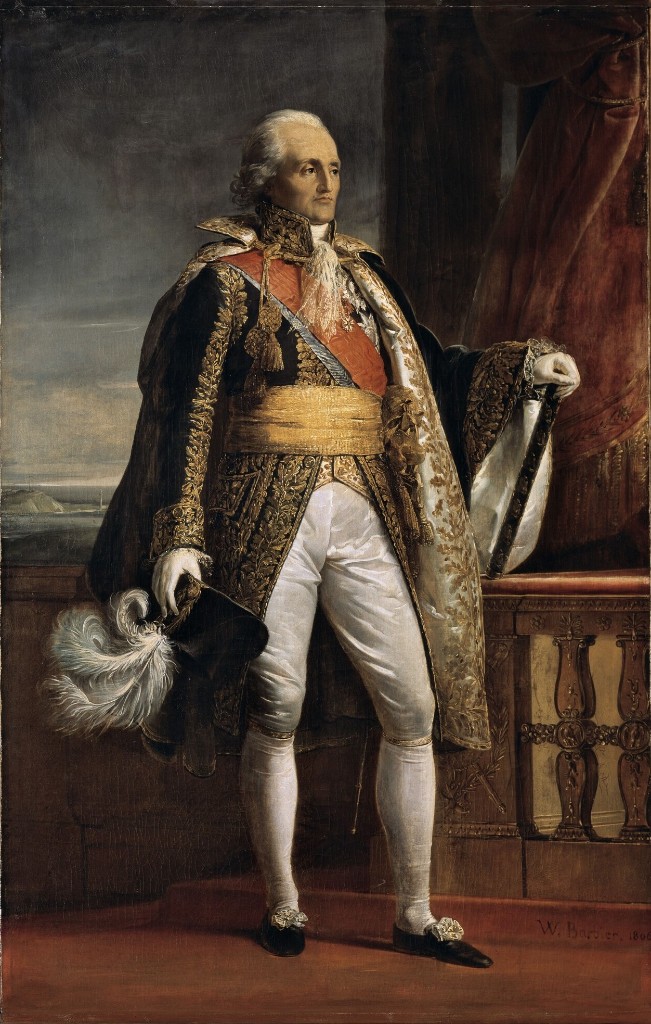
Bon-Adrien Jannot de Moncey
Marshal of the Empire, Duke of Conegliano
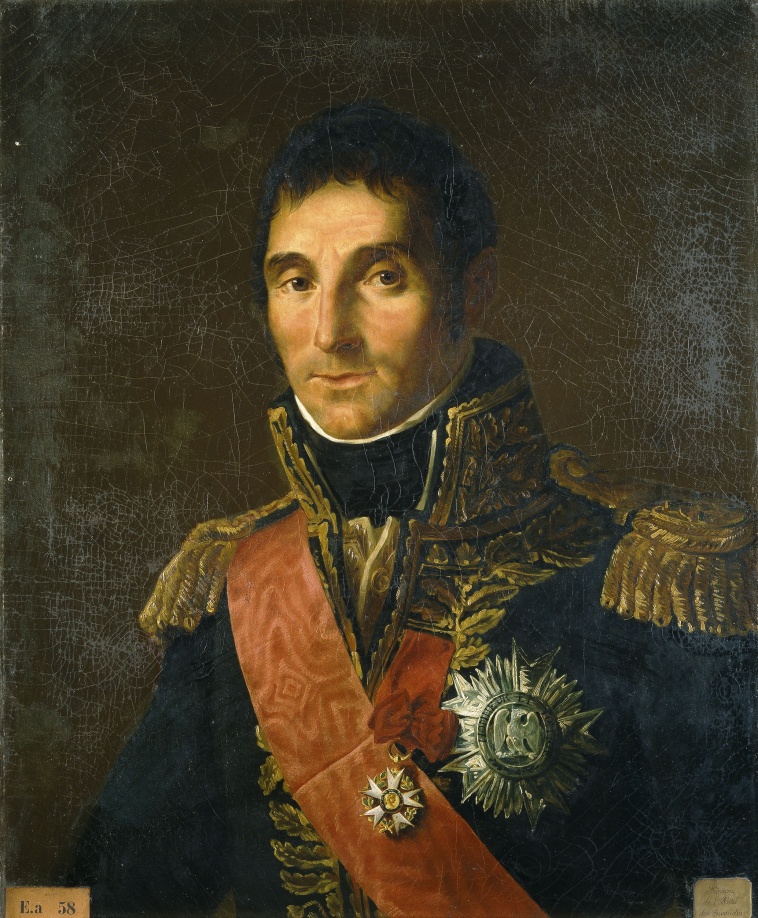
André Masséna
Marshal of the Empire, Prince of Essling
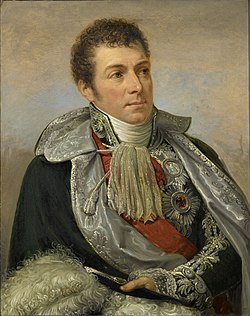
Louis-Alexandre Berthier
Marshal of the Empire, Prince of Neuchâtel and of Wagram, major-general of the Grande Armée (1805–1814)
Go further
Recommended books to dig deeper (affiliate links)

Napoleon the Great
Andrew Roberts · 2014
A monumental biography drawing on Napoleon’s 33,000 surviving letters, admiring but rigorous.
See on Amazon
Napoléon ou le mythe du sauveur
Jean Tulard · 1977
The book that reshaped how the man is read: how France gave itself a saviour, and what it cost.
See on Amazon
Nouvelle histoire du Premier Empire
Thierry Lentz · 2002-2010
Four reference volumes on institutions, diplomacy and collapse: the scholarly synthesis of the subject.
See on AmazonAs an Amazon Associate, this site earns from qualifying purchases.
Support the encyclopedia
Napoleon Empire is an independent project. Your contribution helps grow the content and keep the site running.
DonateSecure payment on the platform you choose.