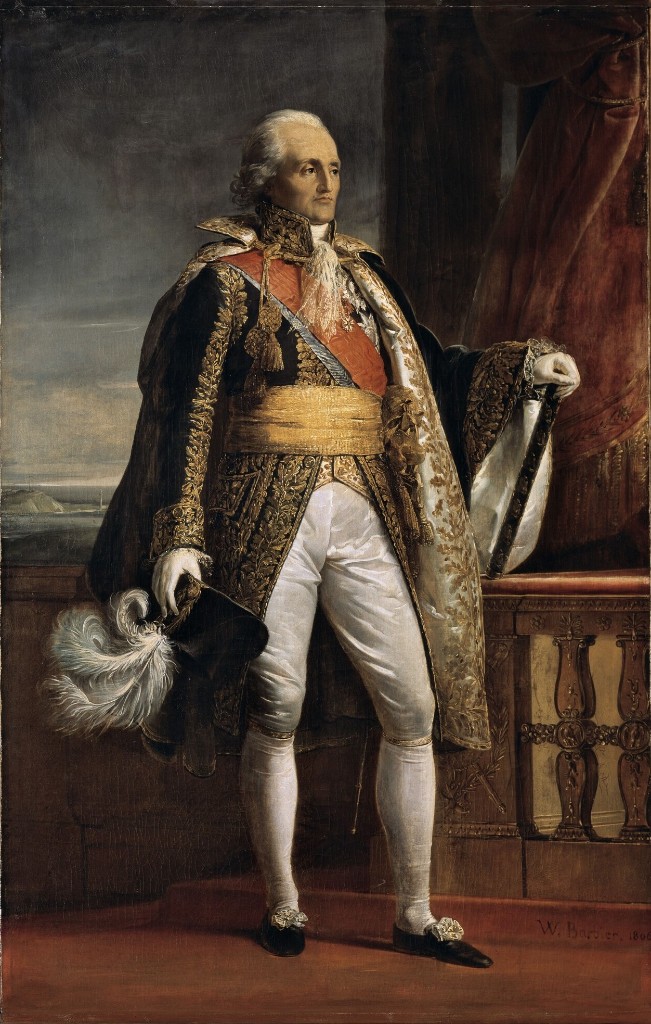
Bon-Adrien Jannot, later styling himself « de Moncey » from his Doubs birthplace (1754-1842), embodies the continuity of a French military career spanning Louis XV, the Revolution, the Directory, the Consulate, the Empire, both Restorations and the July Monarchy. A king's soldier as a boy, he rose through republican ranks amid the turmoil of the west, the Rhine and Helvetic fronts, then Flanders and Holland where in 1799 he played a notable part against the Anglo-Russian expedition. On 19 May 1804 Napoleon counted him among the first eighteen Marshals of the Empire: honour owed to a whole life of service more than to one plain celebrated in bulletins. The Duke of Conegliano title (1808) tied his name to an Italian victory of the 1800 campaign rather than to the great imperial battles where others stole the limelight. Under the Empire he chiefly held inspections, garrisons and internal military police — thankless roles sometimes caricatured as « cabinet marshal ». In March 1814, however, he moved to the fore: tasked with defending Paris's outer barriers with a composite force in which the National Guard mattered decisively, he gave the capital a spasm of military honour on the eve of abdication. Under the Restoration his refusal to sit on the council of war set up to try Marshal Ney — in the phrase traditionally tied to his experience of some fifty « campaigns » set against a fellow marshal’s forty — fixed his moral reputation. Peer of France, inspector general of the National Guard, he died in 1842, buried under the Invalides dome among the glories of the French military state. For Empire Napoléon Moncey recalls that a marshal could weigh as much through holding institutions firm and refusing judicial theatre as through a cuirassier charge.
Moncey, the King’s Regiment, and the Revolutionary Turn
Bon-Adrien Jannot was born on 31 July 1754 at Moncey in the Doubs, son of an officer and of a family tied to law and service records — a milieu that knew court minutes as well as sub-lieutenant contracts. The youth entered the king's army very early: enlistment at fifteen in the infantry is often cited, first in the Royal Piedmont regiment, a spell in the Corsican regiment, apprenticeship in linear discipline, forced marches and the vocabulary of ranks the Revolution would soon deconstruct then rebuild.
The Ancien Régime taught him garrison patience and respect for chains of command; 1789 did not turn him into a barricade tribune, yet he was not among émigrés who fled at the first whisper of reform. Like many career officers without dazzling fortune, he steered between loyalty to military office and the need to choose campaigns where one could survive politically as well as physically.
The Revolution opened brutal social lifts: promotions under fire, suspicion of nobles, purges then recalls according to Thermidorian phases. Jannot rose captain, battalion chief, brigade general, then division general — not by Napoleonic dazzle on a bridge at Arcole, but through a string of thankless missions: interior, Vendée, theatres where one fought insurgents as much as line armies.
Historians stress the diversity of these postings: they forged a commander used to motley troops, broken communications, contradictory political aims. That profile partly explains why later the Directory and Consulate deemed him reliable when holding a department or restoring order without detonating municipalities.
By the late eighteenth century the name « Jannot » gained the particle « de Moncey », a patrimonial anchor distinguishing the general in an army where names changed fast and homonymies already complicated service rolls. It was not token aristocratisation: a signature bulletins and archives would keep for one of the last witnesses of the soldier-king turned Marshal of the Empire.
Helvetia, Flanders, and the 1799 Holland Campaign
Under the Directory Moncey — the name now usual — served on fronts that did not star consular bulletins but matched coalition Europe's political geography. Swiss operations and Helvetic margins exposed him to mountain war, difficult passes, junctions with Swiss or revolutionary allies whose loyalty owed as much to subsidies as to ideology.
The Republic, perpetually short of trained effectives, gave generals of the « 1792 generation » consolidation tasks: hold a riverbank, cover a retreat, stop two enemy columns joining. Moncey complied without chasing media glory; his correspondence, where it surfaces in archives, stresses supplies, bridges, caisson state — a commander's daily knowledge that battles won on paper are lost on muddy roads.
In 1799 the Netherlands campaign pitted Revolutionary France against an Anglo-Russian expedition landed in the north. Fighting around Castricum in October was the decisive episode: a French victory that forced the coalition to evacuate by sea. Moncey, leading a wing or a corps per staff sources, took part in the day that saved the Dutch line for Revolutionary France.
That victory lacks the mythic prestige of Arcole or Rivoli in later imagination; it still mattered in the career of a general the First Consul would soon see as a pillar of « continuity » armies — those holding ground while Bonaparte carried glory in Italy or Egypt.
Passage to the Consulate did not immediately change mission nature: inspections, interim commands, duties in the National Guard or reserves. Moncey embodied the officer posted where discipline must reassure the Ministry of War rather than impress ambassadors.
When the regime shifted toward Empire, promotion to Marshal of the Empire in 1804 looked like collective consecration of generals who had kept the Republic standing between 1792 and 1802. Moncey was not the darling of Napoleonic hunting tallies; he was the legitimate beneficiary of state logic mixing personal reward and political demonstration: the newborn Empire rooted in the Revolution as much as in Brumaire's coup.
Empire: Honours, Duchy of Conegliano, and « Shadow Marshal »
On 19 May 1804 senatus-consulte and imperial ceremonies installed eighteen marshals under the eagles of a new order. Moncey among them received the baton not for a recent spectacular victory but for the whole of revolutionary and consular service deemed irreproachable in state loyalty. That promotion integrated him into the military peer college from which Napoleon expected both the prestige of names and availability for thankless missions.
In 1808 the Duke of Conegliano title crowned older glory: it referred to the 1800 Italian campaign and French victory near Conegliano, an episode of pursuit after Marengo where place names served as currency for imperial noble titles. Moncey was not the only marshal whose grand-ducal duchy sounded Italian: the geography of Napoleonic honours reads like a map of conquered or hoped-for Europe.
Under the Empire Moncey's postings often kept him off the great manoeuvres of Austerlitz, Jena or Wagram. He supervised garrisons, took part in repression or internal order, inspected reserve corps — roles essential to the war machine but ill-suited to historians' canvases seeking heroic charges. Later legend, sometimes ironic, forged the « cabinet marshal » image; administrative reality was more prosaic: a veteran used where experience commanding several levels trumped D-day tactical daring.
1808 also showed Peninsular War risks for French generals' reputations: Dupont's capitulation at Bailén indirectly splashed the whole Iberian staff. Moncey bore no direct responsibility for that disaster; he still felt the suspicion around Iberian commands. His own passage in that theatre, limited in time by rotation phases, fit the logic of a war the Empire failed to normalise.
In 1813 instituting inspection general of the senatorial or reserve National Guard — per text wording — gave Moncey a strong symbolic role: organising mobilisation of citizen-soldiers in a France exhausted by successive levies. That post placed him at the heart of the pact between imperial state and local notables, between line army and volunteer battalions whose combat value ran from best to worst.
When coalitions crossed the Rhine after 1813 defeats, national territory defence became absolute priority. Moncey, by age and experience, embodied the country's military memory: one who had watched borders shift from 1792 to 1814 and knew the capital could become a battlefield like any other fortress.
March 1814: Clichy, Rosny, and Paris’s Last Stand
In March 1814 the coalition army invested the capital after a northern France campaign in which Napoleon had tried in vain to split numerically superior forces. Paris's fall was no distant hypothesis: a probability imperial government and Marshal Mortier among others tried to delay with outpost fighting and pre-armistice negotiation.
Joseph Bonaparte, then Lieutenant General of the Empire before the Legislative Corps, gave Moncey command of the Paris National Guard for defence of the outer barriers — a desperate mission given the balance of forces, yet crucial for army honour and the political show of popular resistance framed by military cadres.
On 30 March fighting at the Clichy barrier and Rosny park entered collective memory through narratives, engravings then canvases — notably Horace Vernet's, which fixed for history the image of the marshal surrounded by a motley contingent: students of the École polytechnique and veterinary school, ill-hardened National Guards, exhausted gunners, war wounded still able to hold a musket.
Moncey did not win the war that day; he won a respite and a story: those of a capital that did not surrender without showing military service was not line troops alone. Human losses, chaos of improvised barricades, confusion of orders between civil and military authorities make up a day whose details specialists still debate, but whose symbol dominates nineteenth-century French national narrative.
Napoleon's abdication, announced soon after, made these fights strategically secondary yet morally central: they let defenders say « we held » before bowing to the inevitable. Moncey emerged with the weathered face of the veteran who had obeyed to the end without illusion about the political outcome.
Restoration, Refusal to Judge Ney, and Burial at the Invalides
Bourbon Restorations reintegrated Moncey in the hierarchy of Marshals of France: titles, pensions, court or inspection roles by political phase. The Hundred Days briefly blurred lines of loyalty; Moncey did not star as a central figure of Napoleonic rallying, yet he was not struck by collective infamy on the king's second return.
In 1815 Marshal Ney's trial — Borodino hero turned traitor symbol for ultras — polarised French society. A marshal's military instance was to examine the case before the Chamber of Peers took over in a procedure mixing law, politics and symbolic revenge. Moncey refused to sit on the council of war: tradition credits him with a formula opposing his « fifty-two campaigns » to the impossibility of judging a fellow marshal who had fought some forty — figures to read as military memory rhetoric rather than exact accounting.
That refusal, whatever textual variants witnesses reported, raised Moncey to moral figure of the army: one placing trade solidarity above orders of the moment. Liberals and Bonapartists of the following century would use it as argument; ultra-royalists saw cowardice or complicity — partisan reading in the memory wars around Ney.
Peer of France, inspector general — or president by period — of the National Guard institution, Moncey pursued long public life under Restoration then July Monarchy. He became one of the last survivors of the 1804 marshal tableau, privileged witness of a military century beginning under Louis XV and ending under Louis-Philippe.
He died in Paris on 20 April 1842, aged eighty-seven. State funeral celebrated the Revolutionary soldier become Bourbon pillar without renouncing officer's oath. His body was buried in Saint-Louis Cathedral of the Invalides, under the dome neighbour to Napoleon I's tomb: funerary geography alone summarising the tangle of regimes and loyalties in nineteenth-century France.
Discover other characters
Napoleon Bonaparte
Emperor of the French
François Christophe Kellermann
Marshal of the Empire, Duke of Valmy
Jean-Mathieu-Philibert Sérurier
Marshal of the Empire, Count Sérurier
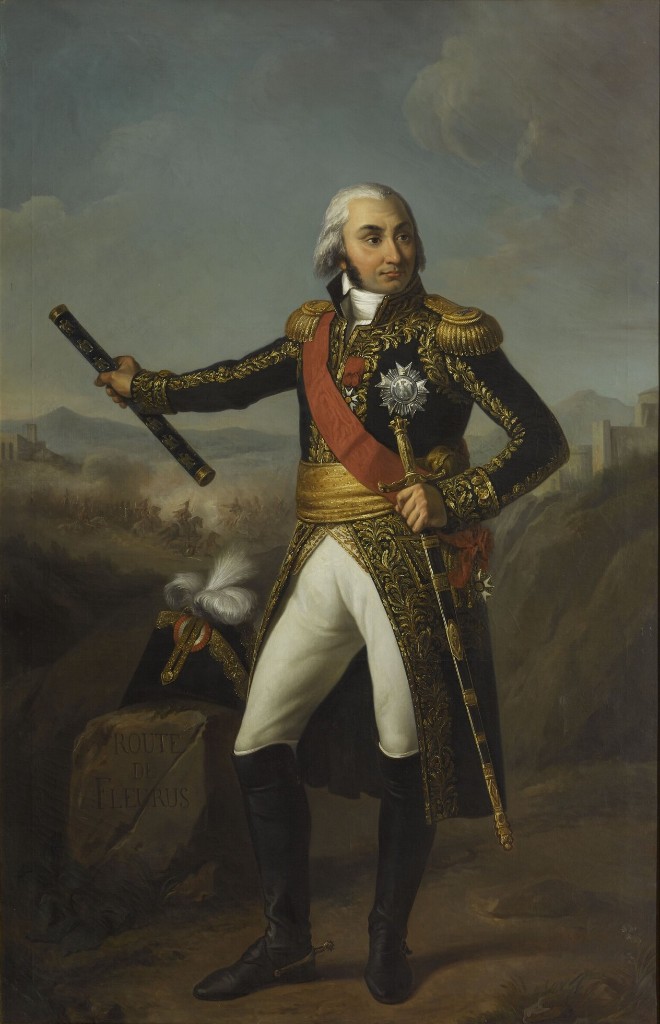
Jean-Baptiste Jourdan
Marshal of the Empire, Count Jourdan
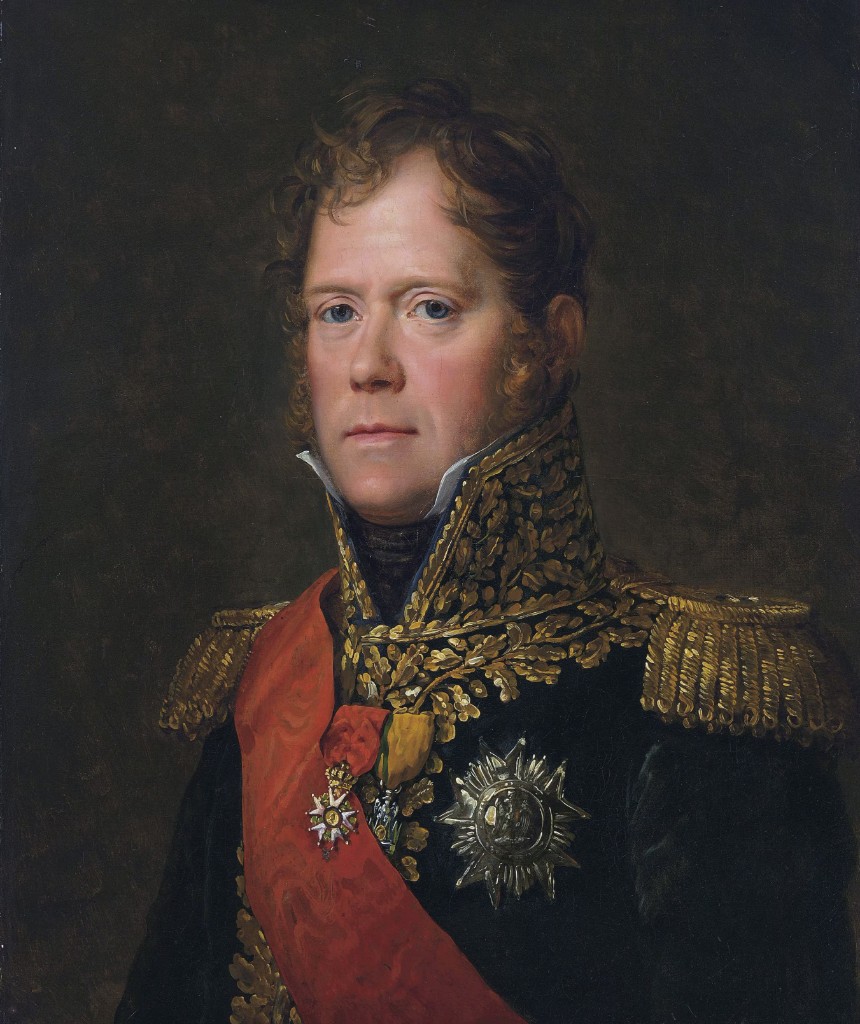
Michel Ney
Marshal of the Empire, Prince of the Moskova
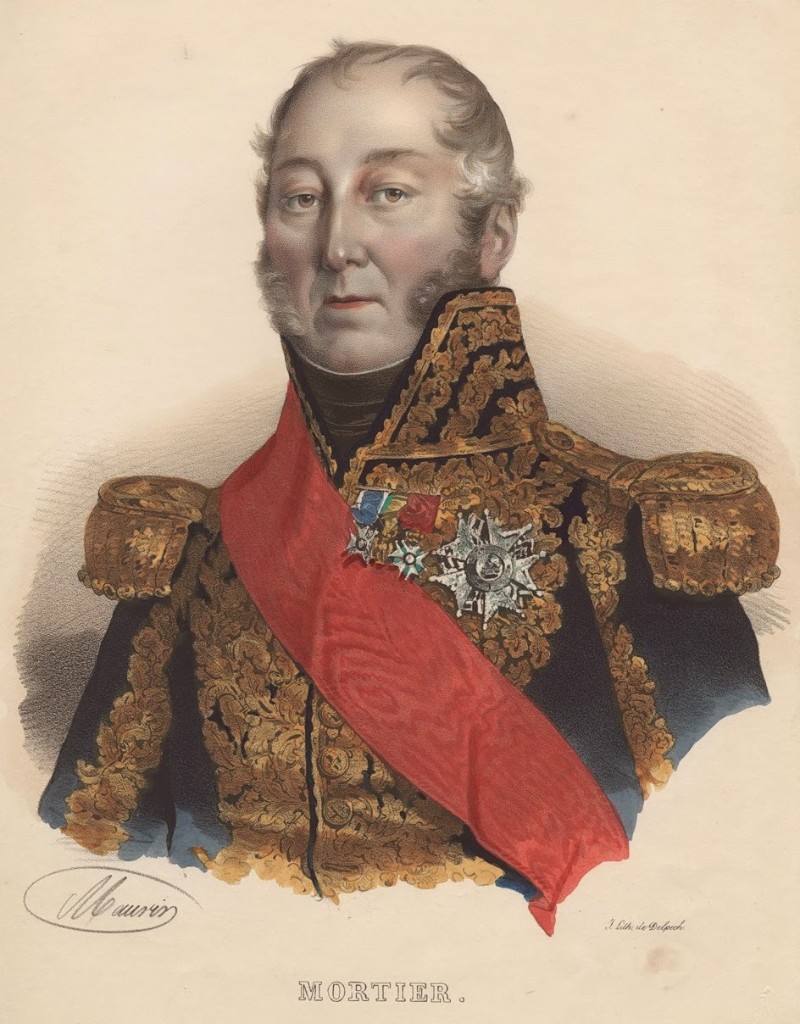
Édouard Mortier
Marshal of the Empire, Duke of Treviso
Go further
Recommended books to dig deeper (affiliate links)
Napoleon the Great
Andrew Roberts · 2014
A monumental biography drawing on Napoleon’s 33,000 surviving letters, admiring but rigorous.
See on Amazon
Napoléon ou le mythe du sauveur
Jean Tulard · 1977
The book that reshaped how the man is read: how France gave itself a saviour, and what it cost.
See on Amazon
Nouvelle histoire du Premier Empire
Thierry Lentz · 2002-2010
Four reference volumes on institutions, diplomacy and collapse: the scholarly synthesis of the subject.
See on AmazonAs an Amazon Associate, this site earns from qualifying purchases.
Support the encyclopedia
Napoleon Empire is an independent project. Your contribution helps grow the content and keep the site running.
DonateSecure payment on the platform you choose.