On 3 March 1814 the fortress of Soissons was surrendered to the allies without need. Blücher, trapped on the Aisne, found there the bridge that saved him — and doubled his army in forty-eight hours.
Historical context
The 1814 campaign was a race: with forty thousand men against three hundred thousand, Napoleon could only win by striking the enemy columns separately. In late February he had pushed Blücher north and pinned him against the Aisne, a wide river without fords. Only one fortress commanded a crossing: Soissons, held by a Polish and German garrison of the Confederation under General Moreau — a namesake of the victor of Hohenlinden, no relation.
On 3 March, summoned by Bülow's and Winzingerode's corps, Moreau capitulated and obtained the honours of war. The place was neither starved nor seriously bombarded. Next day Blücher crossed the Aisne on the Soissons bridge, joined the two northern corps and went from fifty thousand to over a hundred thousand men.
The balance tipped at once. Deprived of his prey, Napoleon had to attack an army twice his size: Craonne on 7 March, costly and indecisive, then Laon on the 9th and 10th, where he was clearly beaten. After Laon no manoeuvre was left; three weeks remained before the capitulation of Paris.
Imperial fury matched the stakes: a board of inquiry, arrest, trial. Moreau was acquitted in 1814 under the Restoration. Historians still debate whether the fortress could have held; what is certain is that no other surrender of 1814 had so direct a strategic consequence. Soissons is the name of a door that should not have been opened.
Go further
Recommended books to dig deeper (affiliate links)

Napoleon the Great
Andrew Roberts · 2014
A monumental biography drawing on Napoleon’s 33,000 surviving letters, admiring but rigorous.
See on Amazon
Napoléon ou le mythe du sauveur
Jean Tulard · 1977
The book that reshaped how the man is read: how France gave itself a saviour, and what it cost.
See on Amazon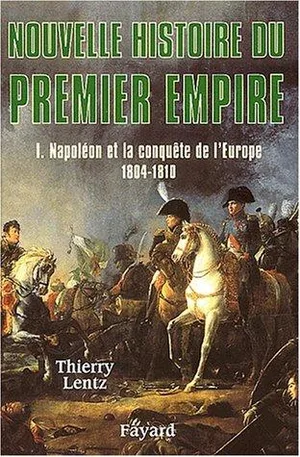
Nouvelle histoire du Premier Empire
Thierry Lentz · 2002-2010
Four reference volumes on institutions, diplomacy and collapse: the scholarly synthesis of the subject.
See on AmazonAs an Amazon Associate, this site earns from qualifying purchases.
Support the encyclopedia
Napoleon Empire is an independent project. Your contribution helps grow the content and keep the site running.
DonateSecure payment on the platform you choose.