Napoleon twice took up residence in the Habsburgs' summer palace, in 1805 and 1809. There he signed the treaty that humiliated Austria — and there his son, the Duke of Reichstadt, died at twenty-one.
Historical context
No gesture was more eloquent: the victor did not lodge in the Hofburg, in the centre of Vienna, but at Schönbrunn, in the Habsburgs' country house, under the frescoes commissioned by Maria Theresa. In November 1805 as in May 1809, Napoleon worked in the Austrian imperial family's apartments and dated his decrees from there. It was a way of saying that one does not visit an adversary: one moves into his home.
On 12 October 1809, during a review in the main courtyard, an eighteen-year-old Saxon named Friedrich Staps approached with a petition and a kitchen knife under his coat. Arrested and questioned by Napoleon himself in Rapp's presence, he refused a pardon and declared he would try again. He was shot five days later. The episode marked the Emperor deeply: German hatred was no longer a matter for cabinets, it now had the face of a twenty-year-old.
Two days later, on 14 October 1809, the Treaty of Schönbrunn was signed in the palace. Austria gave up Carinthia, Carniola, Trieste, Salzburg and western Galicia: three and a half million subjects lost, access to the sea cut off, a crushing indemnity. It was the harshest peace imposed on Vienna — and yet, six months later, Napoleon married the daughter of the defeated.
The irony closed a generation later. Napoleon II, Duke of Reichstadt, raised at Schönbrunn as an Austrian archduke, died there of tuberculosis on 22 July 1832, aged twenty-one, in the very room where his father had set up his study. The palace holds the trace of two reigns that cancelled each other out.
Go further
Recommended books to dig deeper (affiliate links)
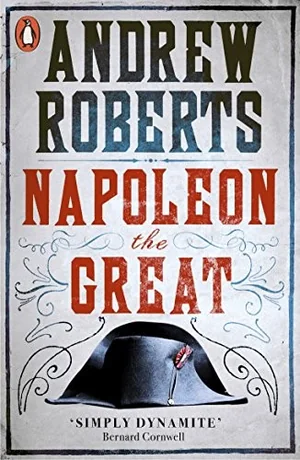
Napoleon the Great
Andrew Roberts · 2014
A monumental biography drawing on Napoleon’s 33,000 surviving letters, admiring but rigorous.
See on Amazon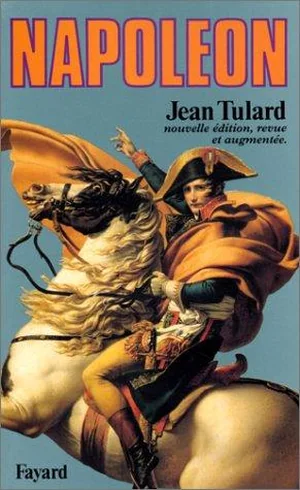
Napoléon ou le mythe du sauveur
Jean Tulard · 1977
The book that reshaped how the man is read: how France gave itself a saviour, and what it cost.
See on Amazon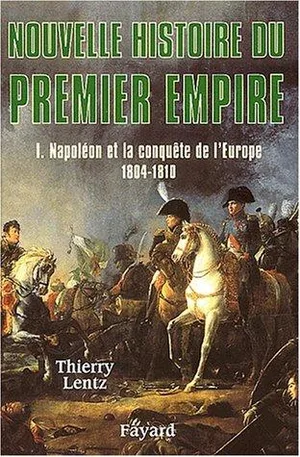
Nouvelle histoire du Premier Empire
Thierry Lentz · 2002-2010
Four reference volumes on institutions, diplomacy and collapse: the scholarly synthesis of the subject.
See on AmazonAs an Amazon Associate, this site earns from qualifying purchases.
Support the encyclopedia
Napoleon Empire is an independent project. Your contribution helps grow the content and keep the site running.
DonateSecure payment on the platform you choose.