Birth and command
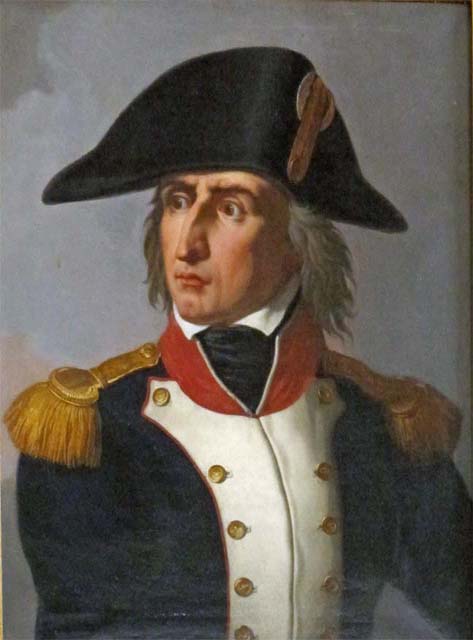
Pierre Augereau, marshal of 1804, received VII Corps when the Grande Armée was formed. A former soldier of fortune turned Revolutionary general, he brought a reputation for bravery and sometimes brutal frankness.
VII Corps organised in infantry divisions with artillery and light cavalry. In the 1805 plan it was not meant to form the decisive centre in Moravia.
Augereau, unwell during part of the 1805 campaign, sometimes left effective command to subordinates for certain movements — a detail historians note without making it an exclusive legend.
Organisation and divisions
Like the other corps, VII Corps had several divisions — Desjardin, Heudelet and others according to returns — forming a mass able to act on a secondary or wing axis.
VII Corps strengths in 1805-1806 stood in the same order of magnitude as other Grande Armée corps, several tens of thousands of men at the start of operations.
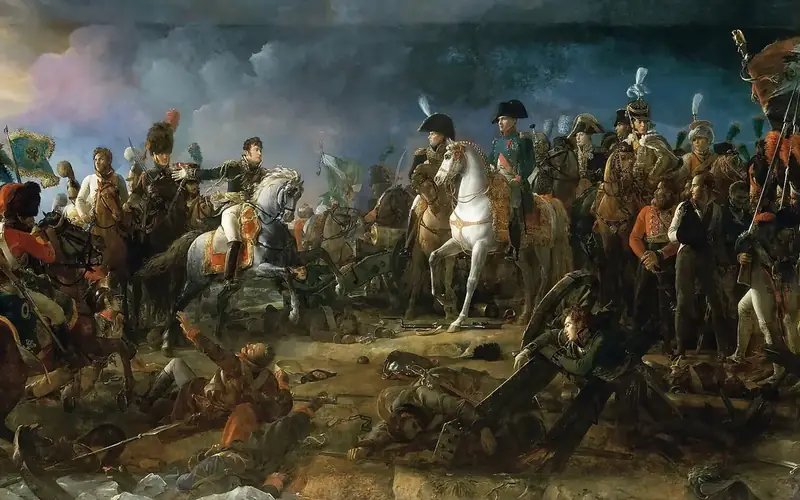
The essential distinction for 1805 is geographic: VII Corps did not belong to the group that fought at Austerlitz on 2 December.
Major campaigns
During the Ulm campaign (September-October 1805) VII Corps took part in the general manoeuvre that isolated Mack. It covered axes and sectors of the South German theatre, contributing to the envelopment strategy without being the manoeuvre's sole spearhead.
After Ulm, while Napoleon pushed toward Vienna and Moravia with part of the Grande Armée, Augereau's VII Corps was not on the Austerlitz battlefield on 2 December 1805. It remained employed on covering and surveillance missions in other sectors of the campaign.
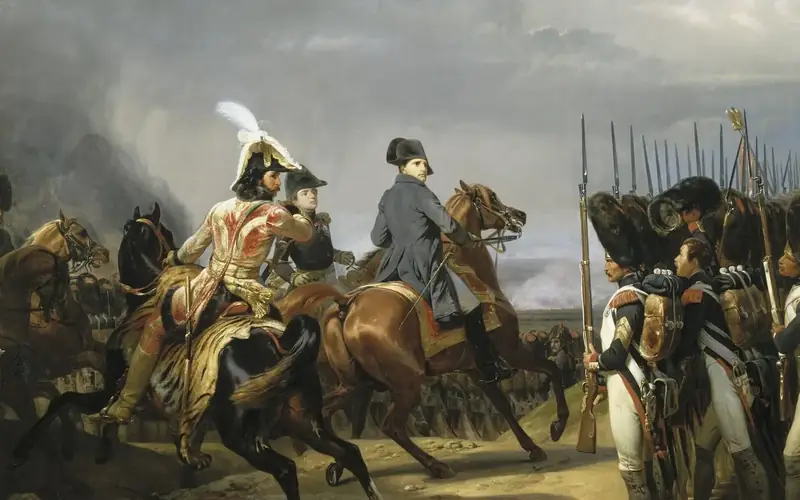
At Jena on 14 October 1806, by contrast, Augereau commanded VII Corps on the French left wing. While Lannes and Ney pressed the centre and Soult manoeuvred on the right, Augereau helped envelop and fix the opposing wing.
The day of Jena, coupled with Davout's victory at Auerstedt, destroyed the Prussian army. Augereau's VII Corps has a clear place there, unlike its absence from the Austerlitz field the previous year.
Operational role
VII Corps under Augereau served first, in 1805, as a covering instrument in a campaign whose decisive shock was fought elsewhere. In 1806 it became a direct actor in the set-piece battle of Jena.
This duality recalls a methodological rule: linking a corps to a 'battle' in an index does not always mean physical presence on the field. For Austerlitz, VII Corps belongs to the campaign, not the Pratzen plateau.
At Jena, by contrast, Augereau's left-wing role is attested by orders of battle and contemporary accounts.
Memory and assessment
The memory of Augereau and VII Corps oscillates between Jena's glory and Austerlitz's absence — an absence that must be named clearly so as not to mislead the reader.
For historiography the VII Corps of 1805-1806 remains a textbook case: useful for understanding the distribution of corps across a vast theatre, and the weight of a wing at Jena in Prussia's destruction.