Striking before the junction
Two armies waited in Belgium: one hundred thousand Anglo-Dutch under Wellington, one hundred and twenty thousand Prussians under Blücher. Napoleon, with one hundred and twenty-five thousand men, meant to insert himself between them. On 16 June he beat Blücher at Ligny while Ney held Wellington at Quatre-Bras, but the Prussians withdrew north instead of east: they stayed in contact. Grouchy, sent after them with thirty-three thousand men, lost them.
18 June
The night's rain had soaked the fields; the Emperor waited until half past eleven to engage, giving Blücher time to arrive. The diversionary attack on Hougoumont tied down whole divisions; d'Erlon's assault on the centre was broken by the British heavy cavalry. Around four o'clock Ney launched nearly nine thousand horsemen against the Allied squares without infantry support: they wore themselves out on them.
La Haye-Sainte finally fell around six, but Bülow's Prussians were already at Plancenoit. About half past seven the Guard climbed towards the ridge and fell back: the cry "The Guard is retreating!" carried the army away. The rout was total; the squares of the Old Guard covered the retreat.
The end of a world
Some forty thousand French dead and wounded, twenty-two thousand for Wellington, seven thousand for Blücher — in a single day over five square kilometres. Napoleon was back in Paris on 21 June; he abdicated on the 22nd.
Waterloo closed twenty-three years of continental war and fixed for a century the balance willed by the Congress of Vienna. The name has become, in nearly every language, a synonym for final defeat.
See also
Go further
Recommended books to dig deeper (affiliate links)
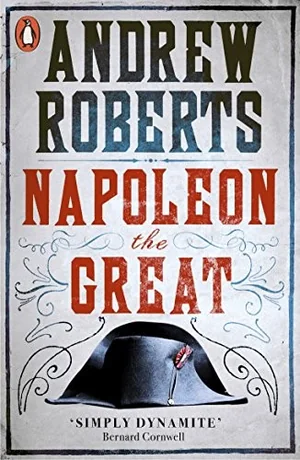
Napoleon the Great
Andrew Roberts · 2014
A monumental biography drawing on Napoleon’s 33,000 surviving letters, admiring but rigorous.
See on Amazon
Napoléon ou le mythe du sauveur
Jean Tulard · 1977
The book that reshaped how the man is read: how France gave itself a saviour, and what it cost.
See on Amazon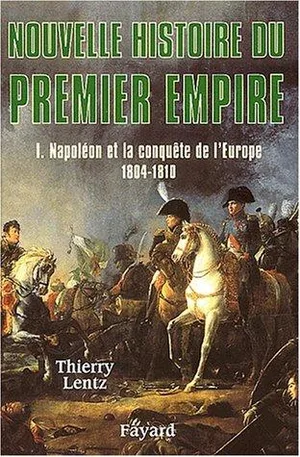
Nouvelle histoire du Premier Empire
Thierry Lentz · 2002-2010
Four reference volumes on institutions, diplomacy and collapse: the scholarly synthesis of the subject.
See on AmazonAs an Amazon Associate, this site earns from qualifying purchases.
Support the encyclopedia
Napoleon Empire is an independent project. Your contribution helps grow the content and keep the site running.
DonateSecure payment on the platform you choose.