While Wellington held the plateau, the real decision was fought on the French right flank, in a village contested hand to hand. The Prussian monument of 1819 still stands there.
Historical context
Plancenoit is a village of about a hundred houses around its church, three kilometres south-east of the Mont-Saint-Jean plateau. It featured in no plan. It was on arriving from the east, from half past four on 18 June 1815, that the Prussian corps of Bülow and then Pirch made it the stake of the French right flank.
The village changed hands at least three times. Lobau held it first with VI Corps, then the Young Guard retook it, then two battalions of the Old Guard cleared it at bayonet point without firing. The fighting went on in the cemetery and around the church, at a few metres' range. Around eight in the evening the Prussians settled there for good and threatened the Charleroi highway, the French army's only line of retreat.
That decided the day far more than the Guard's charge on the plateau. Napoleon had to commit fourteen thousand men, part of them from his reserve, to hold a village that did not appear in his morning dispositions — and those men were missing from the centre at seven in the evening.
The church of Saint Catherine was rebuilt in the nineteenth century, but the village has kept its scale and its lanes. In front of it, the Prussian monument raised in 1819 on the orders of Frederick William III — a neo-Gothic cast-iron spire — commemorates the six thousand seven hundred Prussians who fell that day. It is the oldest monument on the battlefield, sixteen years older than the Lion Mound.
Go further
Recommended books to dig deeper (affiliate links)

Napoleon the Great
Andrew Roberts · 2014
A monumental biography drawing on Napoleon’s 33,000 surviving letters, admiring but rigorous.
See on Amazon
Napoléon ou le mythe du sauveur
Jean Tulard · 1977
The book that reshaped how the man is read: how France gave itself a saviour, and what it cost.
See on Amazon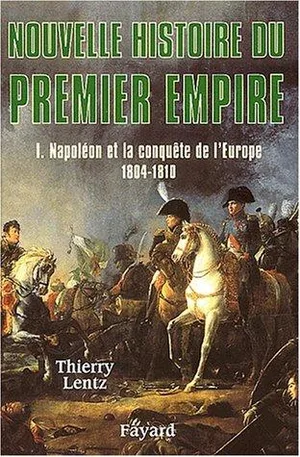
Nouvelle histoire du Premier Empire
Thierry Lentz · 2002-2010
Four reference volumes on institutions, diplomacy and collapse: the scholarly synthesis of the subject.
See on AmazonAs an Amazon Associate, this site earns from qualifying purchases.
Support the encyclopedia
Napoleon Empire is an independent project. Your contribution helps grow the content and keep the site running.
DonateSecure payment on the platform you choose.