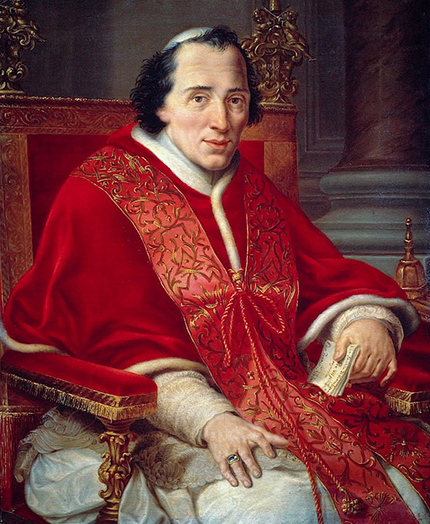
Born Barnaba Chiaramonti at Cesena in 1742, elected pope on 14 March 1800 as Pius VII, he embodies for the Napoleonic age the Holy See as both partner and adversary of France: the Concordat of 1801 reorganised Catholic worship under the Consulate; the coronation of 2 December 1804 at Notre-Dame fixed a global image of the Empire, with the Emperor crowning himself under the pontiff’s gaze. The following years saw a brutal divergence: annexation of the Papal States, excommunication, abduction from the Quirinal (6 July 1809), detention at Savona then Fontainebleau, coerced signature of the « Concordat of Fontainebleau » (1813) and his famous retraction. Freed in 1814, restored by the Congress of Vienna, he re-established the Jesuits, received Bonapartes in exile with measured kindness, and died in 1823, leaving the figure of spiritual resistance to Napoleonic temporal power.
From Cesena to the tiara: Benedictine, bishop of Imola, conclave of Venice
Barnaba Chiaramonti was born on 14 August 1742 at Cesena, in the Papal States, into a local noble family tied to administrative office and religious life. Very young he entered the Benedictines of the Maurist congregation; he took his vows at the abbey of Santa Maria del Monte near Cesena, then pursued in Rome and Parma a classical formation — theology, canon law, letters — that predisposed him less to choir asceticism than to administration and mediation. Ordained priest, he taught in several houses of the order; his career accelerated: in 1782 Pius VI appointed him bishop of Tivoli, then in 1784 bishop of Imola, in Romagna. The diocese, fertile and dense, obliged him to deal with a rural and urban society already shaken by new ideas; there he gained a reputation as a hardworking prelate, little given to spectacle, attentive to parish structures.
The French advance in Italy overturned the framework. In 1796–1797 Bonaparte imposed the Treaty of Tolentino; Romagna was attached to the Cisalpine Republic. Chiaramonti found himself bishop of a territory under revolutionary authority. His Christmas homily of 1797 remains famous: he argued that Christian virtues were not incompatible with a representative regime, urging the faithful to be « good Christians and good democrats ». In Rome the zélanti raged; elsewhere, the prudence of a pastor seeking to avoid social breakdown was praised. The following year, the occupation of Rome and the deportation of Pius VI to Valence — where the pontiff died in August 1799 — brought the Papacy to the edge of institutional abyss. Catholic Europe feared the end of the Holy See; powers hesitated between intransigence and the need for an occupied see.
The conclave met in Venice, under Austrian protection, from November 1799. Cardinals were split between advocates of total refusal to compromise with revolutionary France and supporters of a policy of survival. Ballots followed one another; diplomatic pressure from Vienna and Madrid weighed on the votes. On 14 March 1800, on the seventy-fourth scrutiny, the choice fell on Chiaramonti, who was not a cardinal: he had to be created cardinal-deacon then consecrated bishop of Rome. He took the name Pius VII in homage to his deported predecessor. At fifty-eight he inherited an immense task: to recover diminished temporal and spiritual legitimacy, to negotiate with a victorious First Consul who had just crossed the Alps, and to preserve the unity of a Church scarred by the French turmoil and Italian annexations.
Concordat, Organic Articles, and the 1804 coronation
Pius VII made his solemn entry into Rome in July 1800. The Papal States were mutilated, papal finances bled white; the French clergy, split between jurors and refractories, awaited a legal framework. Bonaparte, eager to close ten years of conflict with Rome and rally Catholic masses to the Consulate, opened talks. Cardinal Ercole Consalvi, Secretary of State, became the main architect of the compromise; Joseph Bonaparte, the First Consul's brother, signed for France. The Concordat of 15 July 1801 did not restore Catholicism as the sole state religion: it was « that of the great majority of French citizens ». The First Consul nominated bishops; the Pope conferred canonical institution. The clergy swore a civic oath; confiscated property was not restored, but the State guaranteed salaries. Pius VII accepted massive material loss for public recognition of worship — a decision many curials found bitter, but which he thought necessary for France's religious unity.
The publication of the Organic Articles by the French government, without Roman agreement, tended to tightly frame the Gallican Church: limits on pontifical right of residence, prefectoral oversight, provisions Rome read as a unilateral addendum to the Concordat. Tensions remained beneath the surface; they foreshadowed the clash over ecclesiastical sovereignty. Meanwhile the regime shifted toward Empire: the imperial sénatus-consulte of 18 May 1804 made Bonaparte hereditary emperor. The Emperor wanted a coronation at Notre-Dame Cathedral, a scene visible across Europe, with the Pope to legitimise the moment while controlling the ritual.
Pius VII, after hesitation, left Rome in November 1804. The pontifical train crossed the Alps in winter; the stay at Fontainebleau preceded arrival in Paris. On 2 December, the ceremony mingled Carolingian symbols, imperial dress, and ecclesiastical presence. At the decisive moment Napoleon took the crown from the altar and placed it on his own head — a gesture propaganda presented as asserting that imperial dignity proceeded from himself, not from exclusive pontifical delegation. Pius VII anointed the Emperor, blessed the regalia, crowned Josephine. His presence conferred religious aura; his symbolic authority was nonetheless countered by Bonapartist staging. Jacques-Louis David's monumental painting fixed for centuries this distribution of roles: the imperial throne at centre, the Pope withdrawn, witness to a majesty that borrowed from the Church without submitting to it.
Annexation of the Papal States, excommunication, and captivity at Savona
After Austerlitz and the geopolitical transformation of Napoleonic Italy, the Holy See became an awkward enclave for the Empire. Napoleon demanded the Pope join the Continental Blockade against the United Kingdom and effectively close papal ports to British ships. Pius VII resisted: he meant to preserve relative neutrality and refused to make papal territory a mere customs outpost of imperial policy. In 1806 French troops occupied Ancona; in 1808 they entered Rome. On 17 May 1809 an imperial decree annexed the Papal States to the Empire; the territory became French departments. For the Pope it was spoliation of Peter's patrimony; for Napoleon, logical integration of an Italy under Parisian control.
On 10 June 1809 Pius VII issued a bull of excommunication against the Emperor and the authors of the annexation — a grave act in the medieval and modern symbolism of pontifical power. The response was immediate and brutal: on the night of 5–6 July General Étienne Radet, on Napoleon's orders, burst into the Quirinal Palace. Despite Swiss guards and the symbolic resistance of the papal court, the Pope was forced to leave. It was not an arrest in the ordinary penal sense: it was political detention of the sovereign of a theoretically neutral state, perceived in Catholic Europe as political sacrilege. Pius VII was taken north, then embarked for Savona on the Ligurian coast.
At Savona the Pope lived confined in the bishop's palace, cut off from Rome, with a reduced court and censored correspondence. Napoleon tried through isolation and moral pressure to obtain renunciation of temporal power or at least legitimisation of bishops appointed unilaterally by the Empire without Roman agreement. Pius VII resisted: he did not validate imposed ecclesiastical schemes. In 1811 a national council met in Paris without him; several French bishops still defended Roman reference. The pontiff's health declined; his entourage feared for his life. The image of a prisoner Pope became propaganda for Napoleon's adversaries, from French royalists to European cabinets hostile to imperial hegemony.
Fontainebleau: the coerced Concordat and the retraction
In June 1812, on the eve of the Russian campaign, Napoleon ordered Pius VII transferred to the château of Fontainebleau. The journey, gruelling for a man in his seventies, stretched over weeks; the Pope arrived exhausted, isolated in the palace apartments under close watch. The Emperor, absorbed by the war in the east, wanted to settle the « Roman dispute » once and for all: reduce pontifical reservations on nominations, lock submission of Italian and French clergy to imperial decrees, obtain formal recognition that would bury the bull of 1809.
In January 1813, after tense meetings, Pius VII signed the text known as the Concordat of Fontainebleau — forty-one articles that, in the Napoleonic reading, would give the Empire effective control of ecclesiastical structures and a large share of papal territory as conditional partial restitutions. The Pope, weakened, yielded under duress; his signature is legible, but his consent is questionable in moral and canonical terms. As early as 24 March 1813 a secret letter — later made public — retracted the agreement: « Everything I have done since 25 January, I did under duress. » The phrase struck public opinion: it opposed imperial reason of state with the pastor's voice denying freedom of his word.
Napoleon, informed, went into cold rage; the Pope remained a prisoner. Military events would nonetheless overtake the Italian sequence: the Russian retreat, the gradual collapse of French domination in Germany and the Iberian peninsula made the Roman question secondary on the Emperor's desk, without softening the captive's fate. Fontainebleau remains the symbol of a clash where each side claimed coherence — the Empire its raison d'état, the Holy See its libertas ecclesiae — and where history chiefly remembers the retraction as an act of resistance to a power that thought it had tamed Peter's see.
Release, Congress of Vienna, restoration, and final years
In January 1814 the Coalition invasion changed the situation. Napoleon, cornered, ordered Pius VII freed. On 23 January the pontiff left Fontainebleau under escort; he crossed France toward Italy, welcomed everywhere by popular demonstrations mingling relief and piety. His return to Rome on 24 May 1814, after more than five years' absence, took on the air of a spiritual triumph. The Congress of Vienna, in its decisions on the Italian order, restored to the Holy See much of the Papal States — not without hard bargaining with powers that had tasted French annexation. Pius VII recovered a temporal function diminished compared with the eighteenth century, but symbolically rehabilitated.
His pontificate of restoration fit the European reaction to revolutionary and Napoleonic excess. In July 1814 the bull Sollicitudo omnium ecclesiarum re-established the Society of Jesus, suppressed in 1773: a gesture heavy with meaning for the future of education and missions. Pius VII renewed ties with legitimate monarchies while watching liberal and nationalist stirrings in Italy. During the Hundred Days he refused to recognise Napoleon's government; he left Rome for refuge in Genoa, avoiding again becoming a military stake. After Waterloo he did not take revenge on the French: several disgraced Bonapartes found relative retirement in Rome — Hortense, Letizia, Pauline; Lucien lived under papal protection. This clemency did not erase the memory of the prison years, but it marked the style of a pope who separated persons from system.
Pius VII died at the Quirinal on 20 August 1823, aged eighty-one, after a pontificate of exceptional length. Antonio Canova executed for St Peter's Basilica a Neoclassical recumbent effigy where the captive pontiff's emaciated face keeps severe dignity. Nineteenth-century historians often opposed « martyr » Pius VII to « tyrant » Napoleon; recent research nuances: the Concordat durably structured Church–State relations in France, while the abduction of 1809 weakened imperial legitimacy in a still deeply believing Europe. Pius VII remains the figure of the apostolic see that paid for its freedom with refusal to dissolve its office into the Napoleonic continental machine.
Discover other characters
Napoleon Bonaparte
Emperor of the French
Charles-Maurice de Talleyrand
Minister for Foreign Affairs, Prince of Benevento, diplomat
Jean-Étienne-Marie Portalis
Lawyer, co-drafter of the Civil Code, Minister of Religious Affairs
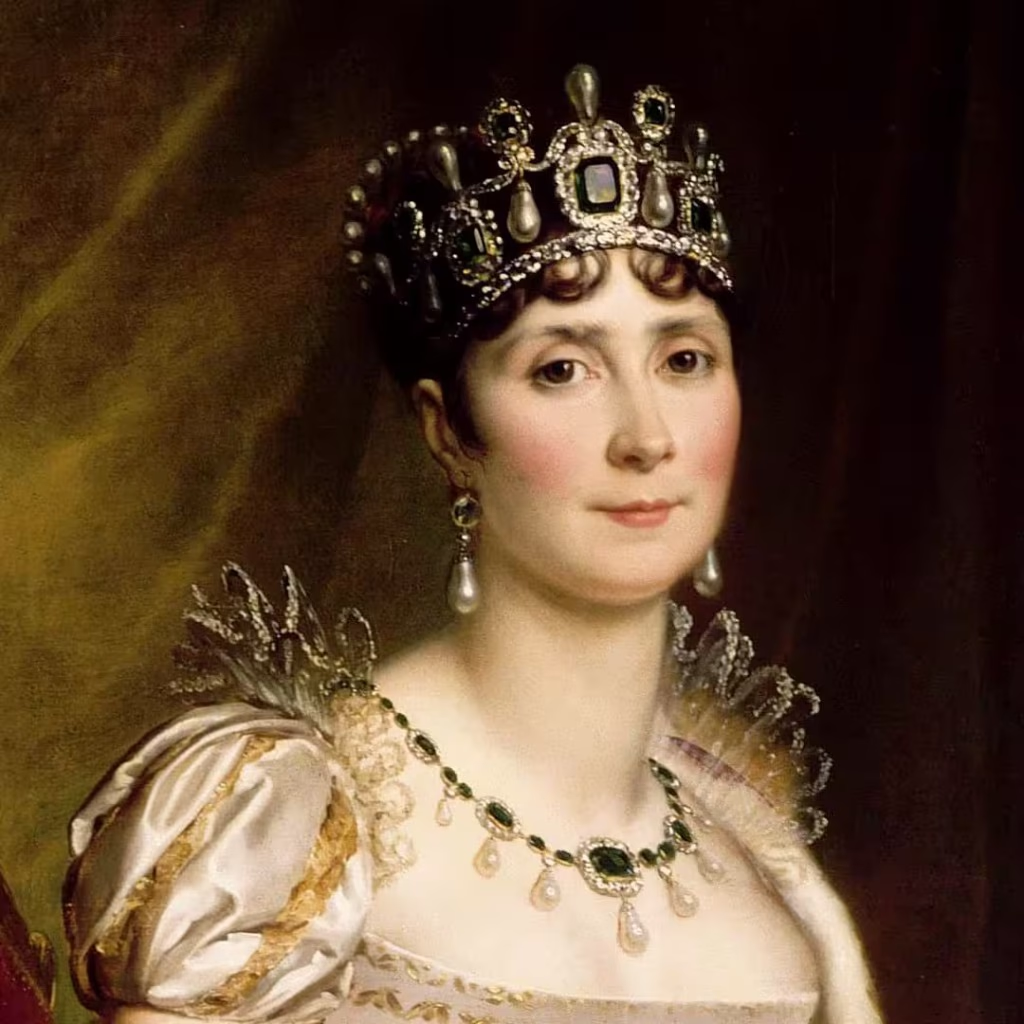
Joséphine de Beauharnais
Empress of the French
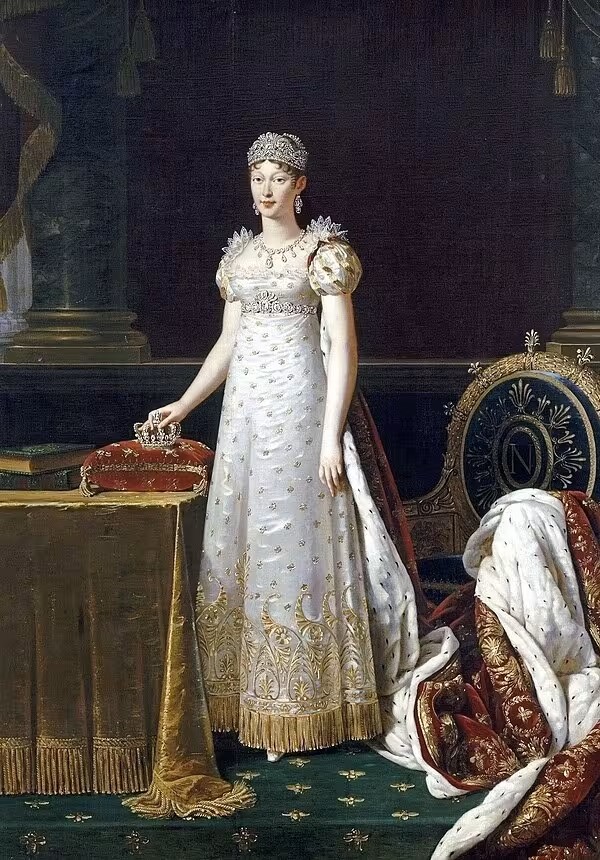
Marie Louise of Austria
Empress of the French
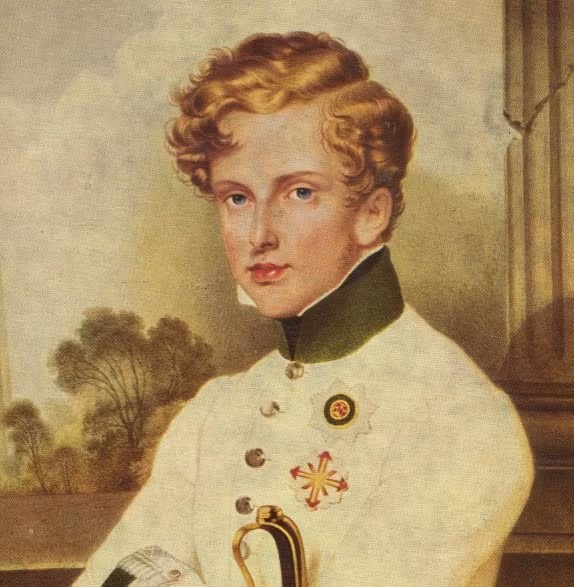
Napoleon II
King of Rome
Go further
Recommended books to dig deeper (affiliate links)
Napoleon the Great
Andrew Roberts · 2014
A monumental biography drawing on Napoleon’s 33,000 surviving letters, admiring but rigorous.
See on Amazon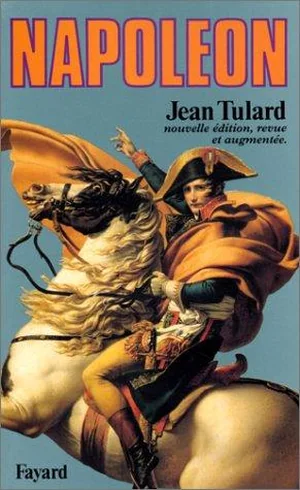
Napoléon ou le mythe du sauveur
Jean Tulard · 1977
The book that reshaped how the man is read: how France gave itself a saviour, and what it cost.
See on Amazon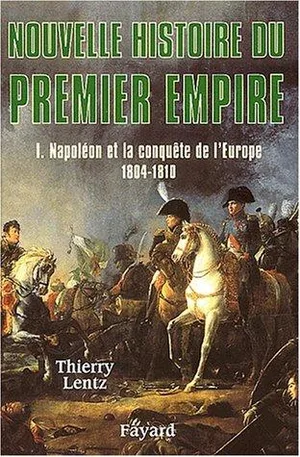
Nouvelle histoire du Premier Empire
Thierry Lentz · 2002-2010
Four reference volumes on institutions, diplomacy and collapse: the scholarly synthesis of the subject.
See on AmazonAs an Amazon Associate, this site earns from qualifying purchases.
Support the encyclopedia
Napoleon Empire is an independent project. Your contribution helps grow the content and keep the site running.
DonateSecure payment on the platform you choose.