The Treaty of Fontainebleau of 11 April 1814 granted Marie Louise the duchies of Parma, Piacenza and Guastalla. She ruled there from 1816 to 1847 and left the memory of a popular sovereign — without ever seeing Napoleon again.
Historical context
The treaty that sent Napoleon to Elba also provided a consolation realm for his wife. A year later the Congress of Vienna cut it down: the duchy was for her lifetime only, it would not pass to Napoleon II, and the succession was reserved to the Bourbons of Parma. Marie Louise ruled a state without a dynasty — her son remained in Vienna, raised as an Austrian archduke.
She arrived in April 1816, aged twenty-four, accompanied by Count Neipperg, the one-eyed officer Metternich had placed at her side and by whom she already had children. They married morganatically in 1821, a few months after Napoleon's death; widowed again in 1829, she would marry Count Bombelles.
Her reign was moderate and industrious. She built the bridge over the Taro, gave the city the Teatro Regio opened in 1829, supported the library, the university and the Academy of Fine Arts, softened the penal code and distributed relief during epidemics. The people of Parma called her la buona Maria Luigia — a nickname that outlived Italian unification and is still heard.
She died in Parma on 17 December 1847 and lies in Vienna, in the Capuchin Crypt, under her title of Archduchess of Austria. The duchy returned to the Bourbons the following year. Parma is the Empire's quiet epilogue: an Empress of the French turned Italian princess, loved by a people who had never seen Napoleon.
Go further
Recommended books to dig deeper (affiliate links)
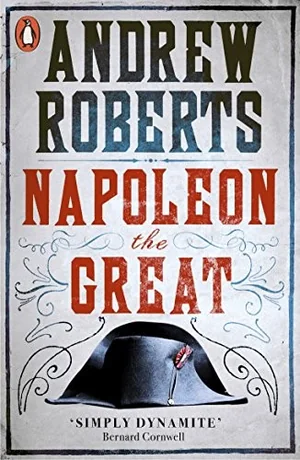
Napoleon the Great
Andrew Roberts · 2014
A monumental biography drawing on Napoleon’s 33,000 surviving letters, admiring but rigorous.
See on Amazon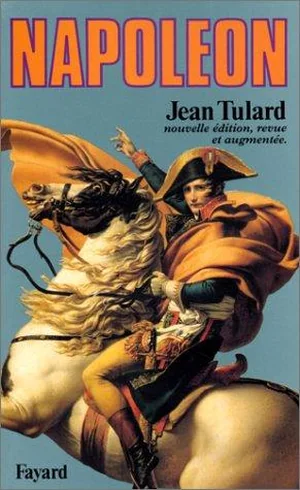
Napoléon ou le mythe du sauveur
Jean Tulard · 1977
The book that reshaped how the man is read: how France gave itself a saviour, and what it cost.
See on Amazon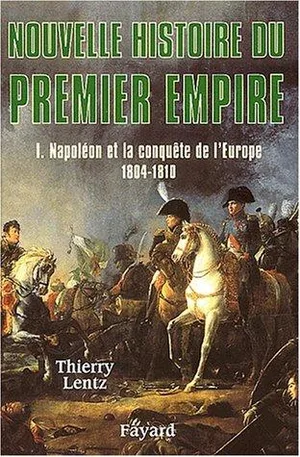
Nouvelle histoire du Premier Empire
Thierry Lentz · 2002-2010
Four reference volumes on institutions, diplomacy and collapse: the scholarly synthesis of the subject.
See on AmazonAs an Amazon Associate, this site earns from qualifying purchases.
Support the encyclopedia
Napoleon Empire is an independent project. Your contribution helps grow the content and keep the site running.
DonateSecure payment on the platform you choose.