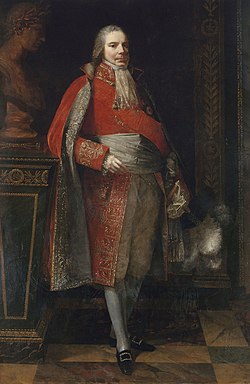
From a comital line of Périgord, Charles-Maurice de Talleyrand-Périgord (1754-1838) embodied as few others the continuity of the French state across regimes: excommunicated constitutional bishop, negotiator of the Concordat, minister of the Directory and then of the First Consul, architect of the shift to the Consulate in 1799, Minister of Foreign Relations with few interruptions until 1807, grand officer of the Empire and then decisive actor in the imperial deposition of 1814 and in France's defence at the Congress of Vienna. His political longevity, apparent reversals, and reputation for cynicism fed a myth; recent scholarship stresses the coherence of a European pragmatism attached to the balance of powers and to France's survival as revolutionary, imperial, and legitimist. Under the First Empire he was both the indispensable servant of treaties and the adviser Napoleon came to distrust, while preparing the storm with the coalition courts without ever quite leaving the Parisian diplomatic game.
Périgord nobility, ecclesiastical career and revolutionary engagement
Charles-Maurice de Talleyrand-Périgord was born in Paris on 2 February 1754, last child of an ancient house ruined by debt and alliances: the comital title existed, revenues were uncertain. Club foot, a congenital malformation the family hid as far as possible, closed the military career; the Church became the path of social ascent for a younger son. Ordained priest in 1779 after studies at the seminary of Saint-Sulpice and the Sorbonne, he was appointed agent general of the French clergy in 1780: the office placed him at the heart of fiscal negotiations between king and orders, taught him state paperwork and the language of material interests. In 1788, thanks to Louis XVI's protection and court support, he obtained the bishopric of Autun — one of the richest in the kingdom. Talleyrand was neither mystic nor ascetic reformer: he frequented salons, read Voltaire and the economists, led a worldly existence that ecclesiastical discipline constrained more than it fulfilled.
Elected deputy of the clergy to the Estates General of 1789, he shifted early to the Third Estate: on 14 July he proposed the union of the three orders; on 4 August he voted the abolition of privileges. On 12 July 1790 he celebrated the Festival of the Federation at the Altar of the Fatherland; the same summer he swore the Civil Constitution of the Clergy and became « constitutional » bishop of Autun. Rome reacted: Pius VI declared him schismatic, then excommunicated him. Talleyrand left the altar with no illusion of an immediate return: he reinvented himself as a lay statesman in a France where religion and politics tore each other apart. In 1791 he proposed to the Legislative Assembly the nationalisation of clerical property already under way; his voice counted among those legitimising confiscation in the name of public debt and the « national good ».
In 1792, as the monarchy faltered, the government sent him to London to negotiate British neutrality. The fall of 10 August and the proclamation of the Republic made his position untenable: suspected of royalism by the Jacobins, he prolonged his stay across the Channel, then in 1794 went into exile in the United States after his name was placed on the émigré list. There he speculated on land, lived by expedients, followed the Terror and 9 Thermidor from afar. Return to Paris in 1796 came under the Directory: Talleyrand recovered assets, renewed ties with Sieyès, Barras and the regime's financiers. In July 1797 he joined the Ministry of Foreign Relations. He negotiated with Austria after the Treaty of Campo Formio, prepared agreements framing republican expansion in Italy and, above all, took part in the dealings leading to the coup of 18 Brumaire: Talleyrand was not the plot's « leader », but one of its diplomatic and financial relays, convinced that a strong executive was the only alternative to Directory instability and the risks of royalist restoration or popular jacquerie.
The Consulate: minister, European peace and the Concordat
Under the Consulate, Talleyrand regained the portfolio of Foreign Relations he had briefly left after Brumaire. His stated goal was stabilisation: Peace of Lunéville with Austria (9 February 1801), confirming republican annexations on the left bank of the Rhine and in Italy; Peace of Amiens with the United Kingdom (25 March 1802), which — provisionally — ended the maritime and colonial war open since 1793. These treaties were not merely legal texts: they reflected a Talleyrandian strategy of « consolidation » before any new expansion, a strategy the First Consul partly shared but whose military ambitions would ultimately prevail. Talleyrand also negotiated with the Porte, with Naples, with German courts; his style mixed protocol flattery and toughness on territorial clauses.
The achievement to which his name remains tied in the revolutionary-consular period is the Concordat of 1801. Bonaparte wished to reintegrate Catholic worship within the legal framework of the Republic — now the Consulate — after a decade of conflict with Rome and radical dechristianisation in some regions. Talleyrand, unfrocked bishop but expert in clerical machinery, took part in talks with Cardinal Consalvi and the papal delegation. The text of 15 July 1801 recognised Catholicism as the religion of the « great majority of French citizens », without restoring it as the sole state religion; the First Consul appointed bishops on papal proposal; the clergy swore a civic oath; confiscated property was not returned. Pius VII ratified despite curial reluctance. Talleyrand saw an instrument of social order as much as a theological compromise: France needed altar and Lent to cement rural obedience around the new executive power.
Meanwhile he used his office to rebuild fortune and network: diplomatic bribes, foreign pensions, sales of influence — contemporaries and Fouché's police kept equivocal traces. Napoleon, who needed his prestige with the chancelleries, looked the other way while victories followed. In 1802 Talleyrand bought the Hôtel de Galliffet on the rue du Bac, then that of Saint-Florentin, which would become the centre of his political and social life. He was not yet « Prince of Benevento »: that reward came in 1806, after the Empire was proclaimed; but from the Consulate onward he embodied the French face of dialogue with the Europe of courts, between a revolutionary past and a future continental master.
The Empire: glory, strategic disagreements and diplomatic clientelism
On 18 May 1804, Talleyrand presented to the Senate the motion proclaiming Napoleon Emperor of the French. In return he received the office of Grand Chamberlain — a dignity of court as much as of government — then, in 1806, the sovereign principality of Benevento in southern Italy, a symbolic apanage associating him with the imperial nobility without giving him a real territorial base in France. At the conferences of Tilsit (July 1807), he witnessed the partition of Europe between Napoleon and Tsar Alexander I; he understood that peace was no longer merely a classical balance but a system of French hegemony built on satellites, placed princely families and continental boycotts of England. Talleyrand then defended a line of moderation: avoid humiliating Prussia too long, spare Austria, not push Alexander into permanent distrust. Napoleon listened at times, then returned to campaign.
In 1808, the Congress of Erfurt consecrated the Franco-Russian alliance against Austria; Talleyrand held a double discourse documented by witnesses: behind the scenes he advised Alexander to resist Napoleonic excess in the name of European balance. Later memoirs no doubt embellished the wording, but the substance is attested: the minister now maintained a parallel channel with hostile or wary courts. Napoleon, informed by his agents, exploded in January 1809 in a scene that became famous: brutal insults before the Council, « shit in a silk stocking » — Talleyrand, impassive, replied in a low voice on leaving the room. The minister was dismissed from Foreign Affairs; he kept honorific titles (Vice-Grand Elector) but no longer exercised official diplomacy. The imperial machine pursued the annexation of Spain, the invasion of Russia; Talleyrand, from his salon on the rue Saint-Florentin, received Metternich, Bourbon emissaries, bankers, silent opponents.
His fortune and influence no longer depended on the portfolio: they rested on anticipation of the « day after ». He lent money, bought paintings, wove minor marital alliances for his posterity — including Charles de Flahaut, a later acknowledged natural son, close to military circles and the imperial court. Talleyrand was not a public opponent: he signed no manifesto; he let networks speak. In 1812-1813, as the Grande Armée dissolved in Russia then at Leipzig, he watched the decomposition of Napoleonic alliances without recording an official position. His cold calculation was that only a negotiated transition with the Bourbons and the Coalition could avoid the partition of France or the brutal restoration of the full Old Regime — two outcomes he judged disastrous for the country and for his own political survival.
Paris 1814: provisional government, Senate and Bourbon shift
In March 1814, Coalition armies crossed the Marne; Napoleon, exhausted by six successive campaigns, could no longer hold every line. Talleyrand was no longer minister, but his notoriety and ties with Alexander I made him the natural pivot of a provisional government as soon as the capital faltered. On 31 March, Allied troops entered Paris; on 1 April, the Senate — which he influenced through committees and docile peers — voted an Emperor's deposition based on breach of the imperial oath and the nation's interest. The text was legally debatable but politically effective: it offered an exit from revolutionary-imperial legality towards monarchical legitimacy without pure restoration of Old Regime privileges. On 2 April, Talleyrand had Louis XVIII proclaimed; the attributed phrase — « legitimacy is in Louis XVIII's shoes » — summed up the strategy: find a king the victors could recognise without humiliating France.
Napoleon abdicated at Fontainebleau on 6 April; Europe breathed; Talleyrand became president of the provisional government until the king's arrival. The Bourbons, wary of the « regicide bishop », nevertheless had to work with him: no one else possessed both the address book of foreign diplomats and the ability to speak the language of revolutionary treaties. Talleyrand obtained guarantees for national property, posts for converted imperial servants, administrative continuity avoiding mass purge. His public image remained that of the renegade; his utility was real. He was already preparing the Congress of Vienna, where defeated France would have to be defended as a legitimate actor in the new European order, not as a pariah to carve up.
This phase cemented his black legend among Bonapartists: for them, Talleyrand was the man of the treacherous Senate; for zealous royalists, he remained the impious constitutionalist. For modern historians he embodies above all the French institutional transition between Empire and Restoration — a transition where continuity of the state prevailed over ideological vengeance, at the price of moral compromises each camp judges in its own way.
Congress of Vienna, Hundred Days and the long passage of the Restoration
From September 1814 to June 1815, the Congress of Vienna redrew Europe after a quarter-century of war. Talleyrand represented legitimist France: his central argument was that Louis XVIII's kingdom was not the criminal continuator of Napoleonic Empire; France must therefore be treated as a power of public law, not as a defeated nation to dismember. He skilfully exploited cracks among the victors — Russo-Prussian rivalries over Poland and Saxony, British mistrust of excessive Russian territorial gains — to obtain borders close to those of 1792 rather than the radical dismantling plan some defended. Signature of the treaty of 9 June 1815 came after the return from Elba and the defeat at Waterloo; Talleyrand, who had remained in Vienna during the Hundred Days, reaffirmed Bourbon legitimacy against the Napoleonic interlude, earning relative Allied confidence but lasting Bonapartist hatred.
Under the Restoration he held several offices: briefly president of the council of ministers in 1815, then ambassador to London from 1830 to 1834 under the July Monarchy — a period when he worked notably on recognition of Belgian independence within a stable European framework. His reputation as rake, gambler, man of celebrated mistresses — Madame Grand, Dorothea of Courland — accompanied the image of the cold diplomat to the point of caricature; it sometimes obscured the density of the negotiator's work, of the memoirs he dictated and had published after his death to shape his legend. He died on 17 May 1838 in Paris, an octogenarian, after a deathbed reconciliation whose details remain debated among theologians and historians.
Nineteenth-century historians painted him by turns as genius of raison d'état and as symbol of disloyalty; contemporary research stresses the permanence of a European idea of balance, already present before 1789 in his reading of Westphalian treaties and Enlightenment politics. Talleyrand served monarchy, Republic, Consulate, Empire and July Monarchy; he served only one constant master: the survival of France as a great diplomatic power. The phrases attributed to him — on speech disguising thought, on reciprocal betrayal — belong to folklore; they testify above all to the lasting fascination of a figure who embodied, more than any other under Napoleon, the idea that foreign policy is a long calendar where regimes pass and the state remains.
Discover other characters
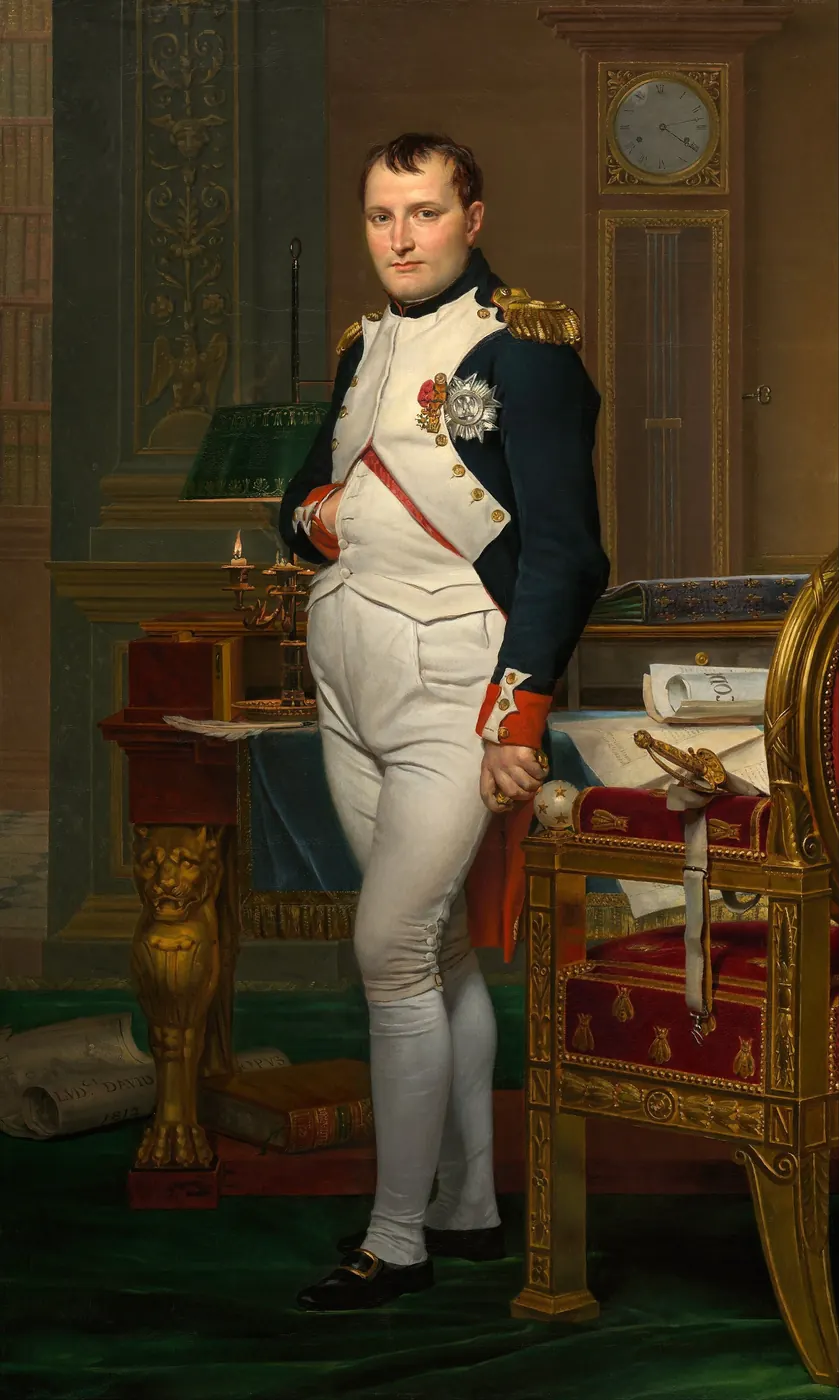
Napoleon Bonaparte
Emperor of the French
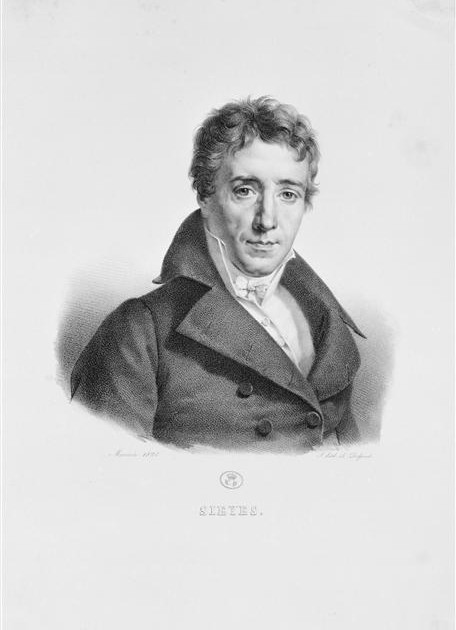
Emmanuel Joseph Sieyès
Political theorist, deputy, Director, Consul
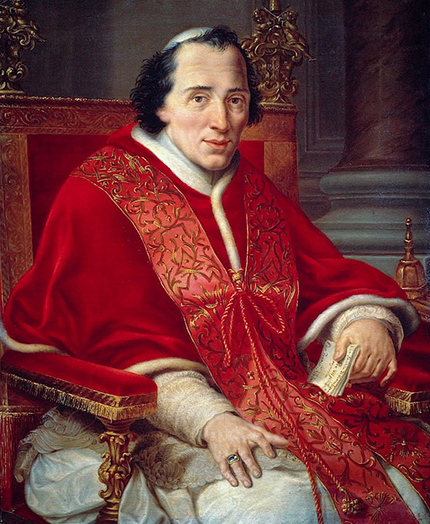
Pius VII
Pope, signatory of the Concordat, political hostage of Napoleon
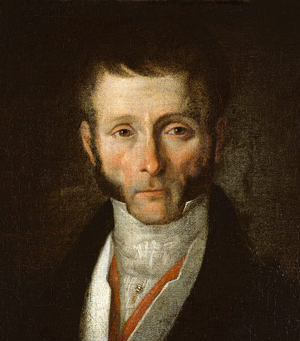
Joseph Fouché
Minister of Police, Duke of Otranto, president of the provisional government (1815)
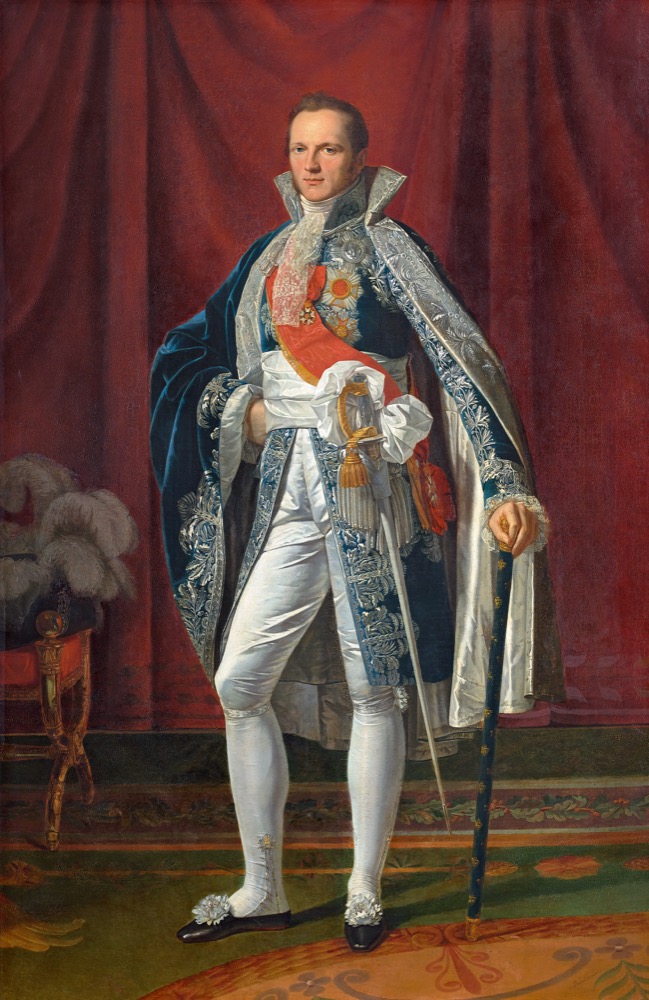
Armand-Augustin-Louis de Caulaincourt
Master of the Horse, ambassador to Saint Petersburg, Minister for Foreign Affairs
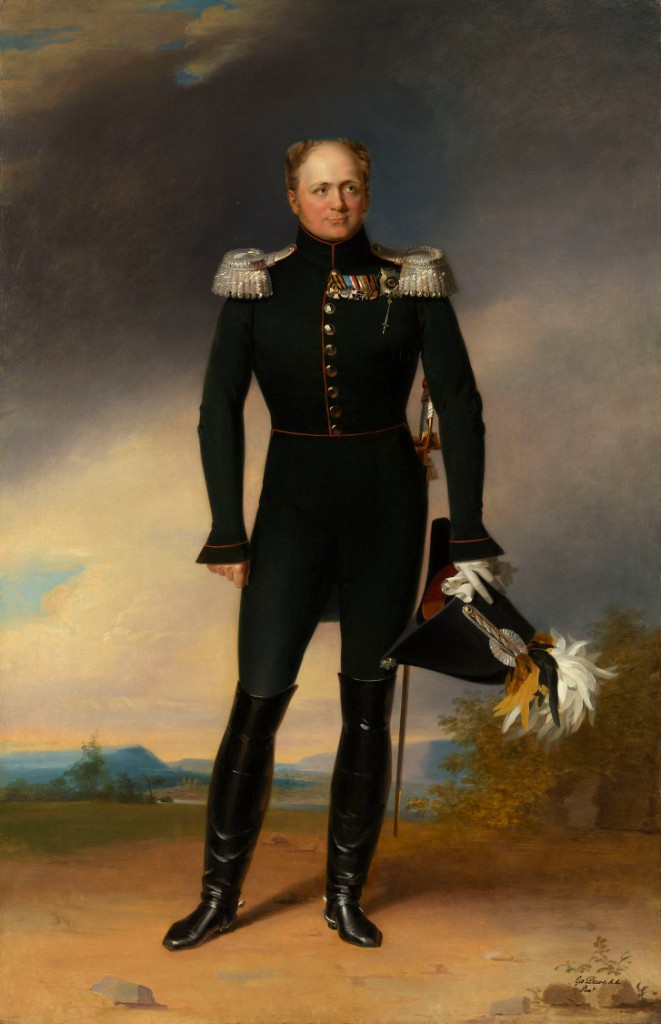
Alexander I Pavlovich, Emperor of all Russia
Emperor of all Russia (1801–1825)
Go further
Recommended books to dig deeper (affiliate links)
Napoleon the Great
Andrew Roberts · 2014
A monumental biography drawing on Napoleon’s 33,000 surviving letters, admiring but rigorous.
See on Amazon
Napoléon ou le mythe du sauveur
Jean Tulard · 1977
The book that reshaped how the man is read: how France gave itself a saviour, and what it cost.
See on Amazon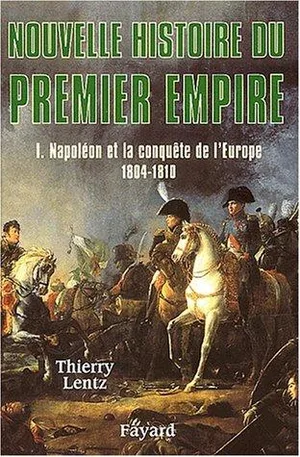
Nouvelle histoire du Premier Empire
Thierry Lentz · 2002-2010
Four reference volumes on institutions, diplomacy and collapse: the scholarly synthesis of the subject.
See on AmazonAs an Amazon Associate, this site earns from qualifying purchases.
Support the encyclopedia
Napoleon Empire is an independent project. Your contribution helps grow the content and keep the site running.
DonateSecure payment on the platform you choose.