Origins and prestige
Carabiniers inherited an elite tradition dating to the Ancien Régime and Revolution. Under the Empire, two carabinier regiments often embodied the social and military summit of heavy cavalry.
They differed from cuirassiers in corps history, uniform and, to a point, recruitment. On the battlefield, however, their employment joined that of the cavalry reserve.
Their reputation as a "smart" unit should not mask the hardness of service: charges, marches and horse losses struck them like the rest.
Organisation
Carabinier regiments formed squadrons within heavy-cavalry divisions. Their overall strength remained below that of the cuirassiers as a whole.
They were held in reserve for decisive moments, beside the cuirassiers, under the Empire's great cavalry commanders.
After murderous campaigns — especially 1812-1813 — maintaining elite horses and riders became a permanent challenge.
Uniform and cuirass
Before widespread adoption of the cuirass, carabiniers are often described in a light coat (white or very light by period and source) and a characteristic helmet with caterpillar crest or mane, making them immediately identifiable.
After campaign lessons — notably losses to lances and gunfire — they received a cuirass, bringing their protection closer to the cuirassiers'. Exact dates and issue details vary by source; this evolution may prudently be placed after 1809.
The heavy-cavalry sabre and pistols remained close-combat weapons; the carbine, despite the corps name, was not central to their charge tactics.
Tactics
Like cuirassiers, carabiniers charged to break and exploit. Their perceived value rested as much on men and mounts as on shock weight.
They were willingly committed when decision seemed near — enemy infantry breach, open flank, pursuit. Launching them too early against intact infantry in square risked bloody failure.
Coordination with horse artillery and other heavy regiments was essential: heavy cavalry rarely acted alone in the Napoleonic battle plan.
Battle honours
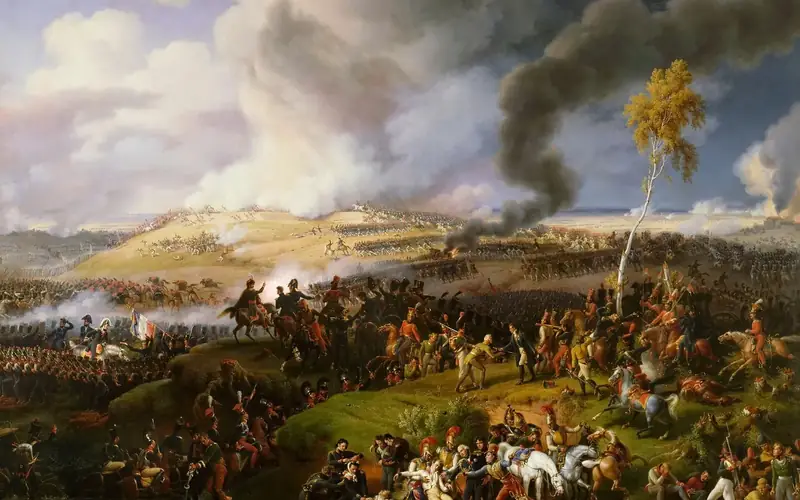
Carabiniers took part in the great days when the cavalry reserve was engaged: Eylau, Wagram, Borodino, and the 1813 German campaigns. Service records and memoirs stress their presence in decisive or desperate charges.
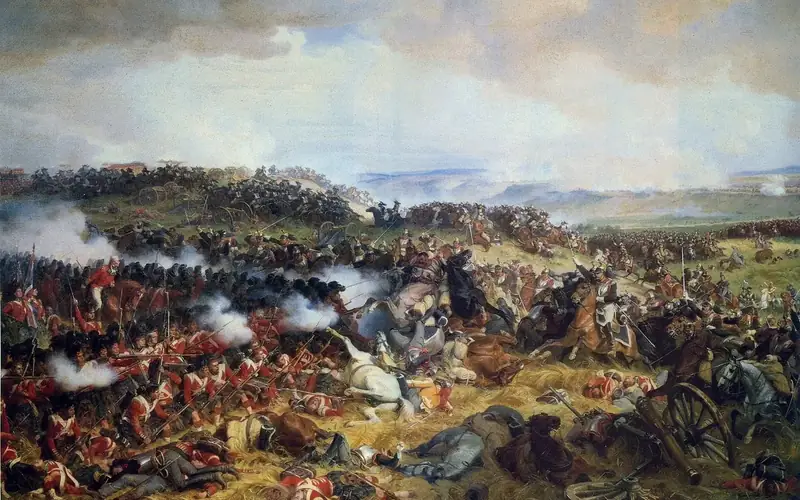
At Waterloo, French heavy-cavalry elements — including the cuirassier/carabinier system — wore themselves out against Allied squares. The day showed the limits of mounted shock against firm infantry and well-served guns.
Which regiments were engaged at each hour varies by source; French heavy cavalry as a whole left much of its effectiveness there.
Legacy
In iconography, the Empire carabinier — helmet, light coat then cuirass — remains a figure of martial elegance. Uniform museums preserve sought-after pieces.
For this wiki they recall that heavy cavalry was not monolithic: between cuirassiers and carabiniers stood a prestige hierarchy within the same shock trade.