Birth and command
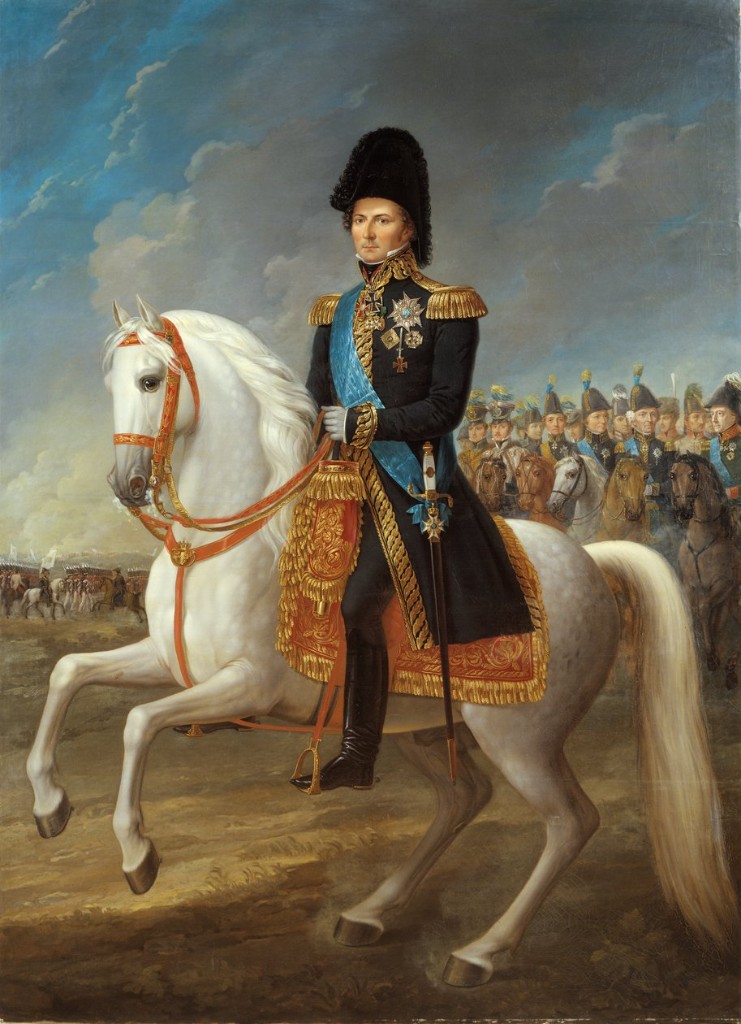
When the Grande Armée left the Camp of Boulogne in 1805, Jean-Baptiste Bernadotte received I Corps. A marshal since 1804, brother-in-law of Joseph Bonaparte through his marriage to Désirée Clary, he held political as well as military prestige.
I Corps comprised several infantry divisions, light cavalry and artillery. Its role in the 1805 plan was that of a major column on the manoeuvre axis toward the Danube.
Bernadotte was neither Soult nor Davout: his style was more political, sometimes judged less cutting in the field. The 1805-1806 campaigns would put that reputation to the test.
Organisation and divisions
I Corps architecture followed the Napoleonic model: autonomous infantry divisions, divisional artillery, covering cavalry. Strengths oscillated by campaign stage around twenty thousand men and more.
Within the 1805 Grande Armée, I Corps marched in the general deployment that enveloped Mack at Ulm before pivoting toward Moravia.
Staffs remembered that corps numbers must not be confused: at Austerlitz the Pratzen blow was struck by Soult's IV Corps, not by I Corps.
Major campaigns
During the Ulm campaign (autumn 1805) I Corps contributed to the enveloping manoeuvre that forced General Mack to capitulate. The strategic victory opened the road to Vienna then Moravia.
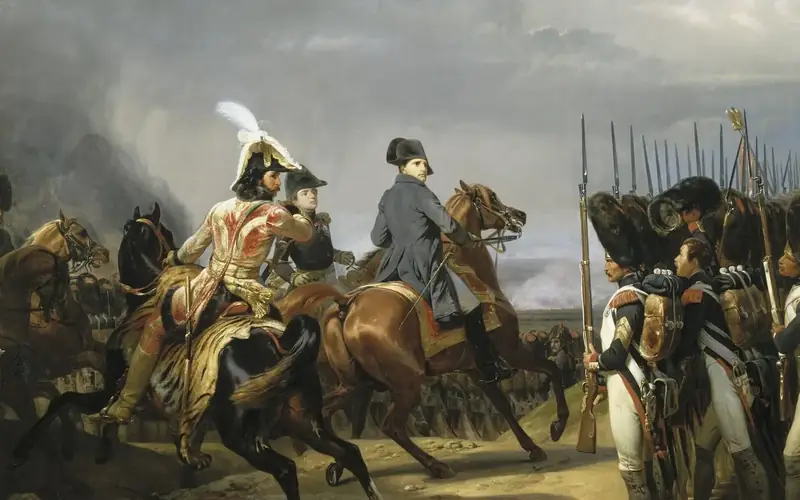
At Austerlitz on 2 December 1805 Bernadotte commanded I Corps. After Soult's IV Corps assault on the Pratzen plateau, I Corps supported and consolidated the occupation of the heights. It did not deliver the first Pratzen shock, but took part in fixing and exploiting success.
In October 1806, during the twin battle of Jena and Auerstedt, Bernadotte and I Corps stood between the two battlefields. Davout alone faced the bulk of the Prussian army at Auerstedt; Napoleon crushed another fraction at Jena. Bernadotte did not intervene in time to support Davout.
The controversy was immediate and lasting: Napoleon accused Bernadotte of slowness, even of ill will. Historians still debate the orders received, distances and responsibilities. The fact remains: I Corps did not bring the expected support at Auerstedt.
Operational role
The I Corps of 1805-1806 illustrates the strength and fragility of the corps system: able to march fast within an overall plan, dependent on its chief's initiative when improvisation between two battlefields was required.
At Austerlitz the corps served Napoleon's plan by consolidating the centre after Soult's shock. At Jena-Auerstedt the lack of support for Davout lastingly tarnished Bernadotte's image in the Emperor's eyes.
Later Bernadotte would leave French service for the Swedish throne; the memory of 1806 would remain an open file between Austerlitz's glory and Auerstedt's shadow.
Memory and assessment
I Corps under Bernadotte was not the 'Pratzen corps' — that glory belongs to Soult — but it was indeed the I Corps present at Austerlitz and engaged in the 1805 campaign.
Its posterity is twofold: contribution to the victory of the Three Emperors, and the 1806 controversies that still feed biographies and historical polemics.