Rebuilding an army in three months
Nothing remained of the Grande Armée of Russia. Napoleon called up the classes of 1813 and 1814 in advance, recalled the National Guard cohorts and drew on the navy: two hundred thousand men were assembled by spring, young and half-trained — the "Marie-Louises". Above all the horses were missing: without cavalry one wins battles but can no longer exploit them.
Lützen, Bautzen, the fatal armistice
Prussia had changed sides in February. Napoleon beat the Allies at Lützen on 2 May, then at Bautzen on the 20th and 21st; two victories without pursuit for want of cavalry, and Duroc was killed there. On 4 June he accepted the armistice of Pläswitz to draw breath. It was the mistake he himself acknowledged: in two months Russia and Prussia doubled their strength, England paid the subsidies and Austria completed its mobilisation.
The Congress of Prague offered peace — the Rhine and Italy in exchange for Germany and Poland. The ultimatum expired on 10 August without an answer; Vienna declared war on the 12th.
Leipzig
The Allies' Trachenberg plan was simple: avoid the Emperor, beat his marshals. It worked at Grossbeeren, the Katzbach, Kulm and Dennewitz, while Napoleon still won at Dresden on 26-27 August.
From 16 to 19 October at Leipzig, three hundred thousand Allies surrounded one hundred and ninety thousand French: the Battle of the Nations. The Saxons going over to the enemy opened the centre; the retreat turned to disaster when the Elster bridge was blown too early, stranding twenty thousand men on the far bank — Poniatowski, a marshal for three days, drowned there. The Confederation of the Rhine dissolved, Germany was lost, and the war entered France.
See also
Go further
Recommended books to dig deeper (affiliate links)
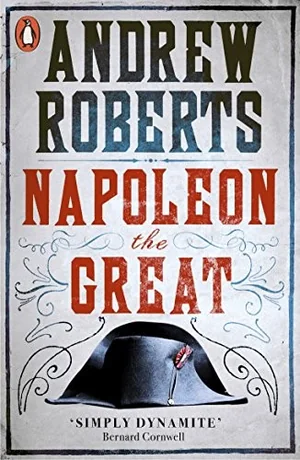
Napoleon the Great
Andrew Roberts · 2014
A monumental biography drawing on Napoleon’s 33,000 surviving letters, admiring but rigorous.
See on Amazon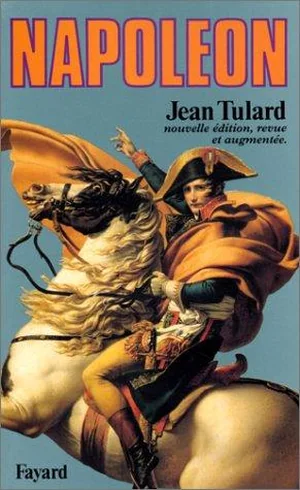
Napoléon ou le mythe du sauveur
Jean Tulard · 1977
The book that reshaped how the man is read: how France gave itself a saviour, and what it cost.
See on Amazon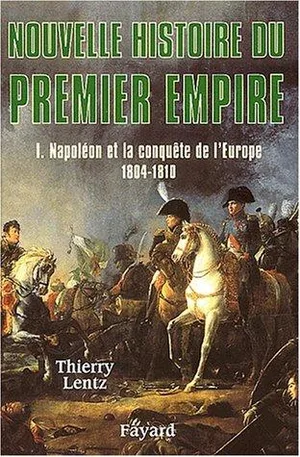
Nouvelle histoire du Premier Empire
Thierry Lentz · 2002-2010
Four reference volumes on institutions, diplomacy and collapse: the scholarly synthesis of the subject.
See on AmazonAs an Amazon Associate, this site earns from qualifying purchases.
Support the encyclopedia
Napoleon Empire is an independent project. Your contribution helps grow the content and keep the site running.
DonateSecure payment on the platform you choose.