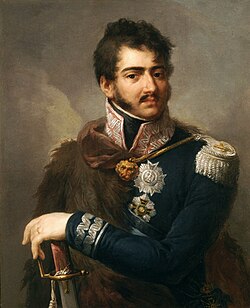
Józef Antoni Poniatowski (1763-1813), nephew of Poland's last King Stanisław August, embodies the tragic alliance between a nation carved up by partitions and the Napoleonic Empire that erected the Duchy of Warsaw after Tilsit. Trained in the Austrian cavalry school, he chose Warsaw over Vienna and forged an army where nobles and peasants fought under the French eagle while cultivating symbols, regimental patron saints, and the dream of restored independence. The 1809 campaigns against Austria, Poland's huge contribution at Borodino and the Berezina, then the 1813 German retreat measure blood paid out of proportion to the duchy's population. On 16 October 1813 Napoleon named him Marshal of the Empire on the Leipzig battlefield — the only foreigner so raised for battlefield valour, aside from honorific titles for allied princes. Wounded, refusing capture after a bridge over the Elster blew too soon, he tried to cross the river mounted and vanished in the flood: legend of a Polish Leonidas was born at once, between national Romanticism and French military respect. Dead before the Congress redraw the map without resurrecting the Polish state, he remains inscribed on the Arc de Triomphe and at Wawel, read differently by each regime. Historians now cross ducal archives, correspondence with the imperial staff and Polish memory to nuance the myth without denying the tenacity of the commander who held the southern flank in 1812 and the last bridge at Leipzig.
Partitions, Vienna, and the Tilsit Turning Point
Józef Antoni Poniatowski was born in Vienna on 7 May 1763, into a princely Polish family already condemned by geopolitics: the Polish-Lithuanian Commonwealth, torn apart by Russia, Prussia and Austria, vanished from the map as a sovereign state before he came of age. His uncle, Stanisław August Poniatowski, ruled in Warsaw as an enlightened sovereign and hostage of the partitioning powers. Józef grew up between courts, Austrian cavalry discipline, the confused feeling of belonging to a fatherland that survived in hearts more than on maps.
He served in the Imperial army, learned the officer's trade under Joseph II's strict rules: Bohemian manoeuvres, inspections, sabre code of honour. The young prince excelled without ostentatious arrogance; yet his attachment to Warsaw did not weaken. Kościuszko's risings, the third and fourth partitions, successive foreign armies on Polish lands built in him a political awareness rare in a staff officer: serving a neighbouring power might serve the family's material survival, but not the national cause.
When French armies entered Poland again after Austerlitz and diplomatic reshuffles, when Napoleon crushed the Russians at Friedland, the Tilsit congress redrew north-eastern Europe. The Duchy of Warsaw was born as a French satellite, with fragmented territory, Napoleonic administration and an army to rebuild almost from scratch. For Poniatowski the moment was decisive: stay in Francis I's white-buttoned uniform or don that of the Polish legions under French tutelage.
He returned, took military command of the new duchy, abandoned the Austrian career. Vienna spoke treason; Warsaw, redemption. That pivot defined the rest of his life: he would never be one more French marshal, but standard-bearer of a nation negotiating existence through bayonets allied to the Empire. Diplomats knew hope of a reconstituted Poland after definitive peace was coin Napoleon spent; Poniatowski knew it too, and still tried to keep human reserves for the future.
The duchy's first years mixed administrative reform, conscription, peasant discontent and noble ambition. The prince had to juggle Paris's orders, Warsaw's expectations and the harsh reality of a tight military budget. His command style — presence under fire, cavalry charges in the front rank when morale flagged — took shape in these apprentice years: prestige of the fallen royal house was paid in visibility on the ground.
When the War of the Fifth Coalition broke out, Austria marched on the duchy: Poniatowski would have to prove on maps and guns that the choice of 1807 was not only a diplomatic gamble but an ability to resist armed against his former military homeland.
The Duchy of Warsaw — Army, Raszyn, and the Price of Blood
Between 1807 and 1812 Poniatowski built a force where Polish nobles and peasants served side by side — a social feat in a still deeply feudal society. Uhlans, infantry squares, batteries from seized Prussian arsenals: organisation copied French regulations, but colours, hymns and regimental patron saints recalled these men died as much for the shadow of a future Poland as for the Emperor of the French.
In April 1809 Archduke Ferdinand drove columns toward Warsaw. The Battle of Raszyn, near the capital, pitted a sizeable Austro-Hungarian corps against duchy troops under Poniatowski. Bloody and strategically indecisive on paper, the fight bought time, warded off immediate fall of the city and showed Paris the Polish satellite held under pressure from the prince's former military homeland. The image of Poniatowski as defender of national soil — even under French banner — began to spread in press and song.
Counter-offensives that followed, the push into Galicia, negotiations with local insurgents made a campaign where the general mixed cavalry daring and loss accounting. Napoleon observed, decorated, promised territorial compensation that often remained dead letter after the next peace congress. Poles paid every imperial victory in disproportion to their demographics; illusion of full restoration after definitive peace structured recruitment as much as it prepared future disappointments.
In correspondence less lyrical than some French marshals', Poniatowski stressed training cadres, keeping reserves, avoiding useless skirmishes that would gnaw the last generation fit to wear uniform. He was a constrained strategist: obey the Emperor while sparing Polish flesh. The balance held as long as great continental campaigns did not impose total mobilisation.
1810–1811 saw the duchy woven into the Continental System, Russian watchfulness tighten eastward, rumours multiply of new war with the tsar. Poniatowski took part in preparations, knew the next conflict would drag a massive share of the ducal army into distances and climates Warsaw maps hardly prepared for. He still obeyed: refusal risked pure erasure of the duchy from negotiators' tables.
When the Grand Army crossed the Niemen in June 1812, tens of thousands of Poles — foot, horse, gunners — followed the eagle toward Moscow. Poniatowski, commanding V Corps, carried hope and fear of a nation staking its blood on French victory over Alexander.
1812 — Borodino, Retreat, and the Berezina
On the Grand Army's southern flank, Poniatowski's V Corps faced Prince Bagration's Russian wing, then after his death at Borodino on 7 September tried to keep enemy corps from outflanking Napoleon and cutting junctions with allied Saxons and Austrians. August and September were a succession of forced marches, skirmishes where Polish cavalry charged superior masses with daring that stunned French observers.
At Borodino his corps fought with ferocity that commanded respect: repeated charges, frightful losses, refusal to yield ground even when Russian artillery turned furrows into charnel houses. Poniatowski did not decide the overall plan; he executed with tenacity that won imperial praise and the grognards' gaze, unused to allies fighting as hard as themselves. For the staff, V Corps was one of the pivots keeping the southern wing from collapsing before the centre decided.
Moscow's occupation and fire opened the deadliest phase: the retreat. Poniatowski covered flanks, sacrificed rearguards, tried to preserve shreds of cohesion as the main column disintegrated under cold, partisans and phantom supply. Every dispatch to Warsaw was a grim reckoning: the duchy paid blood tax disproportionate to its population.
At the Berezina his name was among those holding crossings under enemy fire, organising successive charges to buy hours needed for the crossing. He came out alive, diminished, but upright. Behind him, thousands of Poles did not recross the river. News crossed Europe: the Franco-Polish alliance still held on the battlefield, but the duchy's social body was wounded at the roots.
Modern historians stress the contrast between Polish units' tactical bravery and overall demographic cost: every battle won or held on the way back bought the French army time at the price of a Polish generation. Poniatowski knew it; he lacked freedom to break with Napoleon without handing the duchy to Russian or Prussian annexation already waiting.
In 1813, when the French Empire tried to rebuild its line in Saxony, what remained of the Polish army was called back to the colours. Poniatowski gathered tried cadres, integrated hesitant contingents, prepared the last great continental melee: Leipzig, where Napoleonic Europe's fate would play out in a few days in a Saxon city's suburbs.
Leipzig — The Baton of 16 October and the Elster River
The Battle of the Nations, 16-19 October 1813, gathered nearly six hundred thousand combatants in and around Leipzig: the greatest clash of the Napoleonic era. Poniatowski held urban and suburban sectors, chained counter-attacks, compensated by élan what numbers could no longer assure. The Emperor, aware of the symbol, raised him to the marshalate on 16 October under fire — exceptional distinction for a foreign prince fighting for valour, not dynastic alliance alone.
The gesture bound the duchy again to French arms as the Russo-Prusso-Austrian coalition tightened the noose. Poniatowski, already wounded, accepted the baton without hollow triumph: he knew it honoured Polish sacrifice as much as it was a tool to keep duchy troops cohesive in the storm. The following days saw French positions yield, the city tilt, the imperial army have to pull back through suburbs and gardens under crossfire.
Retreat to the Elster became logistical and human nightmare: a bridge blew before the last rearguard crossed — sapper error, fate, or controversial decision, debate would last centuries. Thousands of soldiers stayed on the enemy bank, taken or massacred. Poniatowski, wounded again, refused personal surrender. Mounted, he tried to cross the swollen river; his horse fell and the marshal vanished in dark waters.
The body would be found downstream; identity confirmed by uniform and witnesses. Immediately legend forged the tale of the prince preferring death to capture by powers who had partitioned his fatherland — Romantic simplification, yet revealing Polish need for a hero uniting military bravery and political refusal. On the French side, the marshal dead in action entered the gallery of the Empire's last act's brave.
In strict military terms Leipzig ended Napoleonic domination in Germany and opened the road to the France of 1814. For Warsaw it ended the duchy's army as autonomous instrument: future congresses redistributed territory without resurrecting sovereign Poland. Poniatowski would not see the clauses; he had anticipated their lines in his 1812–1813 letters.
News of his death crossed Europe in weeks: from Dresden to Paris, Kraków to Russian camps, each side measured what it meant to lose a commander able to unite Polish cavalry and French discipline on one battlefield.
Tomb, Arc de Triomphe, and Shared Memory
Warsaw, Kraków, Romantic exile: Poniatowski's memory crossed the nineteenth century like a Polish Leonidas — hyperbolic comparison revealing national need for a sacrificial figure. Mickiewicz and poets of the great migrations made him a tragic hero; French military historians a marshal of unquestioned but marginal value in the Napoleonic hierarchy of the living; Russian propaganda, a rebellious vassal among enemies of tsarist order. Each regime cast a different shadow on his tomb.
His ashes rest at Wawel after transfers and controversy; in Paris the Arc de Triomphe inscribes his name among the Empire's generals, a sign that Republican and French Imperial France integrated the prince into the pantheon of victors of their wars, beyond mere diplomatic alliance. Twentieth-century Polish schoolbooks, popular culture, epic films constantly reactivate the image of the lion-maned marshal thrown into the water.
Napoleon on Saint Helena is said — according to Las Cases — to have called Poniatowski « a brave man »; the phrase is short, almost banal, but in the exiled Emperor's mouth it weighs: it suggests soldier's respect for soldier, beyond cabinet calculation on Poland's fate. French generals who served with him in V Corps long kept memory of an ally who asked no favour but held rank under fire.
Contemporary historians cross duchy archives, correspondence with Berthier and intendants, Leipzig medical reports and Elster survivors' testimony to dismantle some legendary embellishments without erasing death in combat during a disorderly retreat. Drowning becomes documented fact; the « choice » to die rather than surrender remains interpretation, yet fits repeated refusal of personal capitulation observed by witnesses.
For Empire Napoléon, Poniatowski embodies the tragic dimension of the Franco-Polish alliance: hope of a nation resurrected by arms, disappointment of the 1814–1815 treaties, splendour of final sacrifice on a bridge blown too soon. To read his life is to understand the imperial epic was not only French — that it absorbed whole peoples in a dream of glory and reconstruction whose price was measured in rivers crossed too late and bridges blown before the last unit.
Discover other characters
Napoleon Bonaparte
Emperor of the French
Eugène de Beauharnais
Viceroy of Italy
Joachim Murat
Marshal of the Empire, King of Naples
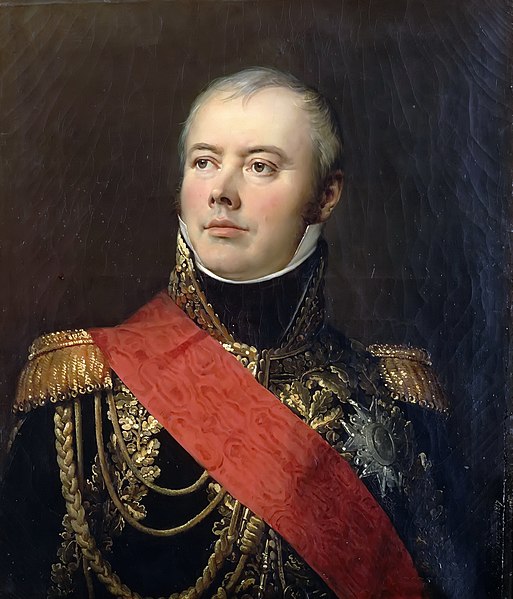
Jacques Macdonald
Marshal of the Empire, Duke of Taranto
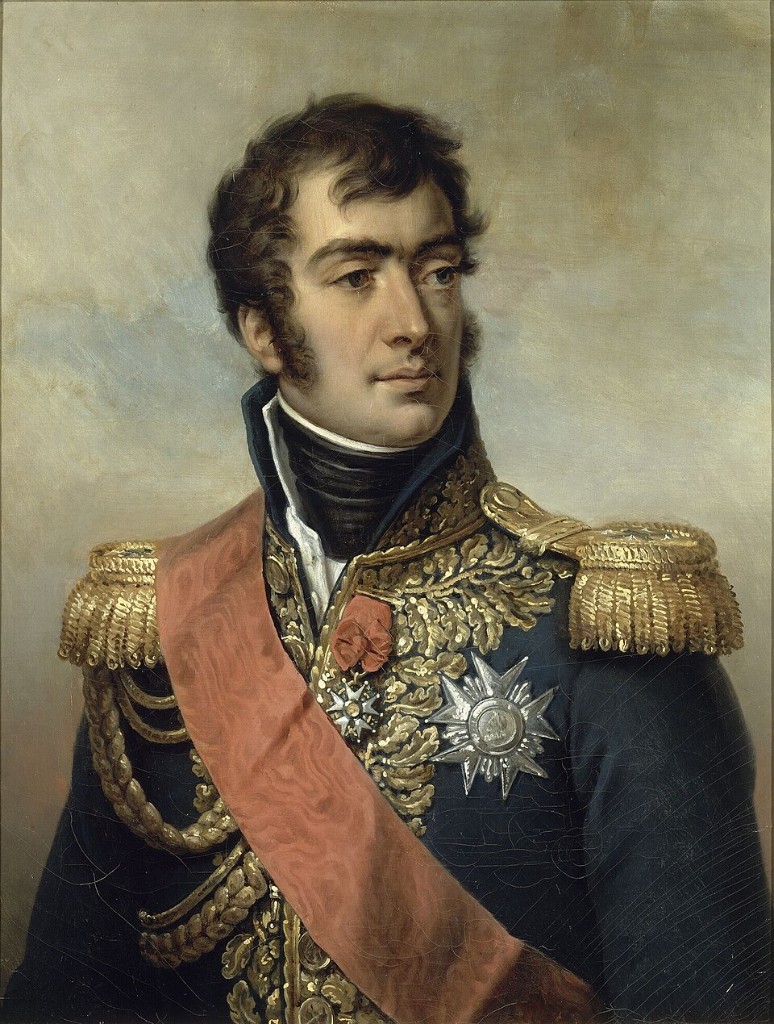
Auguste de Marmont
Marshal of the Empire, Duke of Ragusa
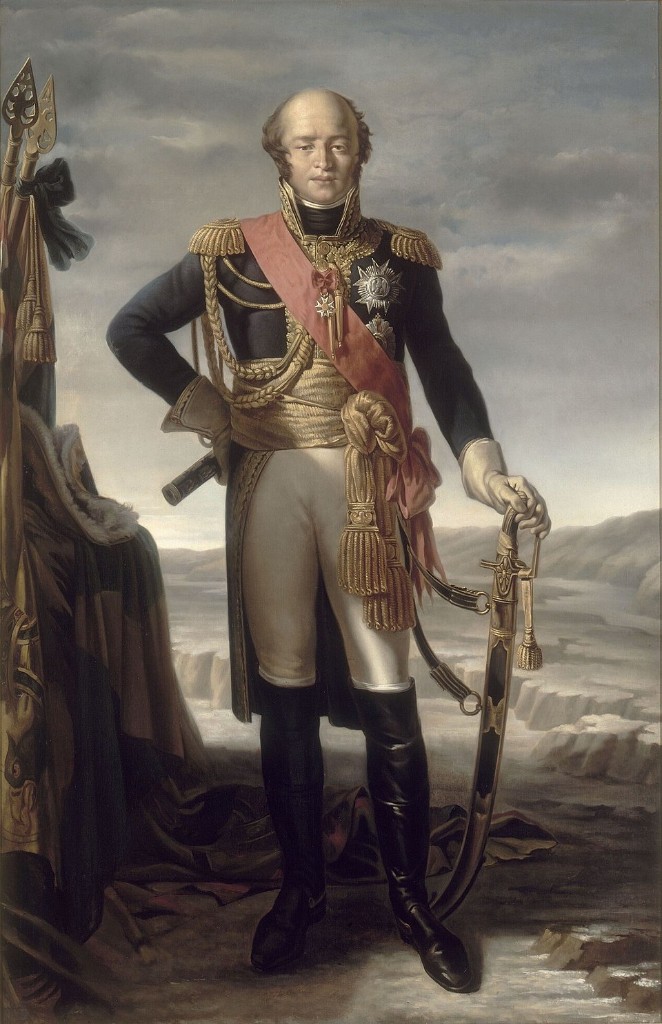
Louis-Nicolas Davout
Marshal of the Empire, Prince of Eckmühl
Go further
Recommended books to dig deeper (affiliate links)
Napoleon the Great
Andrew Roberts · 2014
A monumental biography drawing on Napoleon’s 33,000 surviving letters, admiring but rigorous.
See on Amazon
Napoléon ou le mythe du sauveur
Jean Tulard · 1977
The book that reshaped how the man is read: how France gave itself a saviour, and what it cost.
See on Amazon
Nouvelle histoire du Premier Empire
Thierry Lentz · 2002-2010
Four reference volumes on institutions, diplomacy and collapse: the scholarly synthesis of the subject.
See on AmazonAs an Amazon Associate, this site earns from qualifying purchases.
Support the encyclopedia
Napoleon Empire is an independent project. Your contribution helps grow the content and keep the site running.
DonateSecure payment on the platform you choose.