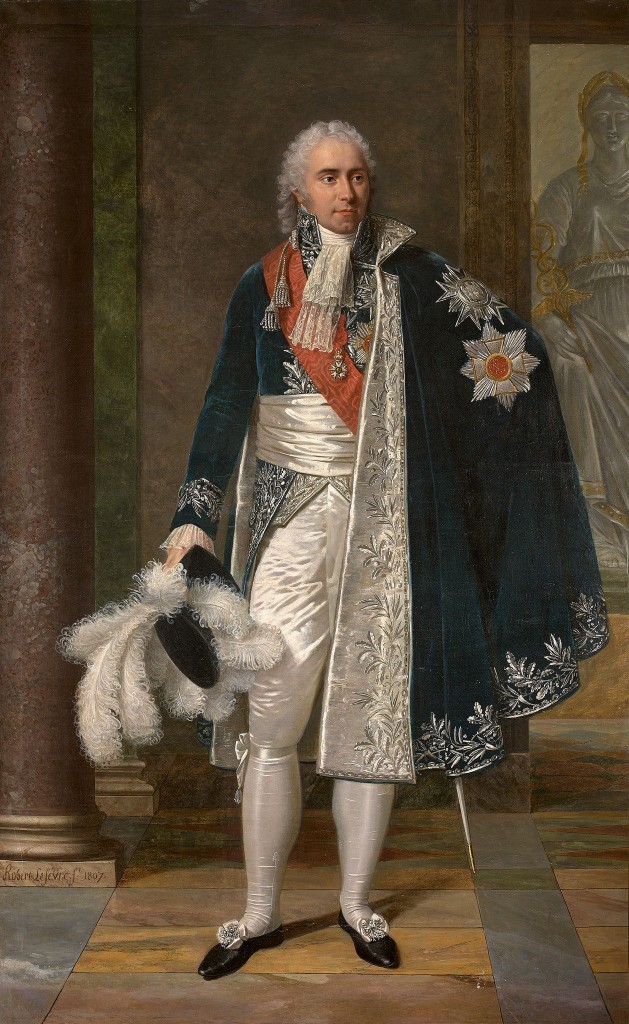
Born at Dijon on 22 July 1763, Hugues-Bernard Maret lived the Revolution as lawyer and journalist: he founded the Bulletin de l'Assemblée nationale, forerunner of Le Moniteur universel, and joined the Ministry of Foreign Affairs before a London mission that ended in Austrian captivity (1793–1795), exchanged for Madame Royale. Under the Consulate and Empire he became secretary to the consuls then general secretary of the government: he formatted the Grand Army bulletins Napoleon dictated after each victory, handled part of official correspondence, and followed the Emperor on campaigns in Austria, Prussia, Spain, and as far as the Moskova. Raised Duke of Bassano in 1809, he replaced Jean-Baptiste de Nompère de Champagny at Foreign Affairs and combined the office with Secretary of State from 1811 to 1813, until replaced by Caulaincourt amid diplomatic reshuffling before collapse. Faithful at Fontainebleau, he accompanied Napoleon to Elba as secretary; exiled after Waterloo, allowed to return in 1820, he became a peer of France and briefly President of the Council under Louis-Philippe in November 1834. Memoirs and correspondence of the day describe him as the discreet craftsman of state speech calibrated for Europe's chancelleries as for French opinion. He died in Paris on 13 May 1839, buried at Père-Lachaise — emblematic figure of the « imperial pen » between military propaganda and the archives of power.
Dijon, revolutionary tribunes, and captivity 1793–1795
Hugues-Bernard Maret was born at Dijon into the robe bourgeoisie: the parlement of Burgundy trained lawyers used to briefs, hearings, provincial networks. The Revolution seized him as a young adult; he chose neither flight nor militant silence, but the pen. In 1789 he launched the Bulletin de l'Assemblée nationale, an editorial venture aiming to publish regular accounts of debates — prototype of what would become Le Moniteur universel, official organ of the Republic then the Empire. That choice placed him at the crossroads of opinion: to inform, summarise, sometimes steer reading of sessions became his trade before he held a ministerial desk.
In 1792 he joined the Ministry of Foreign Affairs, where mastery of drafting and languages made him valuable. The following year, with Charles-Louis Huguet de Sémonville, he was sent on diplomatic mission to London in a context of war and mutual suspicion between republics and coalition monarchies. The return journey took them through Austrian-controlled territory: both envoys were arrested, treated as representatives of a hated regime, and held until 1795. Their release belonged to a famous political exchange — the « niece of Louis XVI », Madame Royale, left the Temple prison for the freeing of French hostages. Maret emerged marked by prison experience but intact in moderate convictions: he had not known Parisian Terror from within, but the fate of ideological prisoners of war.
Back in Paris, he recovered Le Moniteur and the antechambers of the weakened Directory executive. His profile — neither Jacobin nor royalist, competent, discreet on public stands — matched the type of man 18 Brumaire's plotters sought to restore order to government paperwork. Meeting Bonaparte, contact with circles preparing the coup, integrated him into the Consular renewal without his being a general or a public-square orator.
The years 1795–1799 saw him refine Le Moniteur's editorial model: numbering of decrees, stable rubrics, diffusion to departmental administrations, coordination with Paris printers. That technical routine earned him a reputation for reliability as military coups succeeded; he knew how to publish next day a text presenting new power's legality as self-evident — competence Bonaparte would exploit ceaselessly as First Consul.
Under the Consulate, Maret climbed secretarial ranks: first secretary to the consuls, charged with circulars and publishable versions of decisions, then general secretary of government from 1799–1800 by administrative stages. He became a pivot between Bonaparte's cabinet and ministries: what had to be « said » officially, printed, archived, proofread before dissemination often passed through his hand or under his supervision.
This phase fixed the model of his career: Maret was neither military strategist nor front-line treaty negotiator, but the man who turned power's decisions into published texts, coherent sequences for administration and for literate Europe still reading French official sheets to see where stabilised Revolution headed.
Grand Army bulletins, campaigns, and the diplomatic backdrop
From Consular then Imperial years, Maret embodied the « bulletins man »: after each major victory — Austerlitz, Jena, Friedland, Wagram among the most cited — Napoleon dictated or sketched a text Maret formatted, harmonised with Le Moniteur's style, had proofread by military cabinet staff before dissemination across the Empire and beyond. These bulletins were not mere communiqués: they built a narrative where French losses were minimised, command genius exalted, each battle presented as decisive turn of European history. Modern state propaganda found one of its most effective channels there; Maret was its intellectual layout editor.
He also oversaw useful censorship, coordination with controlled press, translation or recycling of « good news » in departmental print depots. His office handled part of routine diplomatic correspondence, appointments, instructions to ambassadors — always under the Foreign Minister of the day, but with growing visibility to the ever-travelling Emperor.
Maret followed campaigns: tent, post relay, improvised headquarters. At the Moskova in 1812, he was among civilians holding files while the Guard and military staff decided movements. During the retreat he protected archives and registers as disaster allowed; at the Berezina he crossed with survivors of the civil apparatus, symbol of physical loyalty to the regime as to Napoleon.
Diplomatically, great scenes — Tilsit in 1807, where the Emperor met Tsar Alexander and the King of Prussia in a river staging on the Niemen — unfolded without Maret as chief negotiator, but in an atmosphere where his service prepared dispatches, communiqués, and versions for European press. The image of sovereigns' meeting summed for the public the apogee of French continental domination; behind the curtain, men like Maret ensured continuity between political spectacle and paperwork.
He worked in functional tandem with private secretary Méneval: the latter transcribed private correspondence and the chief's intimate drafts; Maret channelled public expression of power. The two complemented each other without overlap — typical Napoleonic cabinet architecture, where the master's absolute centralisation required fine division of pen tasks.
Foreign readers — London papers, German gazettes, correspondents attached to courts — dissected bulletins as barometer of French fortune; Maret knew it and sometimes calibrated phrasing to withstand hostile rereading without abandoning the victory message. That language game, on the border of customary international law and psychological war by press, was integral to his trade at the summit of state.
Minister of Foreign Relations, Duke of Bassano, and disgrace of 1813
Raised Duke of Bassano in 1809 — an imperial noble title tied to an Italian locality of the Neapolitan kingdom — Maret now combined court dignity with heavy administrative load. The nickname « Bassano » stuck to him in memoirs and foreign diplomacy, sometimes more than his birth name.
In April 1811 he succeeded Jean-Baptiste de Nompère de Champagny at the Ministry of Foreign Relations while keeping the office of Secretary of State: rare concentration of pen portfolios and formal negotiations. He inherited a tense context: the Empire extended annexations, Spain still bled, Tsar Alexander reassessed his Tilsit alliance; every dispatch counted. Maret was neither Talleyrand in salon cynicism nor Caulaincourt in military intimacy with the Emperor; he was manager of the daily diplomatic machine.
Archives and correspondence show a minister absorbed in coordinating embassies, instructions to representatives in Vienna, Berlin, St Petersburg, legal preparation of treaties and Napoleonic coalitions. Napoleon, increasingly present on fronts, dictated lines Maret had to translate into protocol language acceptable to European chancelleries.
In November 1813 the Emperor replaced him with Armand de Caulaincourt at Foreign Affairs. Reasons mixed personal dissatisfaction, relative failures of negotiations with Austria before 1813's shift, and need for a military man of trust to speak to coalitions as the Empire retreated. Maret was not erased: he remained close to power, witnessed the last dramatic months, but left the ministerial forefront as Europe tipped.
Fontainebleau, Elba, and exile after Waterloo
In 1814, at the Fontainebleau abdication, Maret was among the small group of servants who saw the curtain fall on the first imperial act. He chose loyalty to Napoleon rather than immediate rally to the Bourbons: he accompanied the ex-Emperor to Elba as secretary, resuming functions close to those he had held at the Tuileries but in a micro island state with still-monarchical pretensions.
This Elban interlude was no retirement: correspondence, projects, rumours from the mainland still crossed his desk. When Napoleon left for France in March 1815, Maret was not in the military front rank of the Hundred Days, but remained tied to the civil sphere of rebuilt power: circulars, proclamations, and official sheets still used turns of phrase he had codified under the Empire — discreet stylistic signature of a regime trying to revive in a few months. After Waterloo, the second abdication and Second Restoration closed the Bonapartist parenthesis: victors and ultras demanded heads and exile for fallen regime intimates.
Maret suffered exile like many others: stay at Graz then Trieste, reduced life but not complete indigence for a man who had managed networks and savings. The 1820 ordinance allowed him to return to France under moral and political surveillance — gradual return to constitutional notables' game rather than armed opposition.
July Monarchy, ephemeral presidency, and memory of the imperial pen
Under the July Monarchy, Louis-Philippe integrated former imperial servants into the Chamber of Peers when their profile seemed compatible with bourgeois order and Orléans dynastic stability. Maret became a peer of France — late recognition of a long career across several regimes without capital sentence. In November 1834 the king appointed him President of the Council of Ministers: the mandate lasted barely a few weeks, political as much as personal gesture, proof an old « man of Bassano » could still embody civil authority in a monarchy claiming moderation.
He died in Paris on 13 May 1839; burial at Père-Lachaise tied his memory to the gallery of First Empire figures. Nineteenth-century historians swung between admiration for administrative efficiency and distrust of propaganda he served; recent scholarship places Maret in the history of state media and revolutionary-imperial bureaucracy.
His trajectory sums a often overlooked social fraction: draftsmen, general secretaries, and pen ministers without whom neither bulletins nor printed treaties circulate — and without whom the Napoleonic legend as consumed by contemporaries and posterity would have had quite another texture.
Ministerial archive holdings and collections of dispatches preserved in Paris still allow reconstructing the pace of his work: stamps, certified copies, successive versions of a single communiqué — material traces of a writing trade in service of a state in permanent war.
Discover other characters
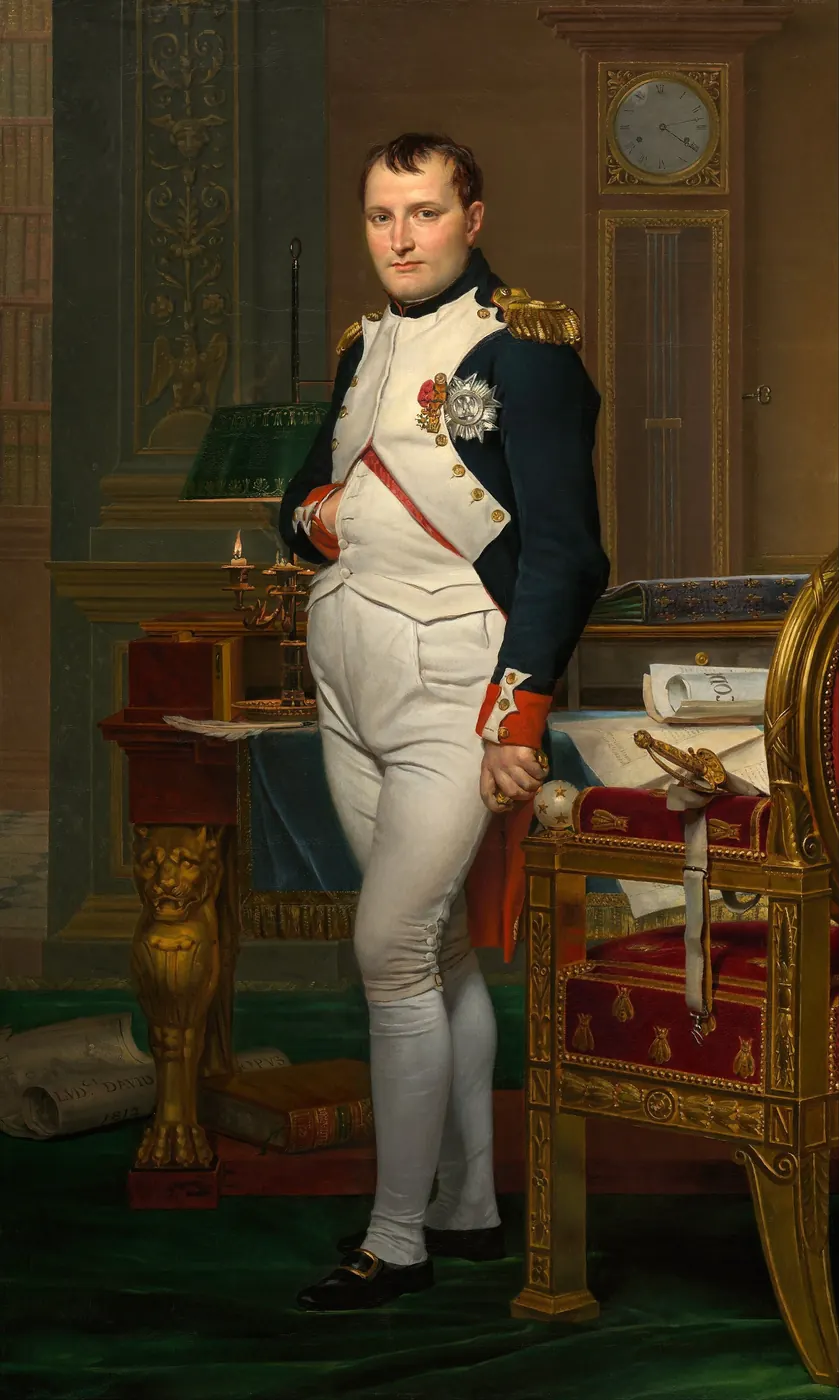
Napoleon Bonaparte
Emperor of the French
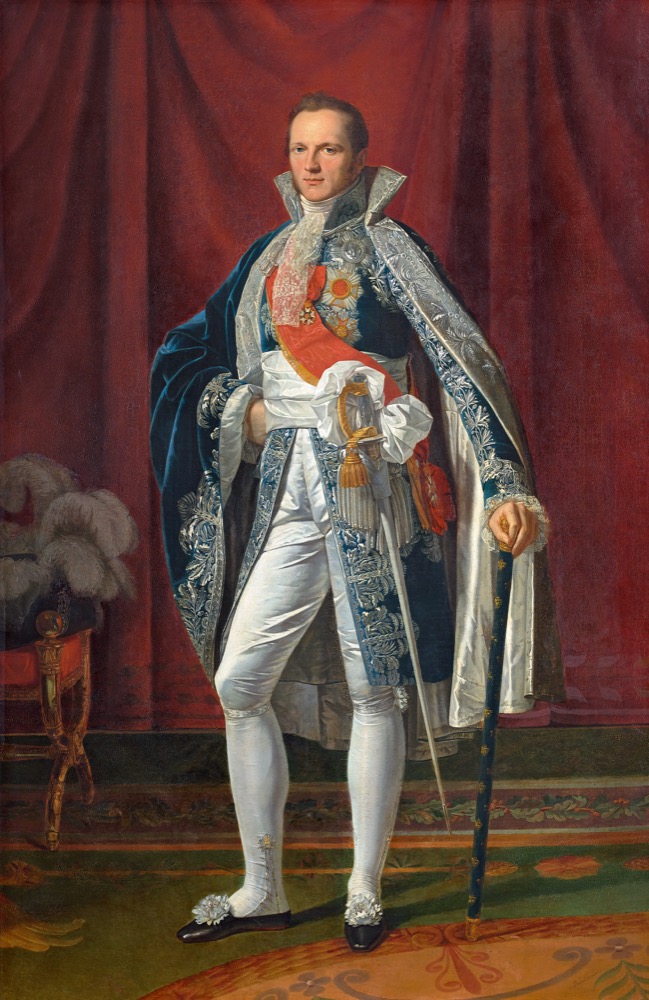
Armand-Augustin-Louis de Caulaincourt
Master of the Horse, ambassador to Saint Petersburg, Minister for Foreign Affairs
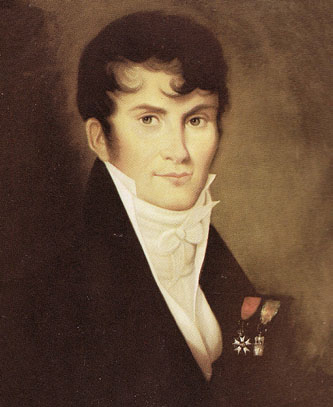
Claude-François de Méneval
Private secretary to Napoleon (1802–1813), Baron of the Empire; then secretary of the orders of Empress Marie Louise
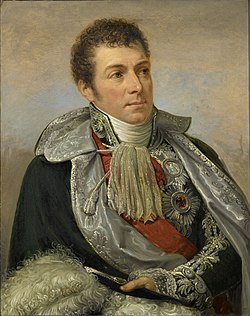
Louis-Alexandre Berthier
Marshal of the Empire, Prince of Neuchâtel and of Wagram, major-general of the Grande Armée (1805–1814)
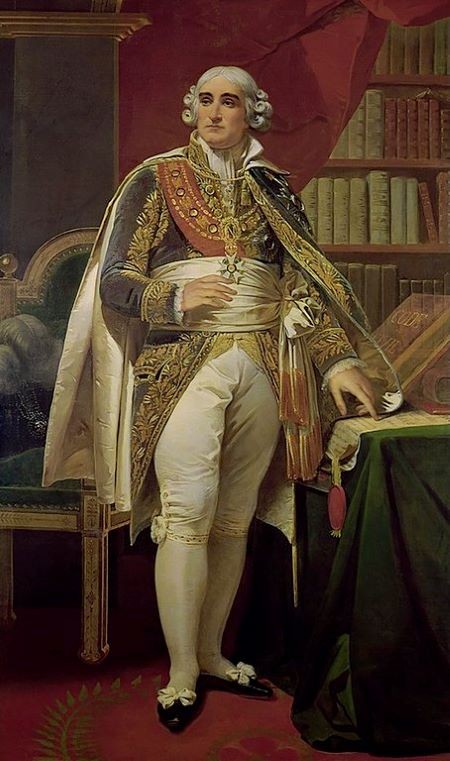
Jean-Jacques Régis de Cambacérès
Second Consul, Archchancellor of the Empire, principal architect of the Civil Code (1804)
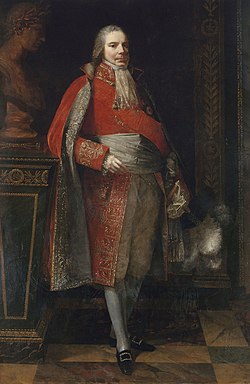
Charles-Maurice de Talleyrand
Minister for Foreign Affairs, Prince of Benevento, diplomat
Go further
Recommended books to dig deeper (affiliate links)

Napoleon the Great
Andrew Roberts · 2014
A monumental biography drawing on Napoleon’s 33,000 surviving letters, admiring but rigorous.
See on Amazon
Napoléon ou le mythe du sauveur
Jean Tulard · 1977
The book that reshaped how the man is read: how France gave itself a saviour, and what it cost.
See on Amazon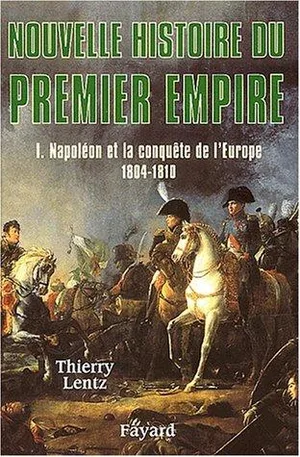
Nouvelle histoire du Premier Empire
Thierry Lentz · 2002-2010
Four reference volumes on institutions, diplomacy and collapse: the scholarly synthesis of the subject.
See on AmazonAs an Amazon Associate, this site earns from qualifying purchases.
Support the encyclopedia
Napoleon Empire is an independent project. Your contribution helps grow the content and keep the site running.
DonateSecure payment on the platform you choose.