Origins and creation
In 1806 Napoleon created the Guard fusilier regiments — fusilier-grenadiers and, in the same expansion, fusilier-chasseurs — to strengthen elite infantry without immediately diluting Old Guard criteria. These formations constitute what historiography calls the Middle Guard.
The project was clear: to offer a quality reserve, recruited among good line soldiers, yet not yet requiring the ten years’ service and stature of the foot grenadiers. The Middle Guard thus became an intermediate tier of the system.
Through successive decrees name and status were clarified. For soldier and enemy alike, belonging to the fusilier-grenadiers already meant entering the Guard’s restricted circle.
Organisation and strength
The fusilier-grenadiers were organised in regiment(s) and battalions on the Guard infantry model. Their strengths grew with campaign needs; they nonetheless remained well below the Young Guard masses created after 1809-1813.
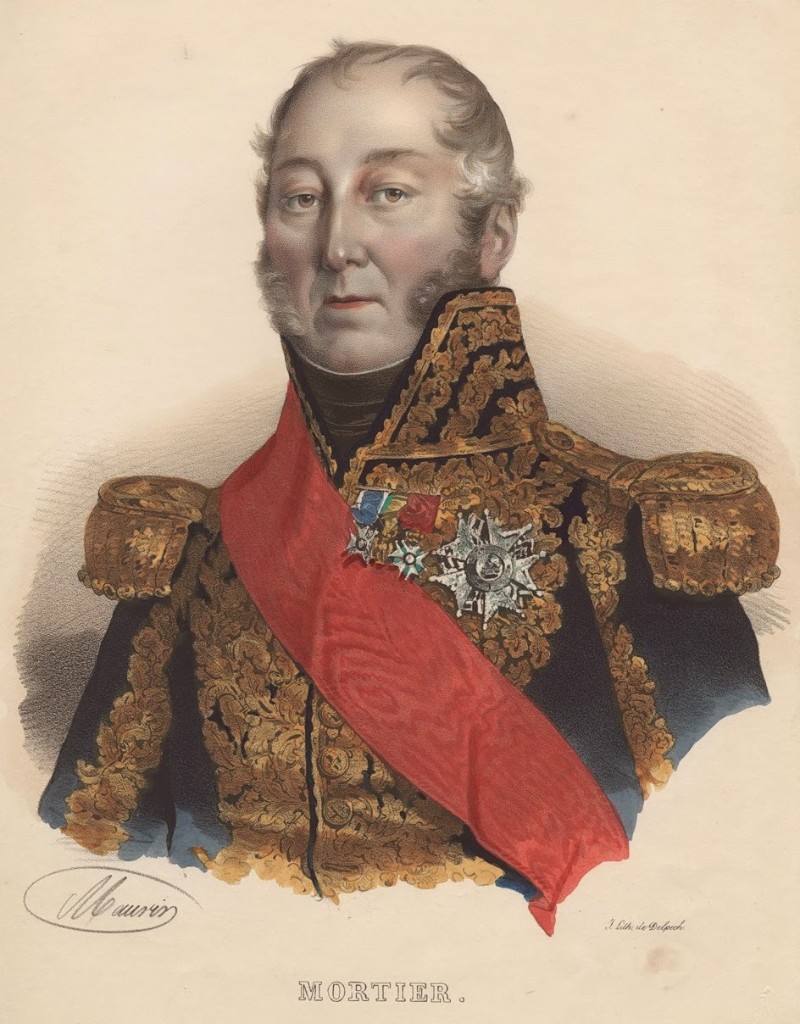
Guard infantry generals — Curial, Roguet and others according to period — appear in command of these formations. Mortier often commanded ensembles that encompassed them.
In the Old / Middle / Young Guard tripartition their place was central: too ‘new’ for the strict Old Guard, too selected to be confused with the tirailleurs.
Uniform, arms and recruitment
The fusilier-grenadier uniform approached that of the Guard while distinguishing itself from the grognards: shako rather than bearskin for much of the period, cuff and rank details proper to the Middle Guard. Arms remained the regulation infantry musket.
Recruitment drew from line regiments among men of good conduct and suitable stature, with seniority below that required for the Old Guard. Promotion into the fusilier-grenadiers was already an envied reward.
Training aimed at the same professionalism as the rest of the Guard: volley fire, column manoeuvre, defensive solidity. From 1813 the pressure of losses sometimes accelerated incorporations.
Deeds of arms
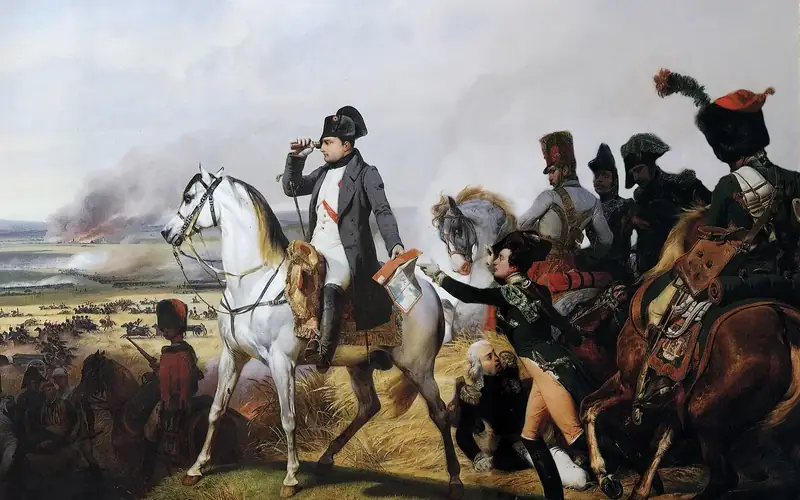
The fusilier-grenadiers fought in Prussia and Poland from their creation, then in the 1809 Austrian campaign — Essling and Wagram — where Guard infantry was more heavily engaged than in the Empire’s early years.
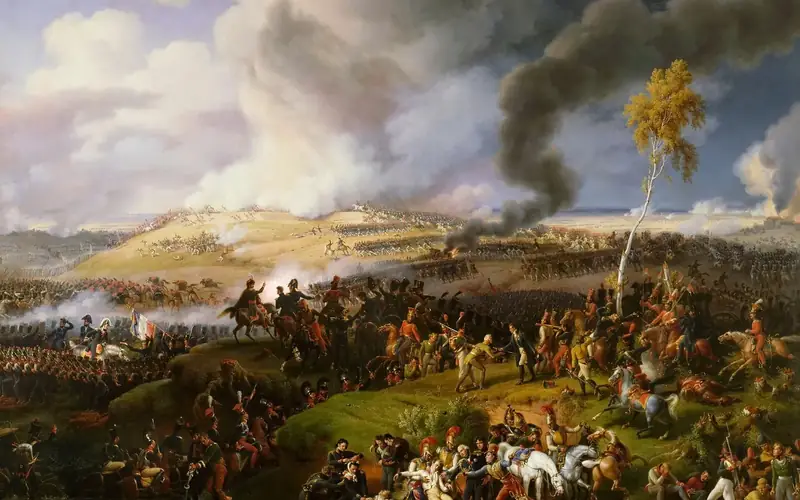
In Russia, at Borodino, Middle Guard elements were present in the reserve deployment. The retreat decimated cadres and soldiers. In 1813-1814 the Middle Guard took part in the German battles and the defence of French territory.
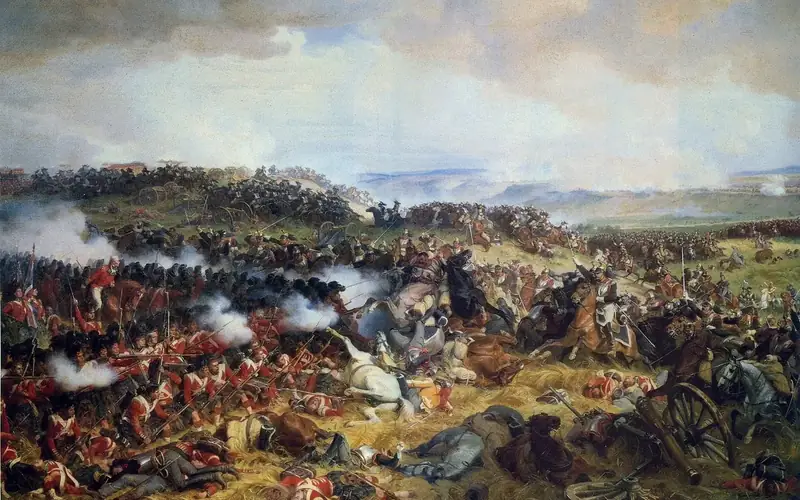
On 18 June 1815 at Waterloo it was mainly Middle Guard formations — including the fusiliers and equivalents under the Hundred Days organisation — that mounted the final assault on the Allied centre. The failure of that attack, under fire from British squares and with the Prussian arrival, marked the Empire’s military end.
The losses of that day, joined to the legend of the Guard that ‘dies but does not surrender’, have sometimes obscured the precise distinction between Old and Middle Guard: modern historiography works to restore it.
Legacy and memory
The Middle Guard suffers relative popular oblivion beside the bearskinned grognards. Yet without the fusilier-grenadiers the Napoleonic reserve system would not have sustained the widening of wars after 1806.
Waterloo paradoxically fixed their memory: it was they, more than the Old Guard, who carried the Emperor’s final infantry offensive.