Gribeauval inheritance
Jean-Baptiste Vaquette de Gribeauval (1715-1789) reformed French artillery in the eighteenth century: standardisation of pieces, carriages and train. The Napoleonic army inherited that system, perfected and massively employed.
Foot artillery meant crews who marched beside the guns (as opposed to mounted gunners of horse artillery). It formed the bulk of field companies attached to divisions and the reserve.
Without this mass artillery, Imperial infantry and cavalry manoeuvres would lose an essential part of their fire preparation.
Organisation
Foot artillery companies were divided between divisional and reserve artillery. An infantry division typically received several pieces; the army reserve concentrated heavier batteries for decisive moments.
The artillery train — horses, caissons, field forges — conditioned real mobility. On bad roads or after rain, 12-pounders became slow to bring into action.
Crew and horse strengths varied by campaign; official returns and field realities often diverged.
Matériel and calibres
Field guns of 4, 8 and 12 pounds (Gribeauval system and evolutions) formed the backbone of fire. Howitzers (notably 6-inch in the French system) completed high-angle fire against entrenchments or sheltered troops.
Solid shot, canister at short range, shell according to available ammunition: projectile choice depended on target and range. Rate of fire remained limited by muzzle loading and battery discipline.
Roundshot accuracy at medium range depended on ground, powder and layers' experience — far from later rifled-gun performance.
Tactics
Napoleon often concentrated fire before assault: battering a position, opening a moral breach, forcing the enemy to expose himself. Once in battery, foot artillery offered lasting fire volume.
Against infantry in column or line, short-range canister was devastating. Against entrenchments, shot and shell worked longer.
Battery protection — supporting infantry, high placement, withdrawing caissons — was part of the trade; an exposed battery could be overrun by cavalry.
Battle honours
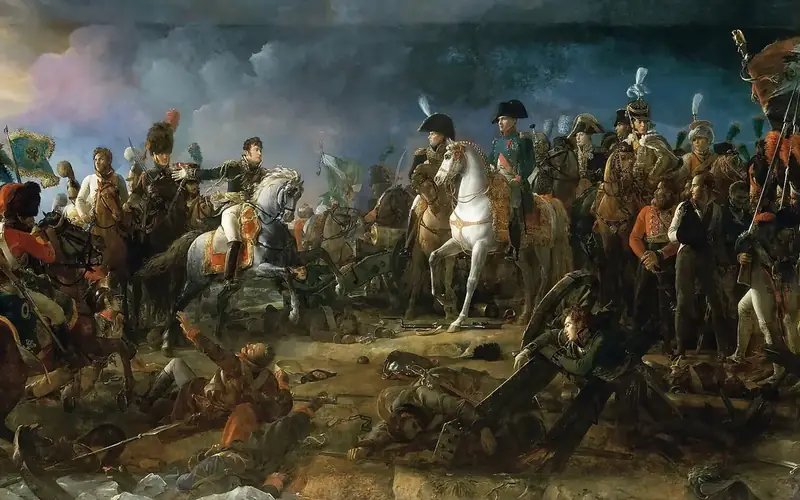
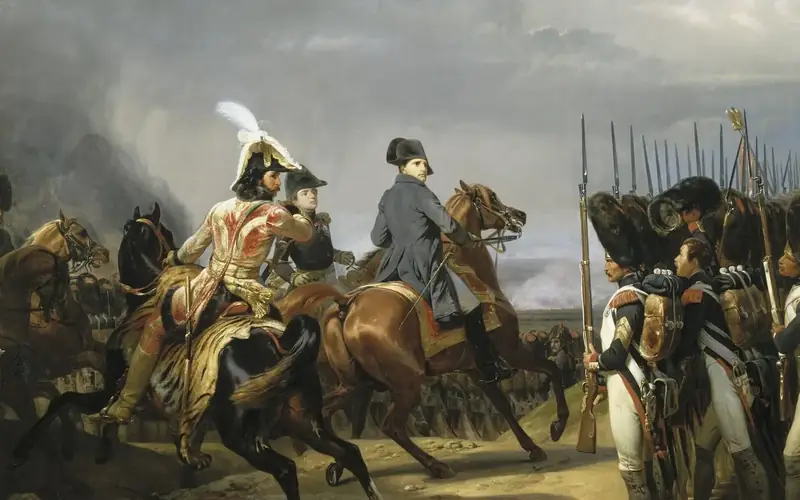
At Austerlitz, French fire prepared and supported the Pratzen manoeuvre. At Jena and Eylau, artillery weighed in days when visibility and ground complicated shooting.
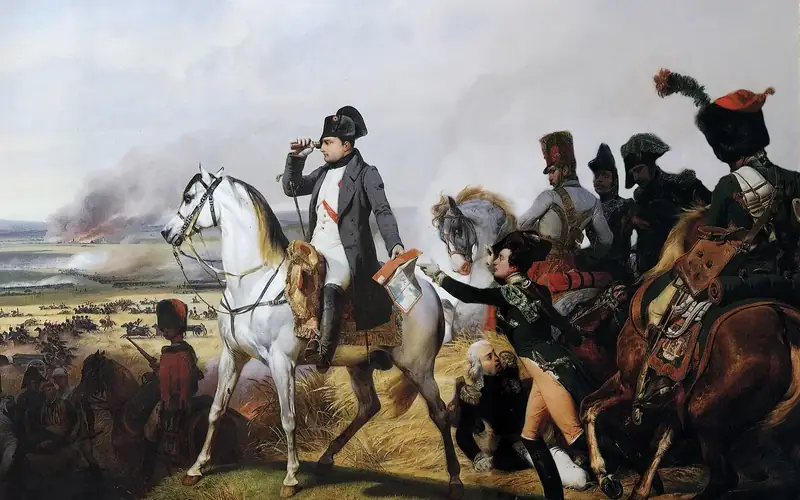
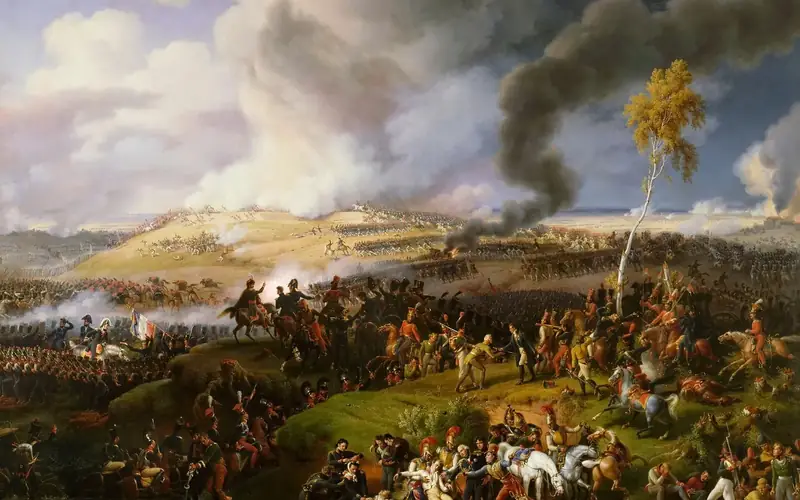
At Wagram, great artillery concentrations marked the battle. At Borodino, fire exchanges around Russian redoubts were extremely violent; crew losses were high.
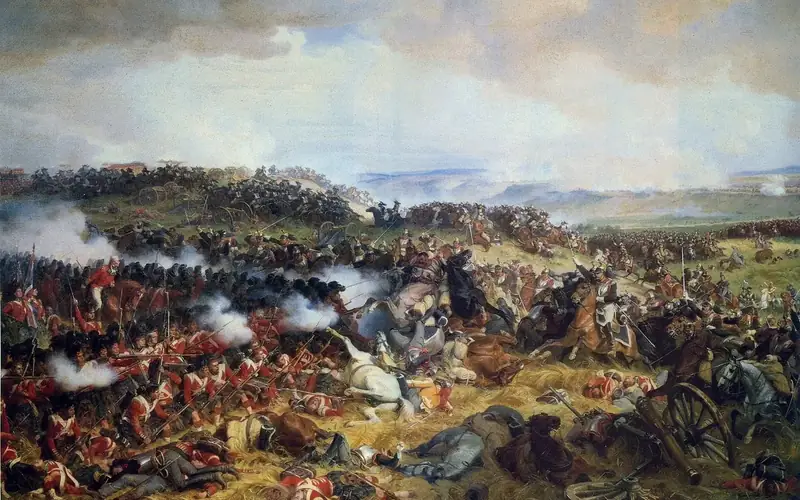
At Waterloo, French foot artillery took part in the opening bombardment and the day's duels; mud slowed movement and ricochet effectiveness.
Legacy
The Gribeauval system and Napoleonic mass artillery employment influenced all European artilleries until rifled breech-loaders arrived.
For this wiki, foot artillery is the battle's low voice: less visible than the charge, often decisive in preparing the shock.