Origins and creation
Heir to the Consular Guard artillery, the Imperial Guard foot artillery took shape after 18 May 1804. Napoleon, himself trained as an artilleryman, gave this arm particular attention.
Guard foot artillery companies were gradually added to the imperial reserve. They accompanied the major campaigns and formed, with the Guard horse artillery, the Grande Armée's elite park.
The principle was clear: to concentrate well-served guns, mobile at battle scale, available to prepare a breakthrough or crush a counter-attack.
Organisation and strength
Guard foot artillery was organised in companies, with a park of French regulation calibres — notably 12-pounder guns and howitzers according to period and need.
Gunner and train strengths varied by campaign. Recruitment and training quality distinguished this artillery from the line's: accuracy of fire, speed of coming into battery, discipline under fire.
Napoleon often decided himself the moment and place of concentrating Guard fires. Foot artillery then became the instrument of a battle plan more than of local tactical autonomy.
Uniform, arms and recruitment
The Guard artillery uniform — dark blue coat, arm distinctives — signalled elite membership. Gunners carried the equipment needed to serve the pieces and for close combat if the battery was threatened.
Recruitment favoured men of sound constitution, familiar with the gunner's trade. Promotion into Guard artillery was a reward for experienced line cadres and gunners.
Instruction stressed rate of fire, ranging and movement of the pieces. Under fire a Guard battery had to remain a reliable instrument in the Emperor's hands.
Deeds of arms
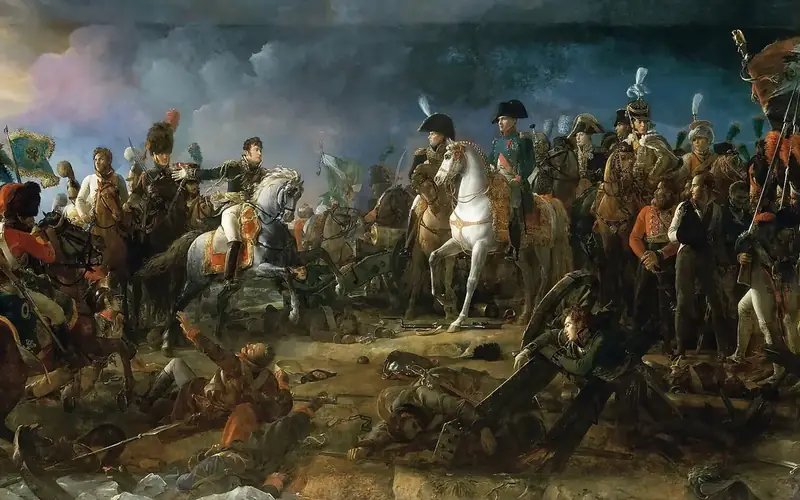
At Austerlitz on 2 December 1805 Guard artillery took part in the central reserve and the fire concentrations accompanying the decisive manoeuvre. It was not alone, but its presence reinforced the imperial reserve's weight.
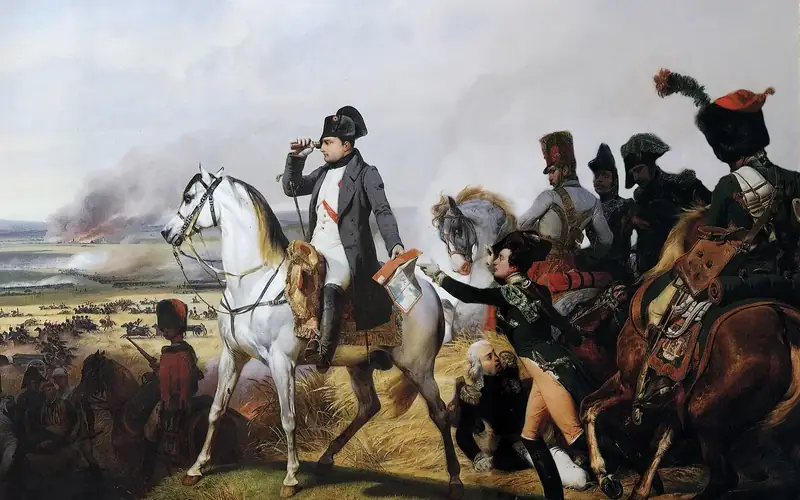
At Wagram (5-6 July 1809) artillery played a major role preparing assaults after Essling. The great French batteries, including Guard pieces, pounded Austrian positions.
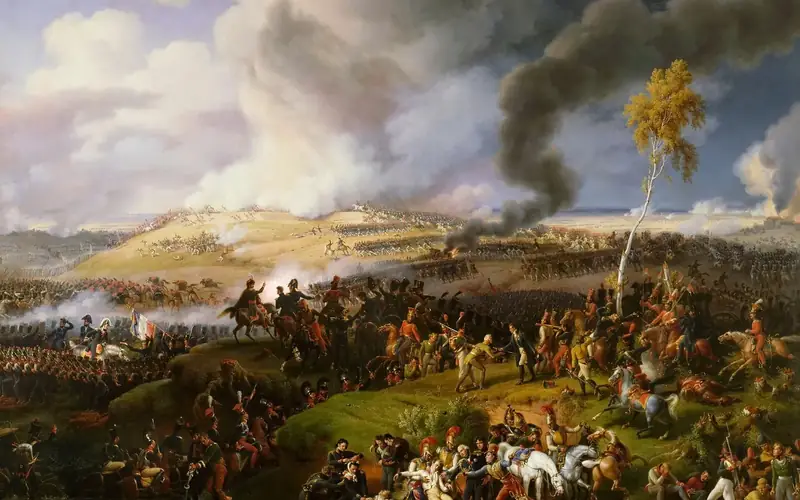
At Borodino on 7 September 1812 French artillery — Guard included — fought a murderous duel with the Russians. Napoleon still husbanded his infantry reserve, but artillery fire remained massively committed.
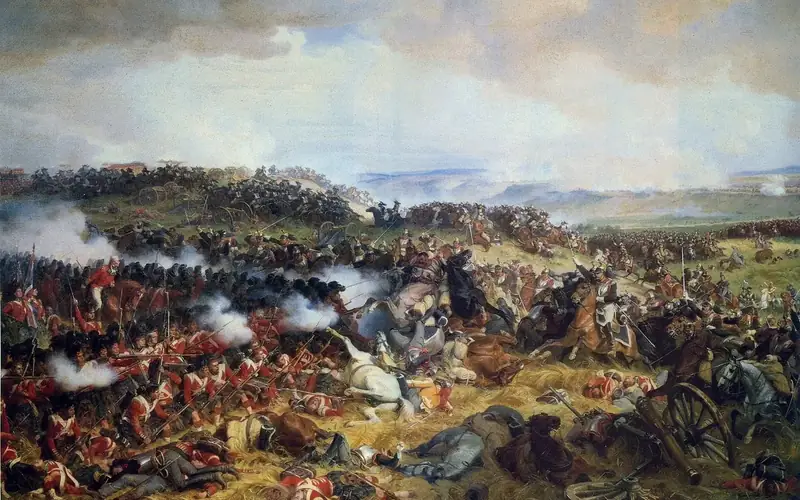
At Waterloo on 18 June 1815 Guard artillery supported the French attacks and the great central battery. Despite the quality of service, it could not break the Allied deployment before the Prussian arrival.
Legacy and memory
Guard foot artillery embodied the intimate link between Napoleon and his original arm. In military memory it symbolises the scientific concentration of fire in the service of a battle plan.
After 1815 the institution vanished with the Guard. Historiography retains the image of an elite fire reserve, a political as much as tactical instrument of imperial power.