About-face from the Channel
On 26 August 1805 the Army of the Ocean Coasts left Boulogne: seven corps took the eastward road by separate routes, with stages calculated in advance by Berthier. In thirty-five days two hundred thousand men crossed the Rhine on a two-hundred-kilometre front between Mainz and Strasbourg, without Vienna grasping where the blow would fall.
The envelopment of Mack
General Mack, with seventy thousand Austrians, waited for the French in the Black Forest gap and thought he had time: Kutuzov's Russians were marching to join him. Napoleon did not attack him frontally. He wheeled his whole army south-east, crossed the Danube downstream at Donauwörth and Neuburg, and cut the line of retreat on Vienna.
The actions at Wertingen, Günzburg and Elchingen tightened the net; Ney stormed the Elchingen bridge on 14 October. Mack, encircled in Ulm without supplies or hope of relief, capitulated on the 20th: some thirty thousand men filed past the Emperor and laid down their arms.
A victory without a battle
All told, the Ulm campaign cost Austria nearly sixty thousand men for a few thousand French casualties, almost without a pitched battle. It was the purest demonstration of the Napoleonic system: the march, not the shock, decides.
The road to Vienna lay open; the city was occupied on 13 November. But the day after the capitulation, Trafalgar closed the sea for good: the Empire won the continent on the day it lost the ocean.
See also
Go further
Recommended books to dig deeper (affiliate links)
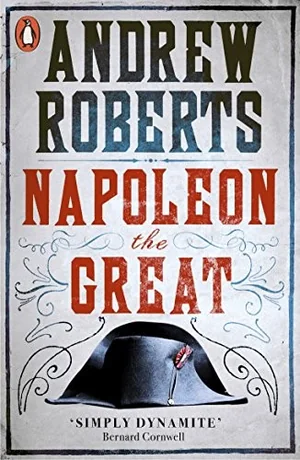
Napoleon the Great
Andrew Roberts · 2014
A monumental biography drawing on Napoleon’s 33,000 surviving letters, admiring but rigorous.
See on Amazon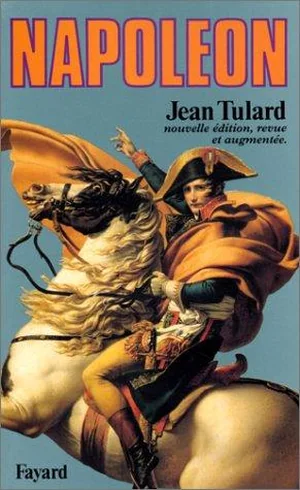
Napoléon ou le mythe du sauveur
Jean Tulard · 1977
The book that reshaped how the man is read: how France gave itself a saviour, and what it cost.
See on Amazon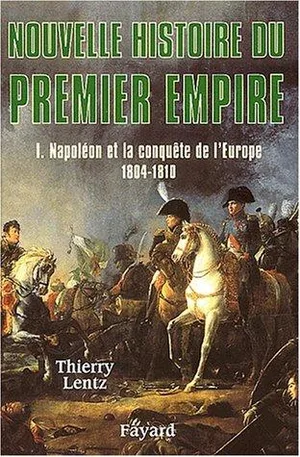
Nouvelle histoire du Premier Empire
Thierry Lentz · 2002-2010
Four reference volumes on institutions, diplomacy and collapse: the scholarly synthesis of the subject.
See on AmazonAs an Amazon Associate, this site earns from qualifying purchases.
Support the encyclopedia
Napoleon Empire is an independent project. Your contribution helps grow the content and keep the site running.
DonateSecure payment on the platform you choose.