Two years facing the Channel
The breakdown of the Peace of Amiens, in May 1803, brought back war with England. Unable to reach her otherwise, Bonaparte resolved to invade. The Army of the Ocean Coasts settled into a chain of camps from Holland to Brittany: Bruges under Davout, Utrecht under Marmont, Montreuil under Ney, and Boulogne, the central camp, under Soult.
It required a flotilla as much as an army: prames, gunboats and flat-bottomed craft accumulated by the thousand in the ports of the coast, whose basins were dug out and enlarged to receive them.
The forge of the Grande Armée
These two years of waiting were two years of continuous training. Divisions were grouped into permanent army corps, each with its own infantry, cavalry, artillery and staff, able to act alone for several days: this was the organisation that would fight the campaign of 1805.
The camp also became a stage. It was there, on 16 August 1804, that the great distribution of the crosses of the Legion of Honour took place before the assembled army; and there that the column of the Grande Armée was begun, at Wimille, above Boulogne.
The about-turn of August 1805
The whole plan rested on a naval condition: to concentrate the French and Spanish squadrons off the Channel long enough to cover the crossing. Villeneuve, who was to draw Nelson to the West Indies and then come back north, fell back on Cádiz; the opportunity never came.
At the end of August 1805, with Austria and Russia now at war, Napoleon broke camp and launched his corps towards the Rhine. The march from the Channel to the Danube ended with the capitulation of Ulm on 20 October; the next day Trafalgar closed the question of invasion for good.
See also
Go further
Recommended books to dig deeper (affiliate links)
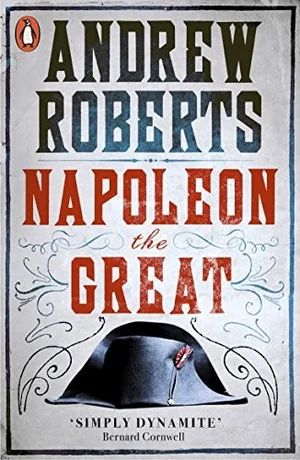
Napoleon the Great
Andrew Roberts · 2014
A monumental biography drawing on Napoleon’s 33,000 surviving letters, admiring but rigorous.
See on Amazon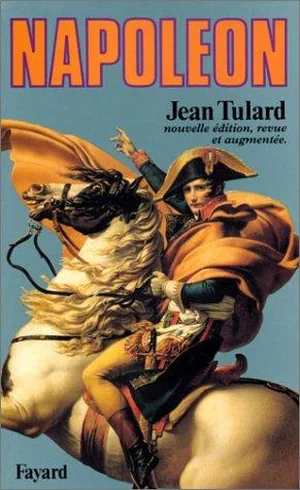
Napoléon ou le mythe du sauveur
Jean Tulard · 1977
The book that reshaped how the man is read: how France gave itself a saviour, and what it cost.
See on Amazon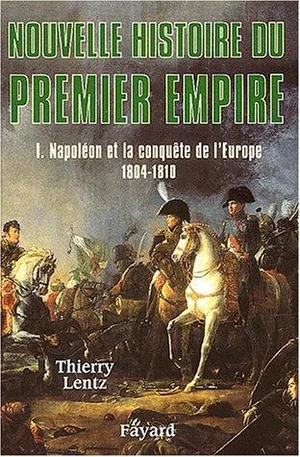
Nouvelle histoire du Premier Empire
Thierry Lentz · 2002-2010
Four reference volumes on institutions, diplomacy and collapse: the scholarly synthesis of the subject.
See on AmazonAs an Amazon Associate, this site earns from qualifying purchases.
Support the encyclopedia
Napoleon Empire is an independent project. Your contribution helps grow the content and keep the site running.
DonateSecure payment on the platform you choose.