The Battle of Trafalgar, fought on 21 October 1805 off the cape of that name in Andalusia, pitted Vice-Admiral Villeneuve’s Franco-Spanish fleet against Nelson’s British fleet. Attacking a larger but poorly trained line in two columns at right angles, Nelson cut it into three and destroyed it within hours: eighteen Franco-Spanish ships were taken or destroyed and no British ship was lost. Nelson was mortally wounded by a marksman from Redoutable, and the storm of the following days completed the disaster. Fought the day after the capitulation of Ulm, when Napoleon had already given up invading England, the battle changed nothing in the war on the continent, but secured command of the seas for the Royal Navy for the next ten years.
Forces at play
Outcome: Decisive British naval victory
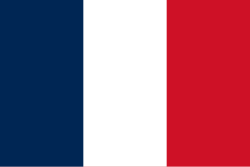
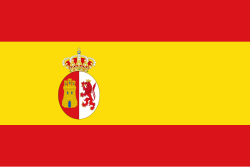
France · Spain
- Villeneuve
- Gravina
- Dumanoir
- Álava
33 ships of the line (18 French, 15 Spanish), about 2,600 guns and nearly 30,000 men
Casualties: 18 ships taken or destroyed on 21 October; from 2,458 to more than 4,000 dead depending on the count, several thousand prisoners
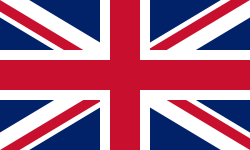
United Kingdom
- Nelson
- Collingwood
27 ships of the line, about 2,150 guns and 17,000 men
Casualties: No ship lost; 458 dead, Nelson among them, and 1,208 wounded
Flags: FDRMRZUSA, CC BY-SA 4.0, Wikimedia Commons
Battle coordinates
Trafalgar
Coordinates 36.2500° N · 6.2000° W
Interactive tactical map
Follow the battle hour by hour — hover over or tap a unit for its details.
The Combined Fleet leaves Cádiz
Learning that Rosily is coming to replace him, Villeneuve decides to sail. On 19 October the frigate Sirius sees the first ships leaving the roadstead; the calm slows the departure, and the fleet is not wholly at sea until the 20th. It steers for the Strait of Gibraltar. Nelson, who had kept his main force out of sight offshore, follows.
On the evening of the 20th, Achille sights a British force following the Combined Fleet.
Schematic positions: the whereabouts of ships at sea are known only approximately. The site of the battle and the British position at dawn are those given by the sources; the order of the Franco-Spanish line follows published orders of battle and the points where the British columns broke through it. Timings, which sometimes differ by a quarter of an hour between accounts, are indicative.
Battle narrative
Boulogne, or the dream of invasion
In 1805 the French Empire dominated the continent, but the Royal Navy held the seas. Since the collapse of the Peace of Amiens in 1803, Napoleon had gathered around Boulogne an army and a flotilla meant to cross the Channel. He lacked the one thing that mattered: command of the Strait, even for a few days, to get his barges across. Yet the French squadrons were blockaded in their ports, at Brest and Toulon, by British squadrons cruising offshore.
France did have a naval ally: Spain, whose ships were based at Cádiz and Ferrol. But the gap in quality was deep. Some of the best officers of the French navy had been executed or had left the service during the Revolution, and the crews, kept in port by the blockade, lacked training at sea.
The grand plan of 1805
Napoleon's plan was ambitious. The Toulon and Cádiz squadrons were to break the blockade, join forces in the West Indies to draw the British there, then return to Europe, free the Brest fleet and together sweep the Channel. Joined to Ganteaume's fleet at Brest and Allemand's squadron, Villeneuve's force would have numbered 59 ships of the line.
Vice-Admiral Pierre-Charles de Villeneuve had commanded the Toulon squadron since the death of Latouche-Tréville. He carried out the first part: taking advantage of the British being blown off station, he left Toulon, passed the Strait of Gibraltar, joined the Spanish at Cádiz and crossed the Atlantic. Nelson, who at first believed in an expedition to Egypt, set off in pursuit and missed him by a few days in the West Indies.
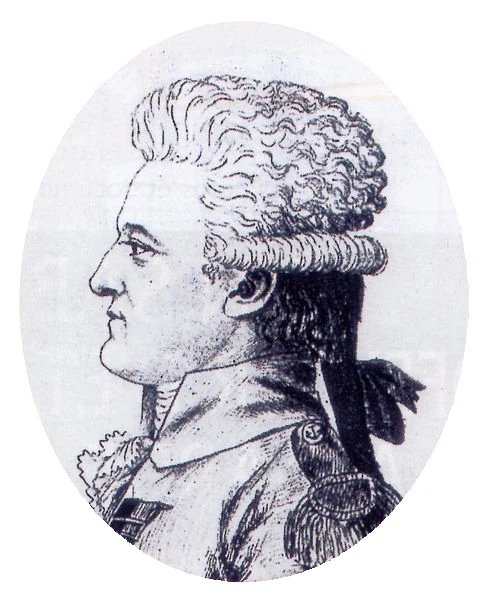
Finisterre, Ferrol, Cádiz
On his way back, Villeneuve ran into Vice-Admiral Calder's squadron off Cape Finisterre on 22 July 1805. The action was indecisive, but two Spanish ships were taken, and Villeneuve took refuge at Ferrol. There he received orders to make for Brest. Fearing that the British were watching him, he headed south on 11 August and made for Cádiz, which he entered on 20 August.
The decision had heavy consequences. On 25 August, with no fleet to cover them, the corps of the invasion army broke camp at Boulogne and marched into Germany, where they would face Austria and Russia. The threat of invasion was lifted before the Battle of Trafalgar was even fought.
Nelson off Cádiz
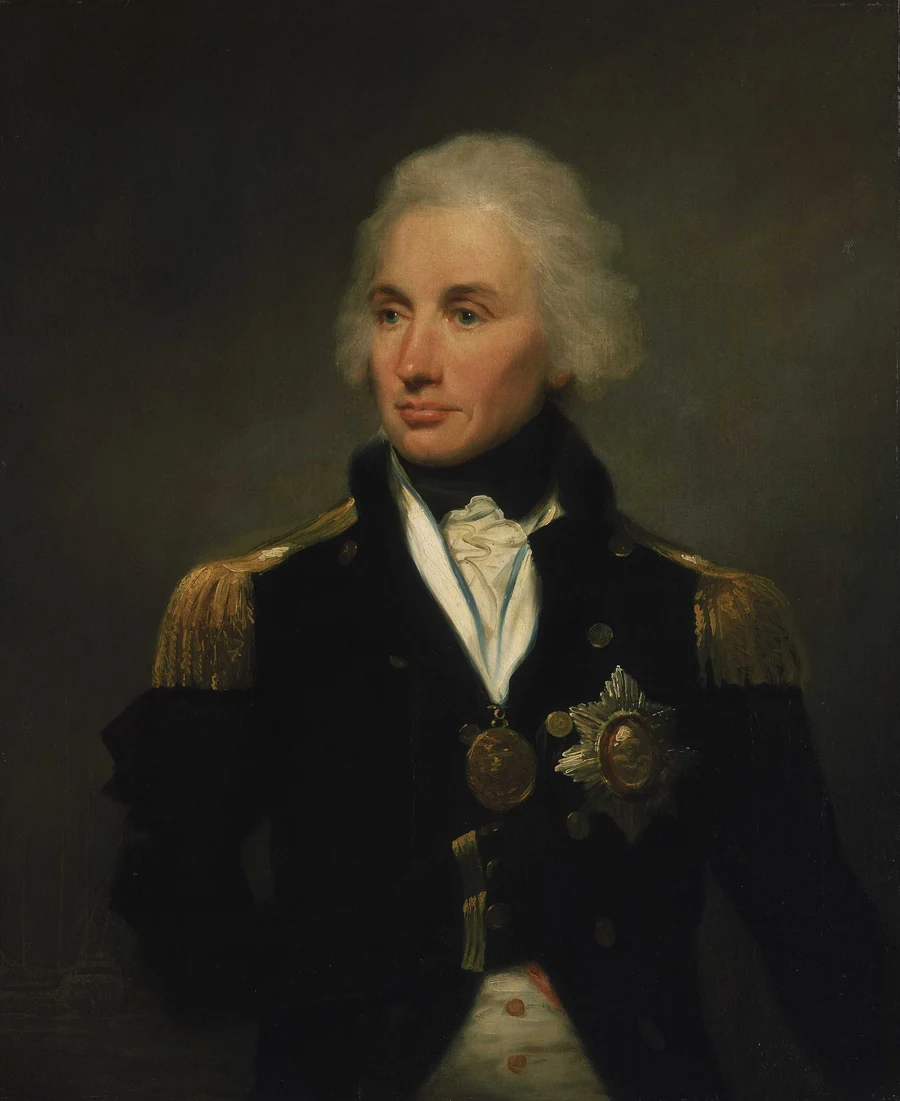
Back in England after two years' service at sea, Vice-Admiral Horatio Nelson spent only twenty-five days ashore. He sailed again on 15 September aboard Victory and on 28 September took command of the fleet blockading Cádiz. To lure the enemy out, he kept the bulk of his ships out of sight, some 80 kilometres offshore, and left Captain Blackwood's frigates to watch the port.
Yet his fleet was weakened before the battle: on 2 October five ships of the line left for Gibraltar under Rear-Admiral Louis to take on supplies and were then diverted to convoy duty; Calder, recalled to face a court martial after Finisterre, went home with his flagship. Other ships arrived, and by 15 October the fleet was back at full strength.
"Fights of extermination": Napoleon's orders
Exasperated by the results of the campaign, Napoleon had lost all confidence in Villeneuve. On 1 September, from Boulogne, he had his minister Decrès write that the Emperor wished to stamp out "this spirit of circumspection" he blamed his navy for, that he counted the loss of his ships as nothing if they were lost with glory, and that he expected "fights of extermination" from his admirals. In mid-September fresh instructions ordered the Combined Fleet to leave Cádiz, pick up the Spanish ships at Cartagena and land troops at Naples. At the same time Napoleon appointed Vice-Admiral Rosily to replace Villeneuve.
At Cádiz the crews were more than 2,000 seamen short, and the officers dreaded putting to sea. In early October a council of war brought together the French and Spanish captains: unanimous for sailing, they nevertheless judged it necessary to wait for a favourable opportunity. Accounts of angry exchanges between Spanish and French officers at this council are not confirmed by all sources.
Putting to sea, 19 and 20 October
On 18 October Villeneuve learned that Rosily had reached Madrid to take his place. Rather than be replaced in harbour, he decided to sail, knowing moreover that several British ships had gone off towards Gibraltar. On the morning of 19 October the British frigate Sirius saw the first ships leaving the roadstead and warned Nelson.
The calm that followed a week of gales slowed the departure: the poorly trained Combined Fleet was not entirely at sea until 20 October. It steered for the Strait of Gibraltar, first in three columns, then in a single line. That evening Achille sighted a British force following it.
Two fleets face to face
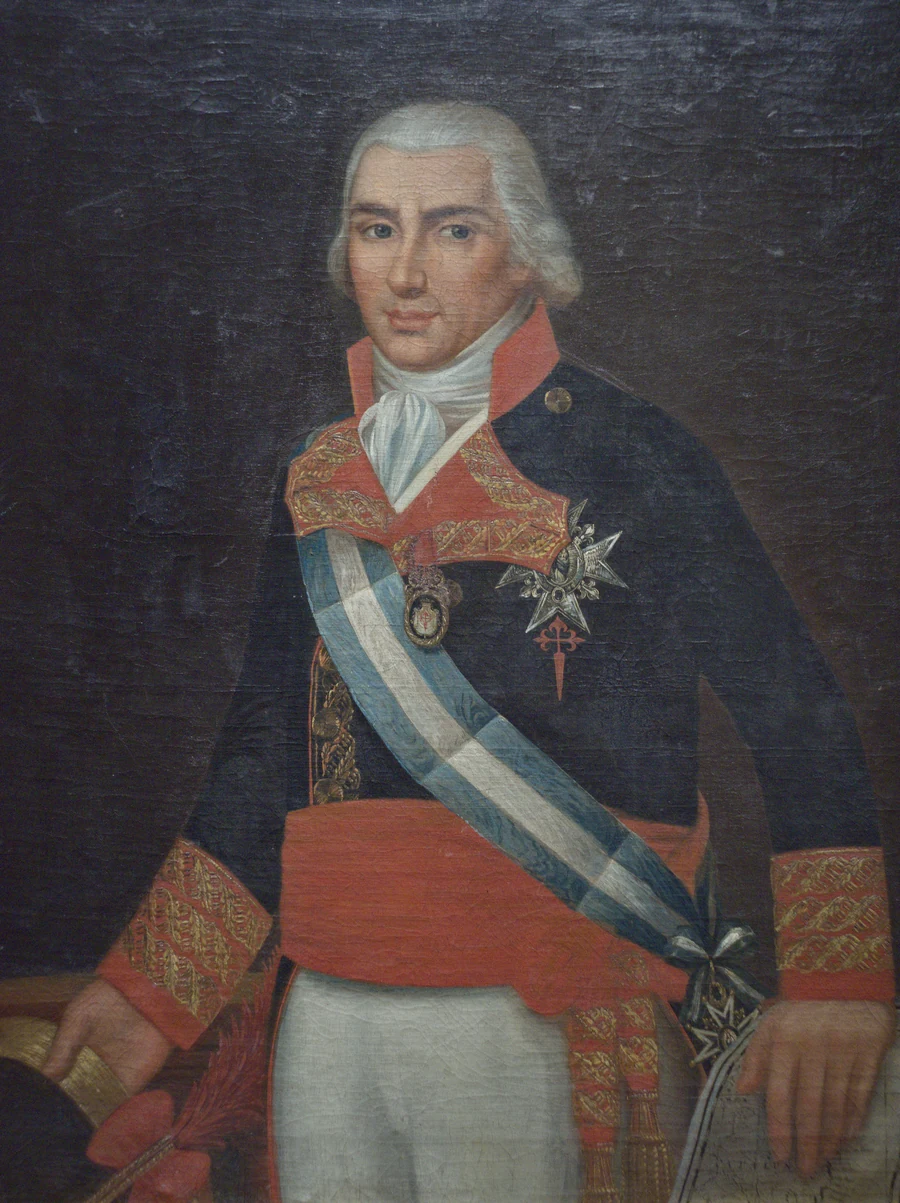
Nelson had 27 ships of the line, three of them 100-gun ships like Victory, carrying some 2,150 guns and 17,000 men. Villeneuve commanded 33 — 18 French and 15 Spanish — with about 2,600 guns and nearly 30,000 men, seamen and soldiers. The Combined Fleet included the largest ships present, among them the Spanish Santísima Trinidad, a giant of 130 guns, and two ships of 112 guns, Príncipe de Asturias and Santa Ana.
Superior numbers did not make up for the gap in quality. The British crews, who had kept the sea for months, were seasoned and fired fast; the crews of the Combined Fleet included few experienced seamen. On the Spanish side, Antonio de Escaño had warned in a report on the squadron that it would "put the nation into mourning" in the event of a battle. Lieutenant General Federico Gravina commanded the Spanish, under Villeneuve's orders.
Nelson's plan
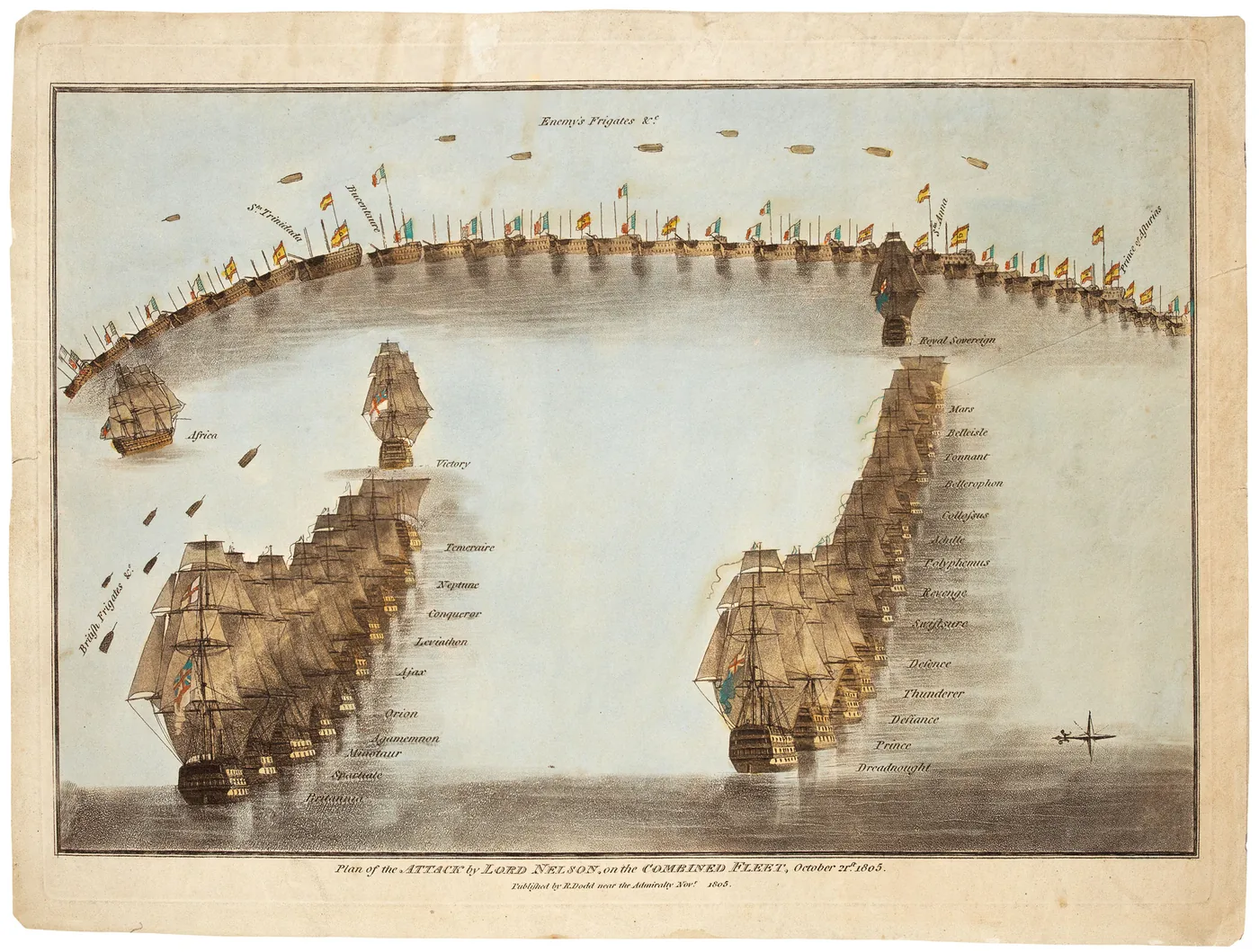
Custom required two fleets to form parallel lines and cannonade each other broadside to broadside, which often produced indecisive actions. Nelson wanted a mêlée instead. Facing a larger line, he would attack it in two columns, at right angles: one against the centre, the other against the rear, so as to cut it into three, crush the centre and rear before the van could turn about, and take the flagship. To save time, the order of sailing would be the order of battle. He left his captains wide latitude: none, he wrote in his memorandum, could do very wrong if he placed his ship alongside that of an enemy.
The plan carried a risk: during the approach the leading ships would take the fire of the enemy line without being able to reply. Nelson therefore had every available sail set and counted on poor enemy gunnery. Villeneuve had foreseen this manoeuvre, warning in his instructions that the enemy would try to break through his line and envelop his rear; but he prepared nothing to counter it and kept a single line, fearing that his officers could not manoeuvre in several groups.
The morning of 21 October
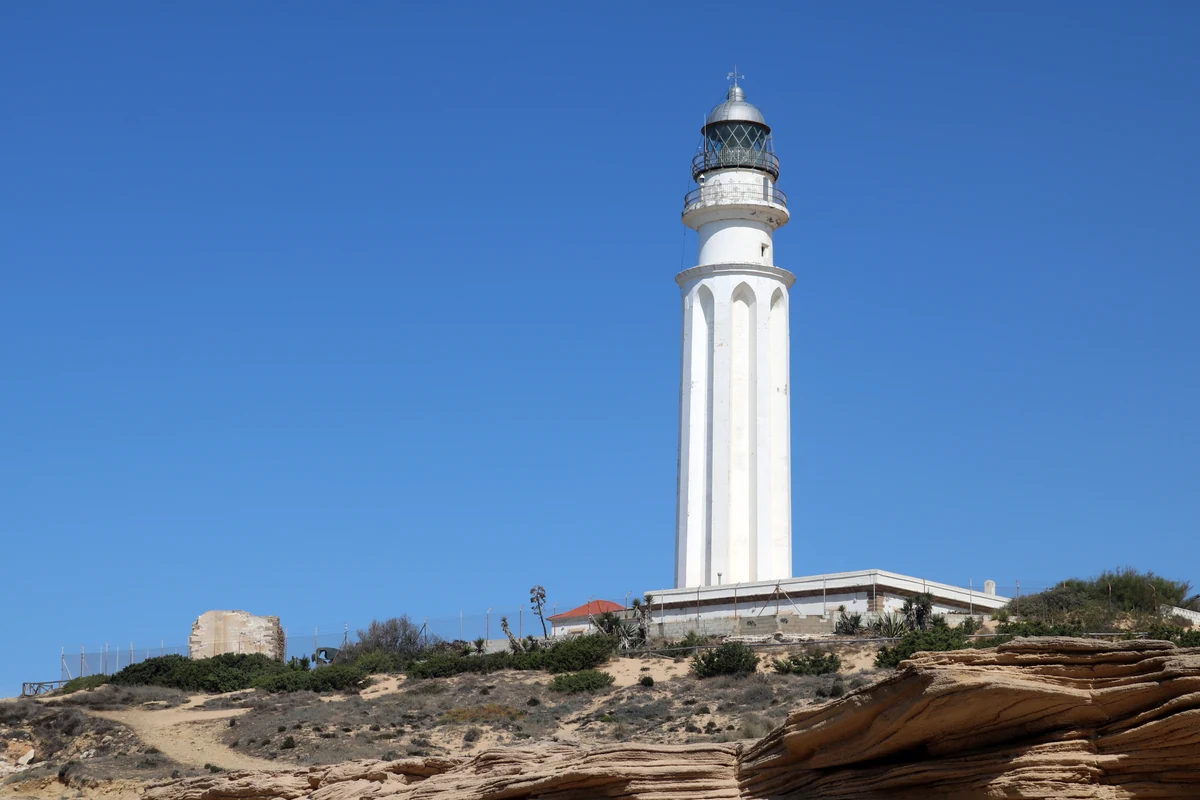
At 05:40 the British fleet was about 34 kilometres north-west of Cape Trafalgar, with the Combined Fleet between it and the coast. At about 06:00 Nelson gave the order to prepare for battle. In his journal he wrote a prayer asking for his country "a great and glorious victory", and that humanity after victory might be the predominant feature of the British fleet.
At about 08:00 Villeneuve ordered his fleet to wear together and head back towards Cádiz. The manoeuvre reversed the order of the line: Rear-Admiral Dumanoir's rear division found itself in the van. The wind was light and shifting; it took nearly an hour and a half to carry out the order, and the Combined Fleet now formed an irregular crescent, nearly eight kilometres long and full of gaps. According to a Spanish account, Captain Churruca, reading the signals through his glass, remarked that the admiral did not know what he was doing and that the fleet was lost.
"England expects…"
At about 11:45 Nelson had the famous signal sent to his fleet: "England expects that every man will do his duty". The signal officer, John Pasco, related that Nelson first wanted to say "England confides"; he suggested "expects", which was in the signal vocabulary, whereas "confides" would have had to be spelt out letter by letter. Nelson agreed: he still had to hoist the signal for close action.
At the time, "England" was commonly used for the whole United Kingdom: the fleet included many Irish, Scottish and Welsh seamen. The two columns then bore down, very slowly for lack of wind: Nelson in Victory at the head of the northern, windward column; Vice-Admiral Cuthbert Collingwood in Royal Sovereign at the head of the southern, leeward one.
Noon: Royal Sovereign breaks the line
At noon Villeneuve signalled to engage the enemy, and Fougueux fired the first shot at Royal Sovereign. Her bottom recently cleaned, Collingwood's ship had outsailed the rest of her column. Under fire from Fougueux, Indomptable, San Justo and San Leandro, she broke the line just astern of Santa Ana, flagship of the Spanish Vice-Admiral Álava, and fired a devastating raking broadside into her stern. "See how that noble fellow Collingwood carries his ship into action!" Nelson is said to have exclaimed; at the same moment Collingwood is said to have asked his captain what Nelson would give to be there.
For a quarter of an hour Royal Sovereign fought alone. Belleisle, following her, was engaged by Aigle, Achille, Neptune and Fougueux, completely dismasted and unable to manoeuvre; yet she kept her flag flying for three-quarters of an hour, until the following ships arrived.
Victory cuts the line
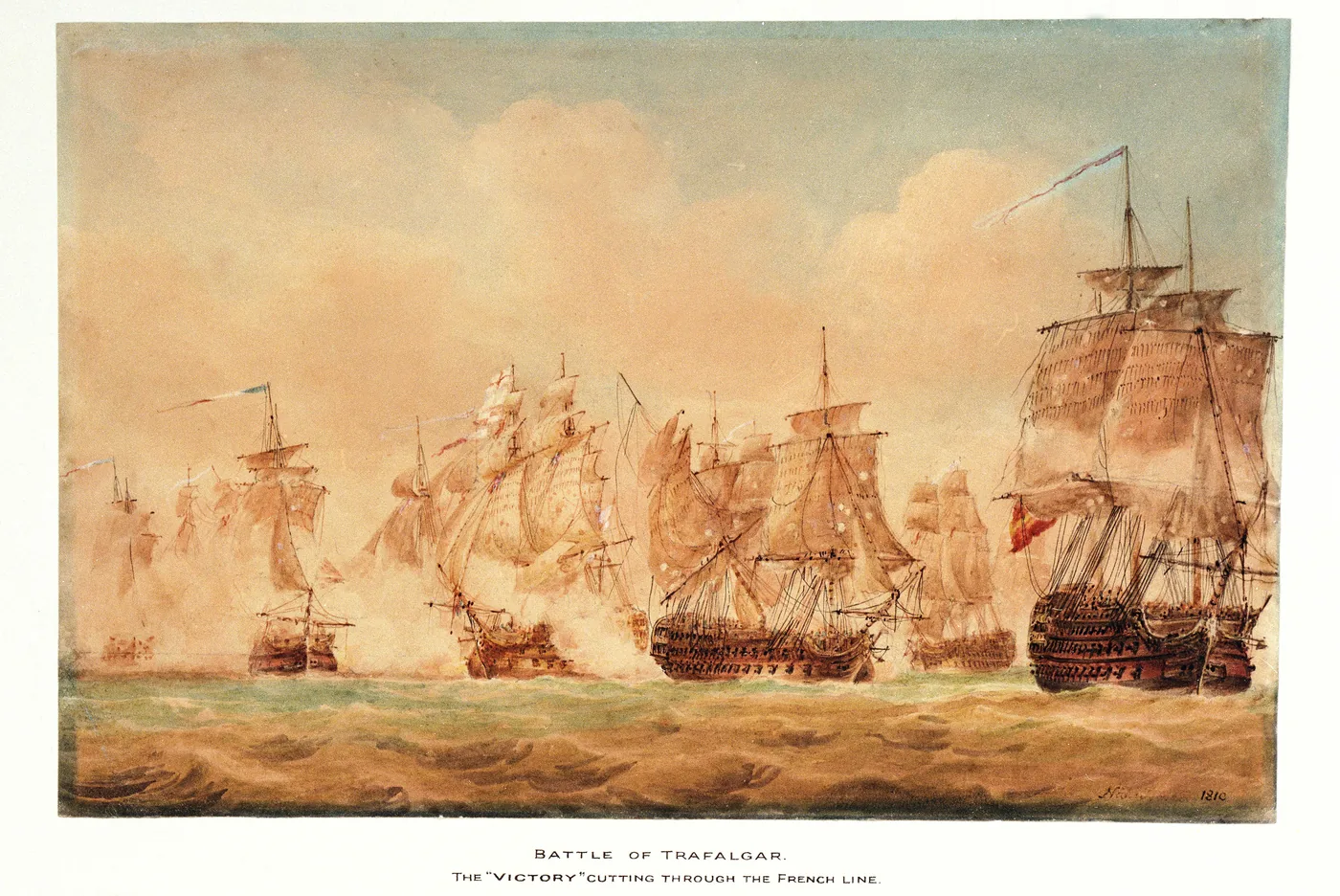
For some forty minutes Victory came on under fire from Héros, Santísima Trinidad, Redoutable and Neptune without being able to reply; her wheel was shot away and she had to be steered from the tiller below decks. At about 12:30 or 12:45, depending on the source, she cut the line between Bucentaure, Villeneuve's flagship, and Redoutable. Passing close under Bucentaure's stern, she fired a raking broadside, guns double- or treble-shotted and carronades loaded with musket balls: it is said to have killed or wounded 200 to 400 of a crew of 800 and put the French flagship out of action.
Leaving Bucentaure to the next ships of her column — Temeraire, Conqueror and the British Neptune — Victory ran into Redoutable, commanded by Captain Jean-Jacques Lucas.
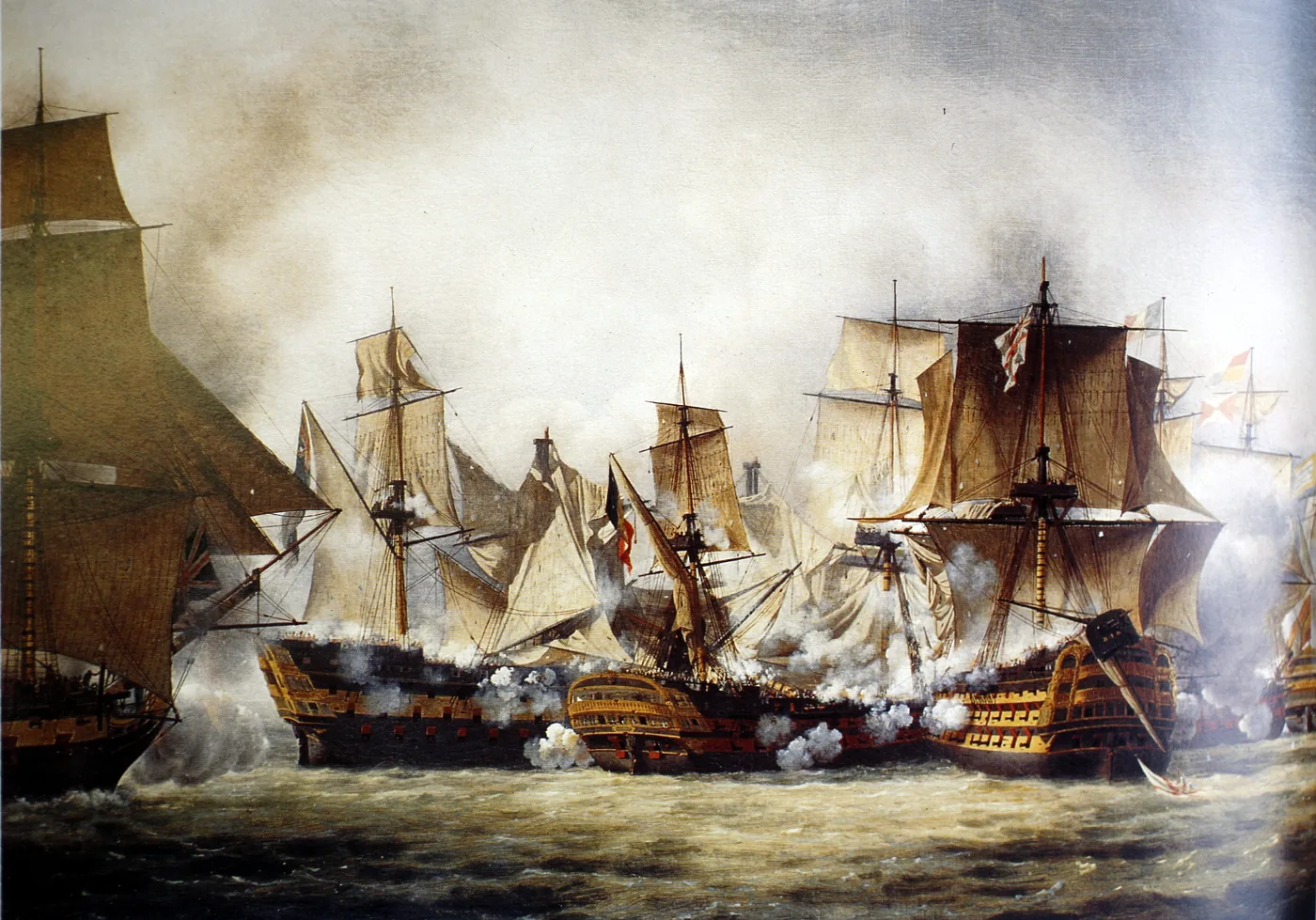
Redoutable against Victory
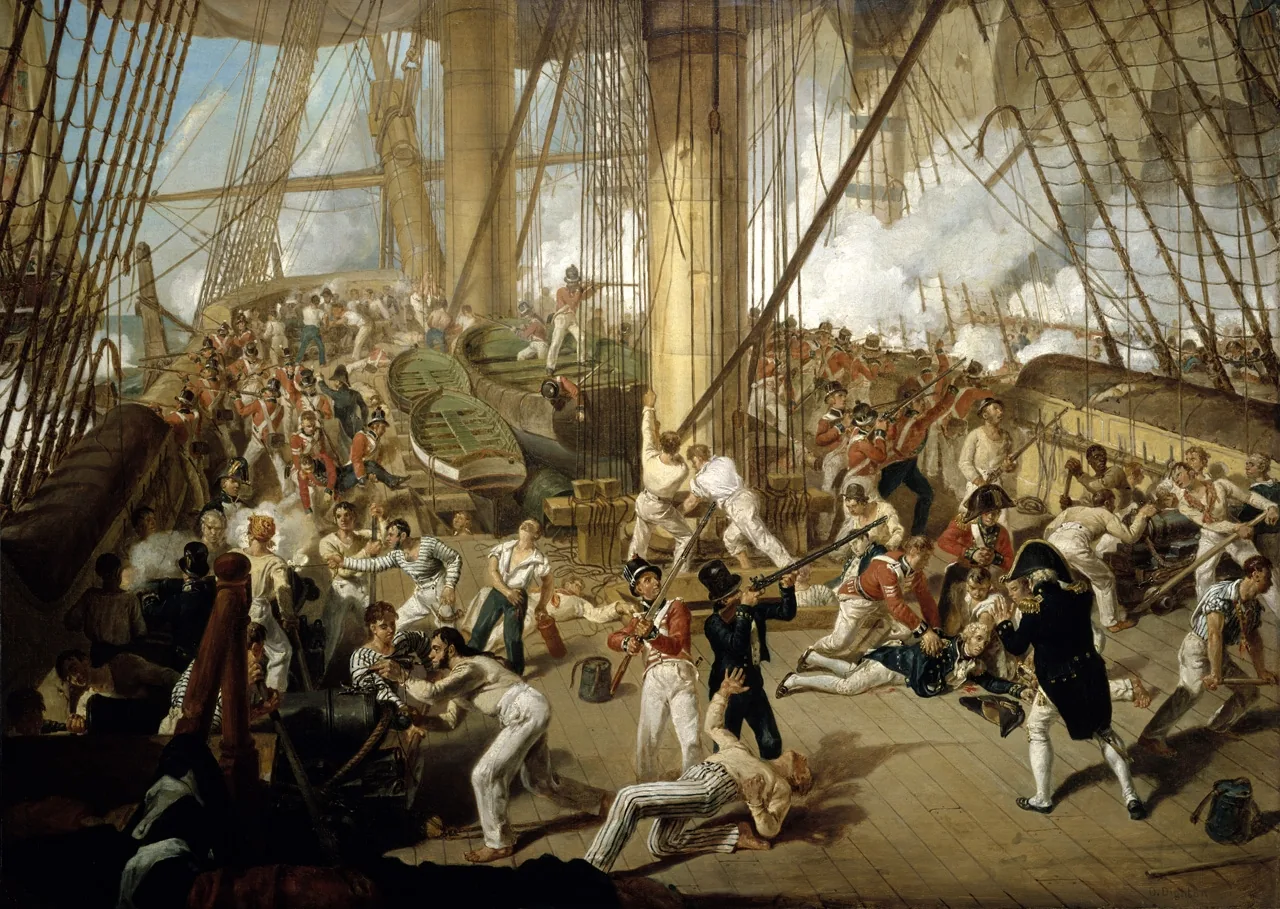
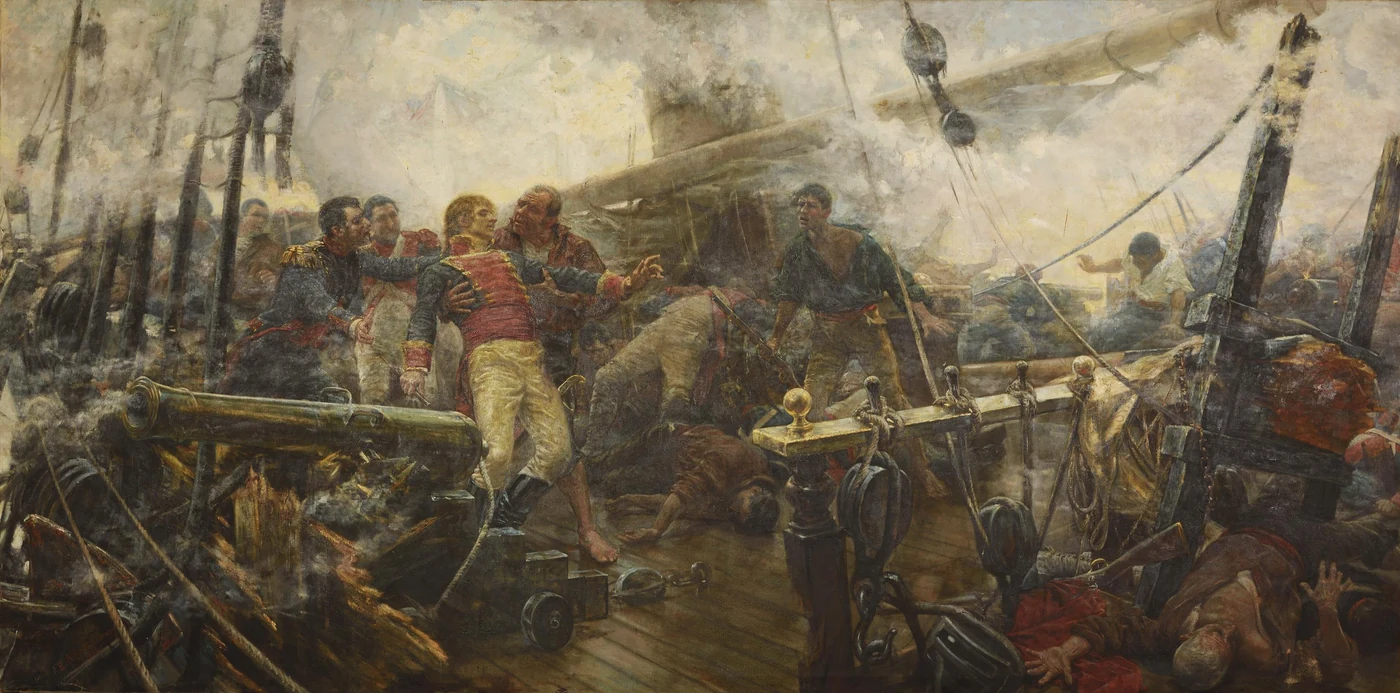
The two ships locked together, rigging against rigging. Lucas's crew, reinforced by a strong detachment of infantry, prepared to board. According to his report, the fire of his marksmen silenced that of Victory's upper decks in less than a quarter of an hour. A musket ball fired from Redoutable's mizzen top struck Nelson in the left shoulder, passed through his spine and lodged in his back. "They finally succeeded, I am dead," he is said to have exclaimed. He was carried below.
The French were about to board when Temeraire, second ship of the column, came up on the other side and swept Redoutable's deck with carronade fire just as the boarding parties were massing there. It was a slaughter. At about 14:00 — 13:55 according to several sources — Redoutable, shattered, her captain badly wounded and more than four-fifths of her 643 men out of action, struck her colours.
The mêlée
As Nelson had intended, the battle broke up into ship-to-ship fights in which British training made the difference. Bucentaure, isolated and riddled, surrendered; Villeneuve was taken prisoner. Santa Ana struck at about 14:15. Santísima Trinidad, surrounded by several British ships, surrendered in turn, at about 14:35 according to one source, after three hours' fighting according to another.
At the rear of the line the Spanish fought fiercely. Brigadier Cosme Damián Churruca, commanding San Juan Nepomuceno, and Dionisio Alcalá Galiano, commanding Bahama, were killed after ordering their ships not to surrender; Francisco Alsedo y Bustamante also died. Gravina was badly wounded.
Dumanoir's van
At the head of the line since the morning's wear, Rear-Admiral Dumanoir's van had long stayed out of the fighting. With the wind gone, he had to have his ships towed by boats and arrived only at 14:30, too late to count. He tried in vain to cut off two British ships, Spartiate and Minotaur, then, the battle lost, sailed away with four French ships: Formidable, Scipion, Duguay-Trouin and Mont-Blanc. They were taken on 4 November 1805 off Cape Ortegal by Sir Richard Strachan's squadron.
Only Intrépide and San Agustín came back towards the fighting from the north. At once taken under fire by several British ships, they surrendered after an hour's struggle.
The death of Nelson
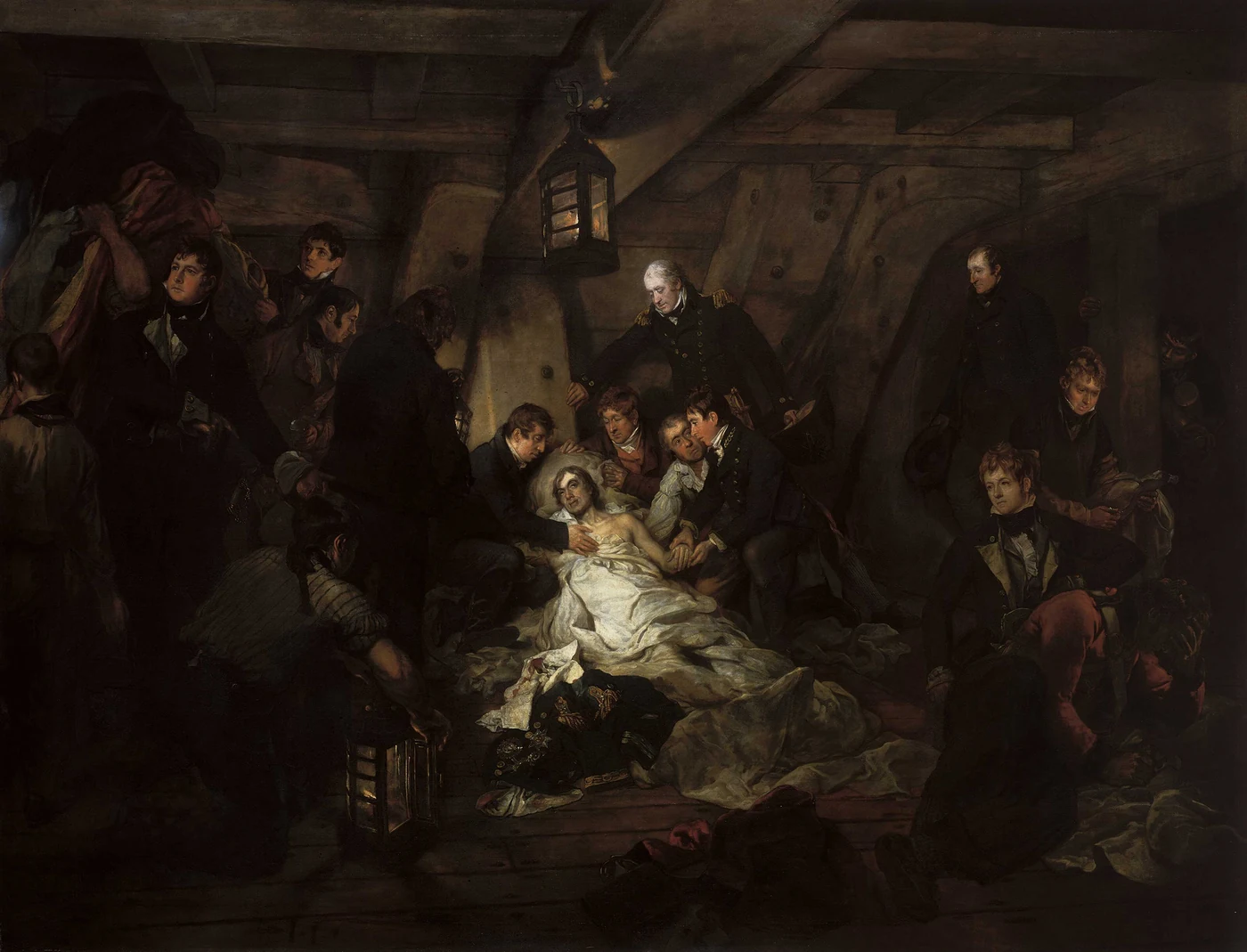
Below decks in Victory, Nelson lay dying for three hours. The surgeon William Beatty heard him murmur "Thank God I have done my duty"; his chaplain, Alexander Scott, recorded his last words as "God and my country". He died at about 16:30. Before dying, foreseeing the storm, he had ordered the fleet to anchor.
At the same time Gravina signalled the ships still able to manoeuvre to rally and withdraw towards Cádiz. The Spanish Neptuno was the last to strike, at about 17:15. A quarter of an hour later the French Achille, ablaze, blew up.
The storm
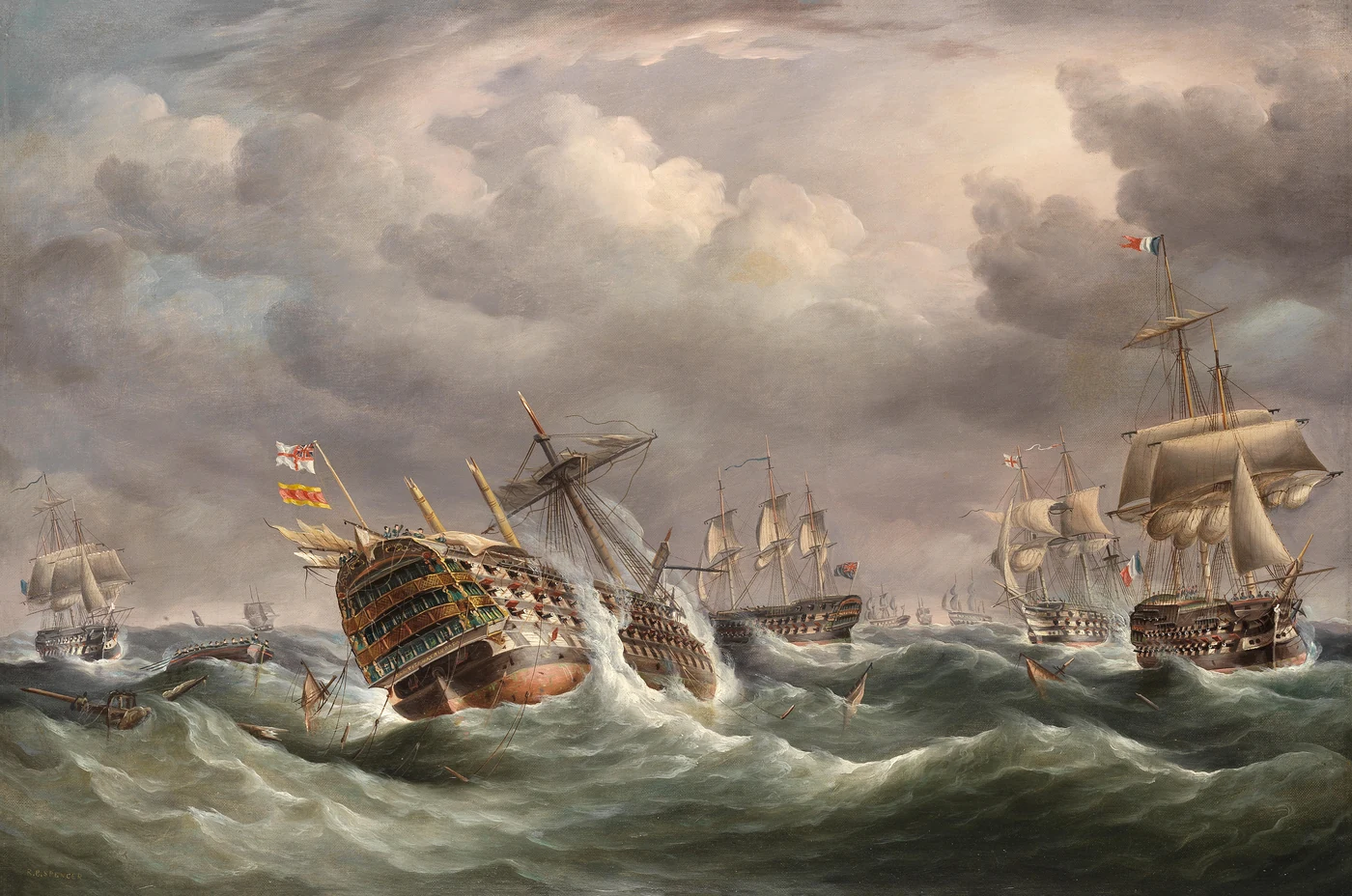
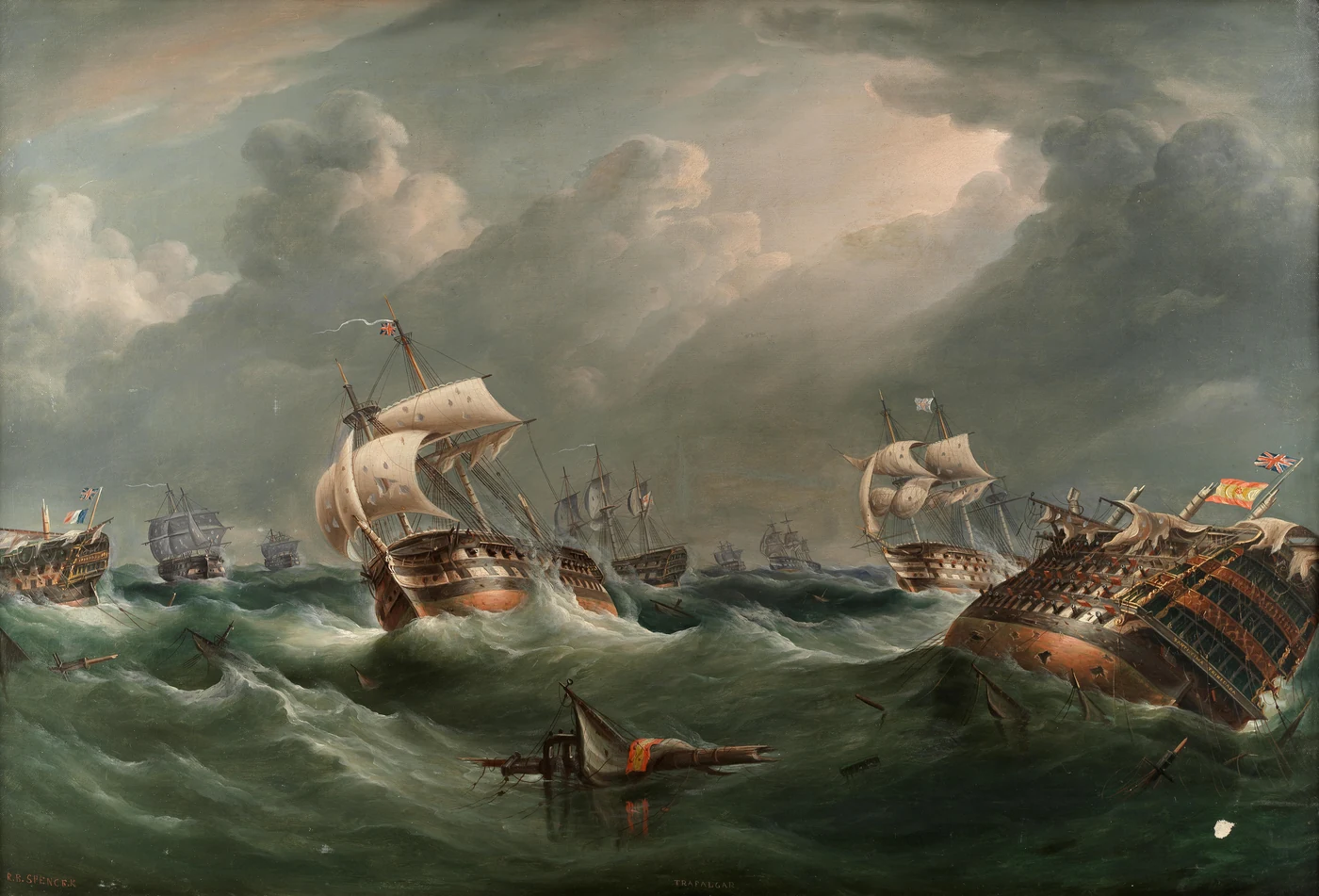
During the night the storm Nelson had foreseen blew up. Many badly damaged ships sank or ran aground on the shoals of the Andalusian coast. Prizes were retaken, sometimes by the prisoners themselves: aboard Algésiras, 270 French seamen guarded by 50 British freed themselves and brought the ship into Cádiz; Bucentaure's crew also retook their ship, which was then wrecked on the reefs.
On 23 October Captain Cosmao-Kerjulien sailed out of Cádiz with Pluton, a few French and Spanish ships and some frigates. He retook Santa Ana and Neptuno, but the storm cost him more: Indomptable was wrecked off Rota with 1,200 men aboard, only about a hundred of whom were saved; Rayo, San Francisco de Asís and Neptuno were lost in turn. The British, forced to break off their repairs, scuttled or burnt the most damaged prizes, Santísima Trinidad among them. Only four prizes would reach England. Collingwood wrote that he would rather fight another battle than pass through such a week as followed it. On 27 October he offered to release his wounded Spanish prisoners; the governor of Cádiz and Gravina released their British prisoners in exchange, and the French joined the agreement.
The toll
The Combined Fleet lost eighteen ships on 21 October, seventeen of them taken and one destroyed; the British lost none. After the storm and Cosmao's sortie, only about ten allied ships were left at Cádiz, and Rosily, on his arrival, found only five French ships there.
Human losses vary with the source. According to one count, the Combined Fleet had 2,458 dead and 2,781 wounded, the British 458 dead and 1,208 wounded. Other tallies give the French navy 3,373 killed in action or drowned afterwards, 1,155 wounded and some 4,000 prisoners, and Spain 1,022 dead, 1,386 wounded and 3,000 to 4,000 prisoners. More than half of the Spanish dead and wounded came from Ferrol and its surroundings.
A victory far from the continental war
Trafalgar was fought the day after the capitulation of Ulm, and Napoleon learned of the defeat only weeks later. He controlled the press and kept the defeat secret for more than a month. On the continent the battle changed nothing: on 2 December Austerlitz knocked Austria out of the war. Napoleon had in any case given up the invasion before Trafalgar, and never revived it.
At sea, however, the lesson was final: the Royal Navy would never again be seriously challenged by a French fleet in a great battle. Napoleon relaunched shipbuilding, to the point of having some 80 ships of the line by 1814, but they never put to sea in strength; he looked elsewhere for a weapon against Britain and found it in the Continental System. French has kept the expression "coup de Trafalgar" for a sudden disaster.
Villeneuve, a prisoner, attended Nelson's funeral. Released on parole, he landed at Morlaix in April 1806 and stopped at Rennes; on 22 April he was found dead in his room at an inn, with six stab wounds near the heart. It was recorded as suicide, a conclusion that has been disputed. Gravina died of his wounds at Cádiz in the spring of 1806; he lies in the Pantheon of Illustrious Seamen at San Fernando.
Nelson, national hero
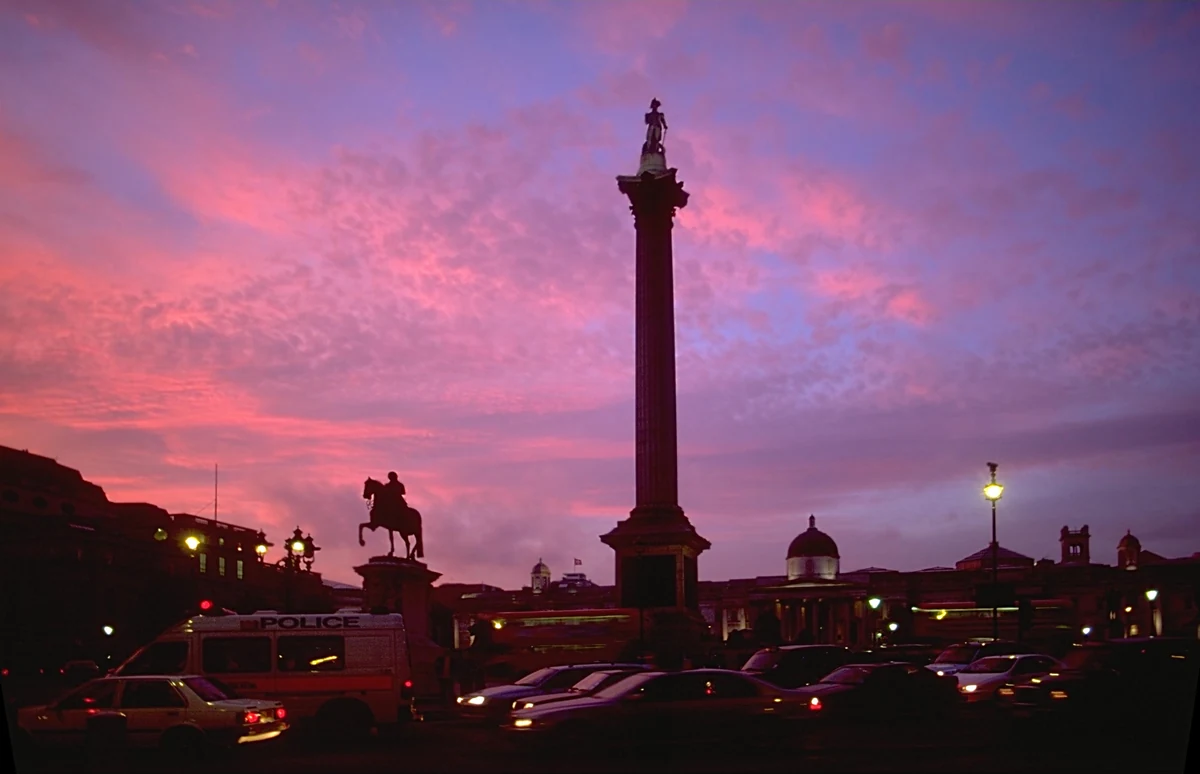
Nelson's body was brought home preserved in a cask of brandy. He was given a state funeral and lies in St Paul's Cathedral in London. Monuments went up quickly, in Glasgow, Dublin, Edinburgh and Montreal. In London, Trafalgar Square bears the name of the victory; Nelson's Column, designed by William Railton, was raised there between 1840 and 1843. The bronze reliefs on its pedestal, one of which shows Nelson's death, were cast from guns captured from the French; Landseer's four lions were added in 1867.
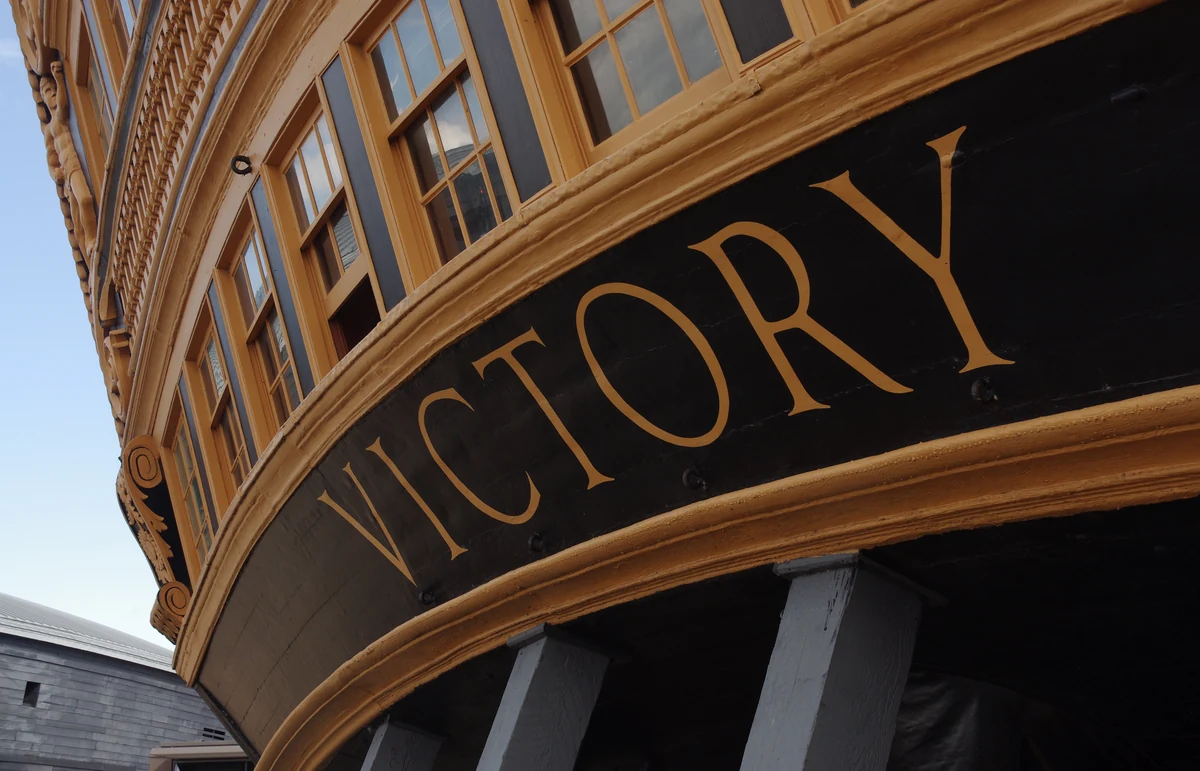
Victory has been preserved in dry dock at Portsmouth since 1922; since 2012 she has been the flagship of the First Sea Lord. In 2005, for the bicentenary, British, Spanish and French ships manoeuvred together on 21 October off Cape Trafalgar, in the presence of descendants of those who fought.
Turner, Galdós, Pérez-Reverte
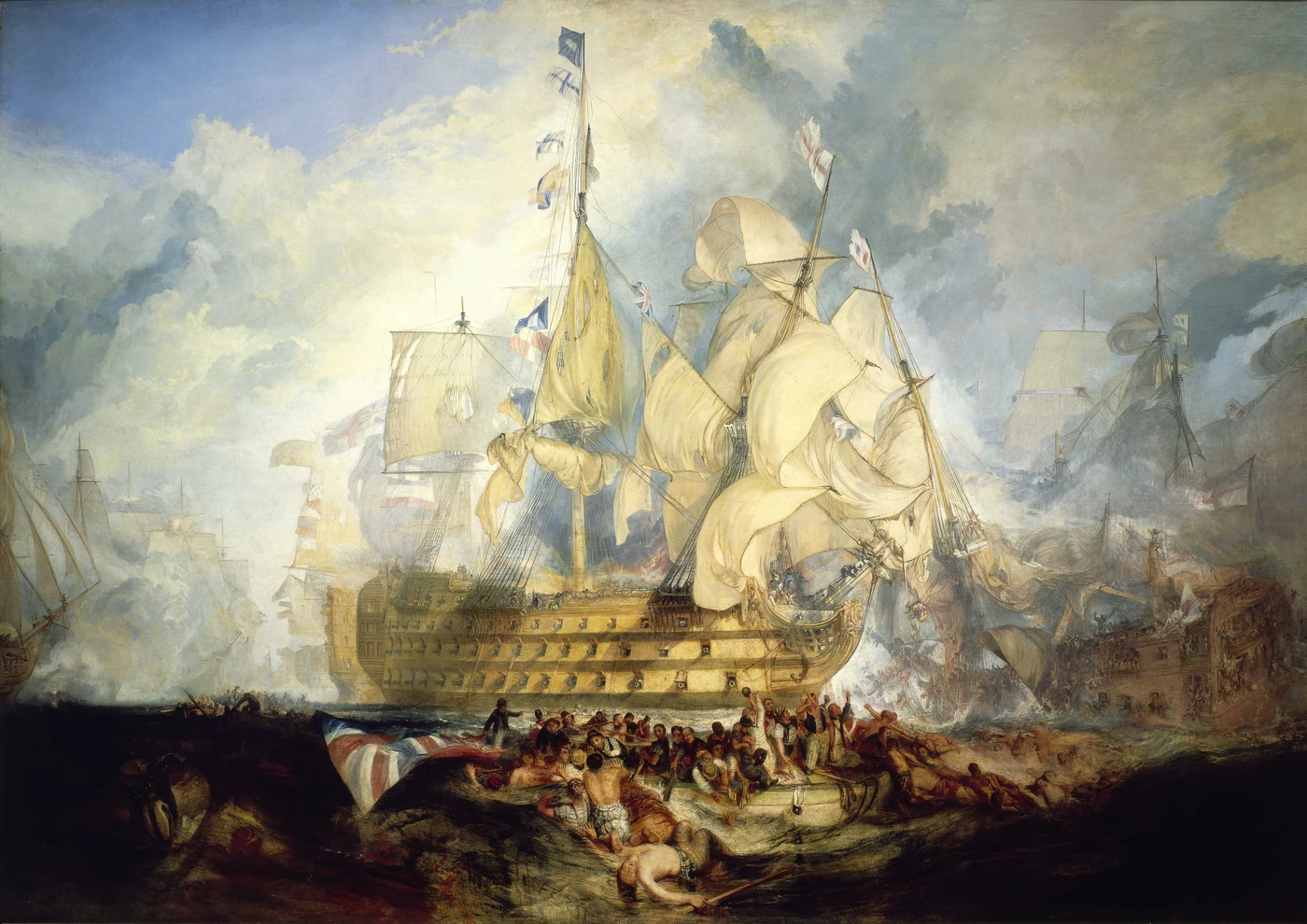
The battle inspired a wealth of art. Joseph Mallord William Turner painted in 1822-1824 a vast Battle of Trafalgar, 2.6 by 3.7 metres, now in the National Maritime Museum at Greenwich, in which a great three-decker dominates a chaos of sails, smoke and castaways.
In Spain, Trafalgar is also a place of literary memory. In 1873 Benito Pérez Galdós opened his Episodios nacionales with Trafalgar, in which a fourteen-year-old boy, Gabriel de Araceli, lives through the battle as the servant of an old naval officer. More recently Arturo Pérez-Reverte published Cabo Trafalgar (2004). In Britain, 21 October has remained Trafalgar Day.
Discover other battles
 Victory
Read the account
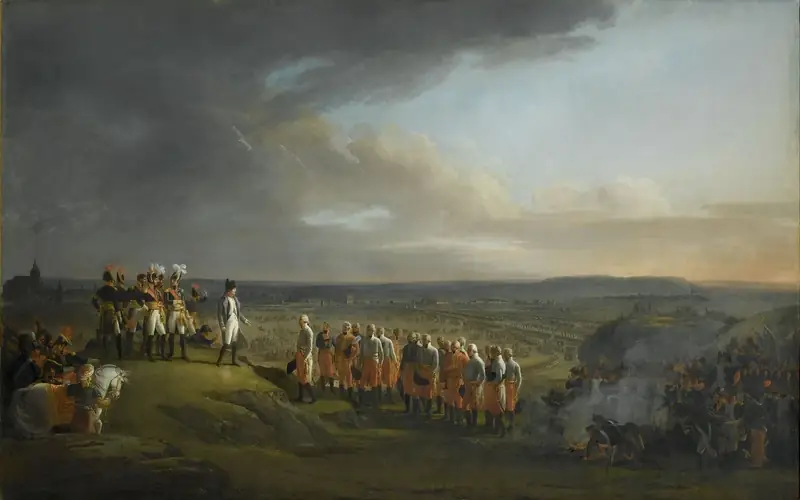
Ulm
15-20 October 1805
Ulm, on the Danube
 Victory
Read the account
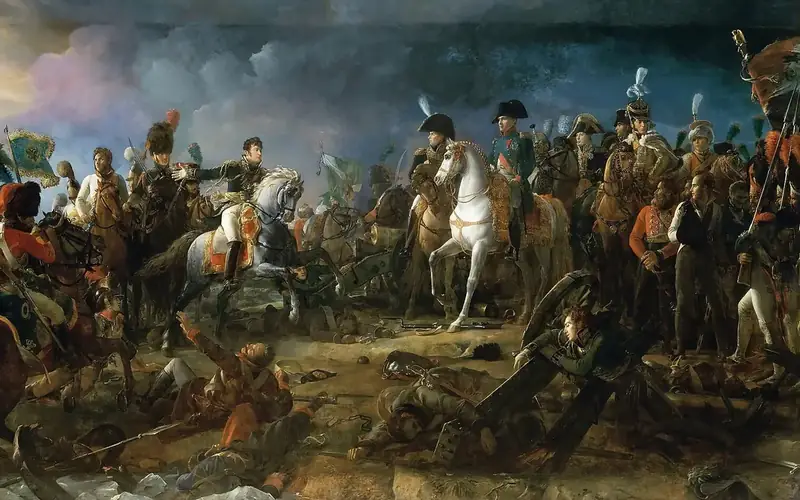
Austerlitz
2 December 1805
Pratzen plateau, Moravia (Czech Republic)
 Victory
Read the account
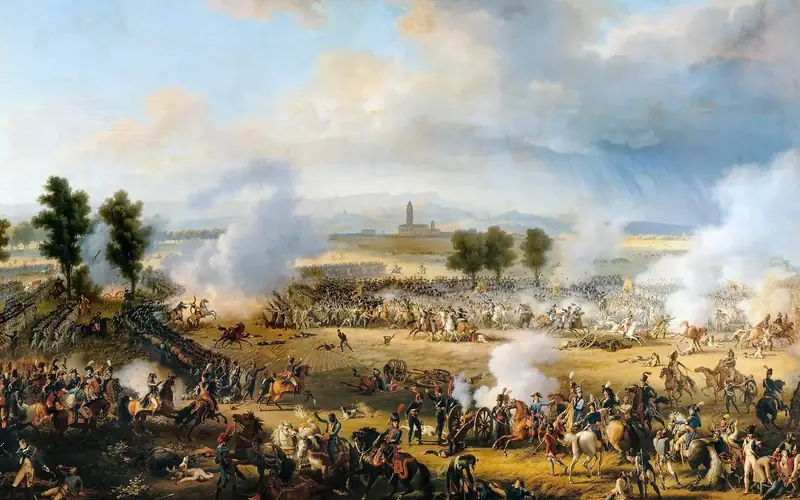
Marengo
14 June 1800
Spinetta Marengo, near Alessandria, Piedmont (Italy)
 Defeat
Read the account
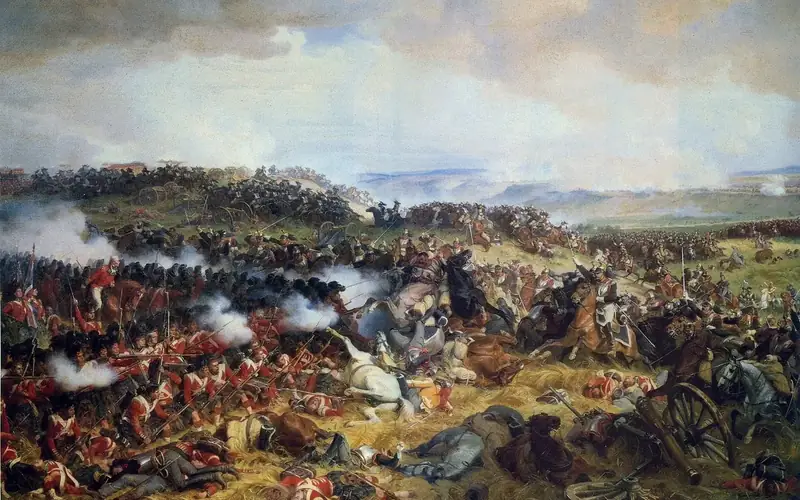
Waterloo
18 June 1815
Mont-Saint-Jean, south of Brussels (Belgium)
Go further
Recommended books to dig deeper (affiliate links)

Napoleon the Great
Andrew Roberts · 2014
A monumental biography drawing on Napoleon’s 33,000 surviving letters, admiring but rigorous.
See on Amazon
Napoléon ou le mythe du sauveur
Jean Tulard · 1977
The book that reshaped how the man is read: how France gave itself a saviour, and what it cost.
See on Amazon
Nouvelle histoire du Premier Empire
Thierry Lentz · 2002-2010
Four reference volumes on institutions, diplomacy and collapse: the scholarly synthesis of the subject.
See on AmazonAs an Amazon Associate, this site earns from qualifying purchases.
Support the encyclopedia
Napoleon Empire is an independent project. Your contribution helps grow the content and keep the site running.
DonateSecure payment on the platform you choose.