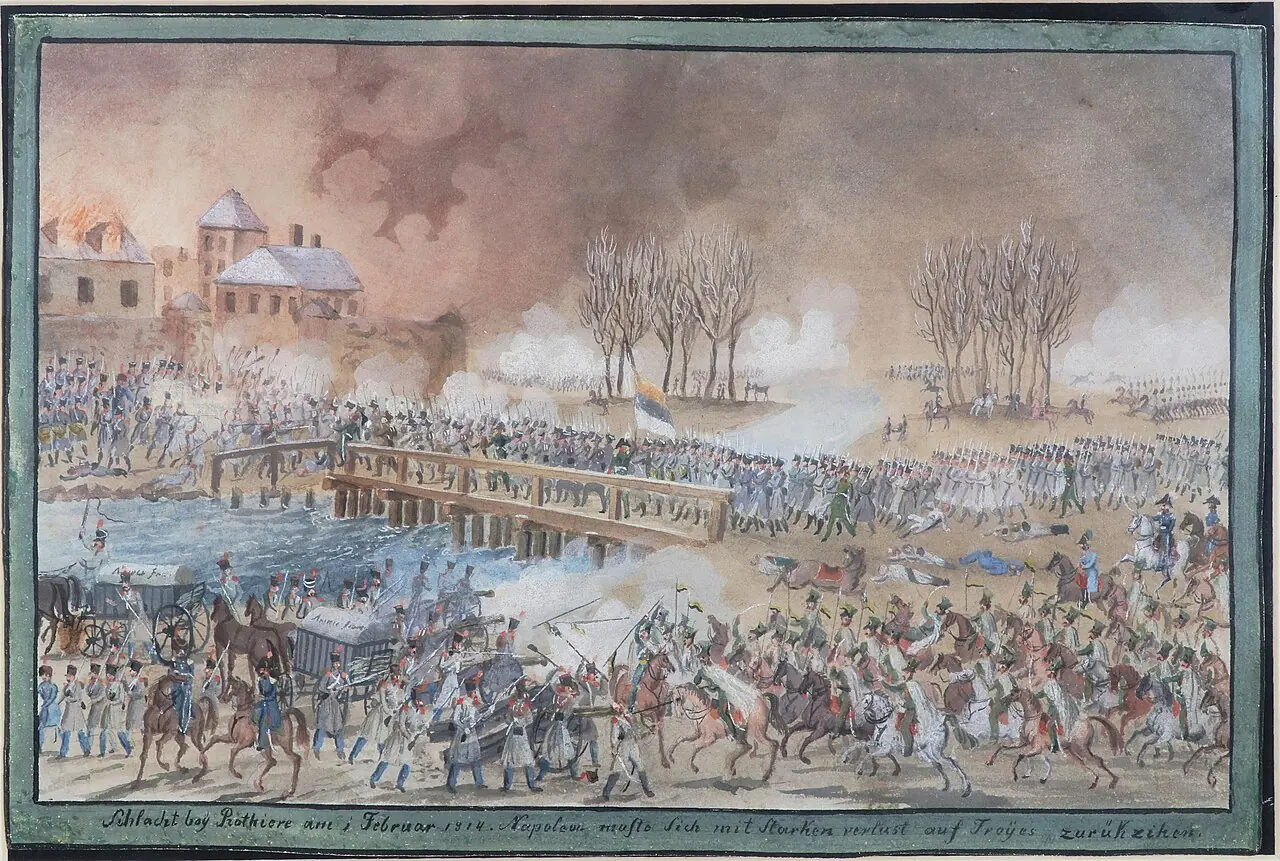
On 1 February 1814, three days after his raid on Brienne, Napoleon found himself cornered on the plain of the Aube by a coalition army two to three times his strength. He had meant to slip away towards Troyes; Blücher, to whom Schwarzenberg had given tactical command for the day, struck first. They fought in the snow from noon until nine at night over a handful of villages and two woods, often with the bayonet because wet muskets would not fire. La Rothière fell, Chaumesnil fell, and the Guard lost twenty-four guns in a failed charge. It was the first battle the Emperor lost on French soil — and it took the darkness, and then a snow squall, to save his army from it.
Forces at play
Outcome: Coalition victory: the villages and the battlefield stayed with the allies, but Napoleon extricated his army under cover of night

France
- Napoléon Ier
- Victor
- Marmont
- Gérard
- Oudinot
- Ney
36,000 to 50,000 men depending on the source: 45,100 and 128 guns according to Petre, 41,000 according to Bodart, from 36,140 (Sporschil) to 50,460 (Damitz) according to Nafziger
Casualties: 4,600 to 6,000 men and 50 to 73 guns depending on the source: 4,600 killed and wounded, about a thousand prisoners and 73 pieces according to Smith; 3,000 killed and wounded, 3,000 prisoners and 63 pieces according to Bodart; 6,000 including 2,000 prisoners according to Petre




Russia · Prussia · Austria · Bavaria · Wurtemberg
- Blücher
- Schwarzenberg
- Wrede
- Guillaume de Wurtemberg
- Gyulai
- Osten-Sacken
78,000 troops engaged out of 118,000 available according to Nafziger; about 85,000 men and 200 guns according to Petre; 120,000 available of whom 80,000 engaged according to Smith
Casualties: 6,000 to 7,000 men according to Smith, 6,000 according to Bodart, Petre and Chandler — of whom nearly 4,000 in Sacken's corps alone
Flags: David Liuzzo, Wikimedia Commons
Battle coordinates
La Rothière
Coordinates 48.3458° N · 4.5583° E
Battle narrative
Three days after Brienne
The raid of 29 January on Brienne had settled nothing. Blücher had withdrawn intact on Trannes, towards Bar-sur-Aube, and there effected precisely the junction with Schwarzenberg's Army of Bohemia that the battle was meant to prevent. Napoleon nevertheless stayed at Brienne on 30 and 31 January, convinced that the allies were aiming at Troyes and that he had time in hand. David Chandler finds this pause out of character; Francis Loraine Petre reads into it a fear of the effect a withdrawal would have on opinion in Paris.
On the evening of the 31st, allied headquarters resolved to attack the next day. Petre gives most of the credit to the Bavarian Wrede, who talked Schwarzenberg into shifting his weight towards Brienne rather than pressing on southwards. Blücher was given tactical command for the day; Schwarzenberg kept overall command. The French figures facing him vary with the source: George Nafziger cites 36,140 men after Sporschil and 50,460 after Damitz, the truth lying somewhere between; Petre counts 45,100 men and 128 guns, Gaston Bodart 41,000. The allies put some 78,000 troops into action out of 118,000 available according to Nafziger, about 85,000 and 200 guns according to Petre. Blücher, for his part, credited Napoleon with more than 80,000 men.
A line too long for the army holding it
The French position stretched some ten kilometres between the Aube and the woods, its back to a river crossed only at Dienville and Lesmont. On the right, Gérard held Dienville and the Unienville bridge with Dufour's Paris reserve and Ricard's division. In the centre, Victor covered La Rothière with Duhesme's division, together with Petit-Mesnil, Chaumesnil, Beaulieu Wood and La Giberie. On the left, Marmont came up about ten in the morning on Morvilliers and La Chaise. In reserve stood Ney with the Young Guard divisions of Meunier and Rottembourg, Nansouty's Guard cavalry and Grouchy's in the centre, Oudinot further back towards Brienne-la-Vieille.
The order to retreat had been issued that morning, and Ney was already on the road to Troyes when the allied columns appeared. He had to be recalled to his position: the battle would be fought on ground the Emperor had decided to give up.
Noon: snow against the guns
About midday Sacken's Russians came out of Trannes and the Crown Prince of Württemberg carried the French outpost in Beaulieu Wood. The snow, falling thickly, hurt the French more than the attackers: Colonel Maude pointed out in 1911 that Napoleon's artillery, his best asset in this campaign, was largely ineffective that day. The pieces bogged down, the ranging was lost, the matches went out.
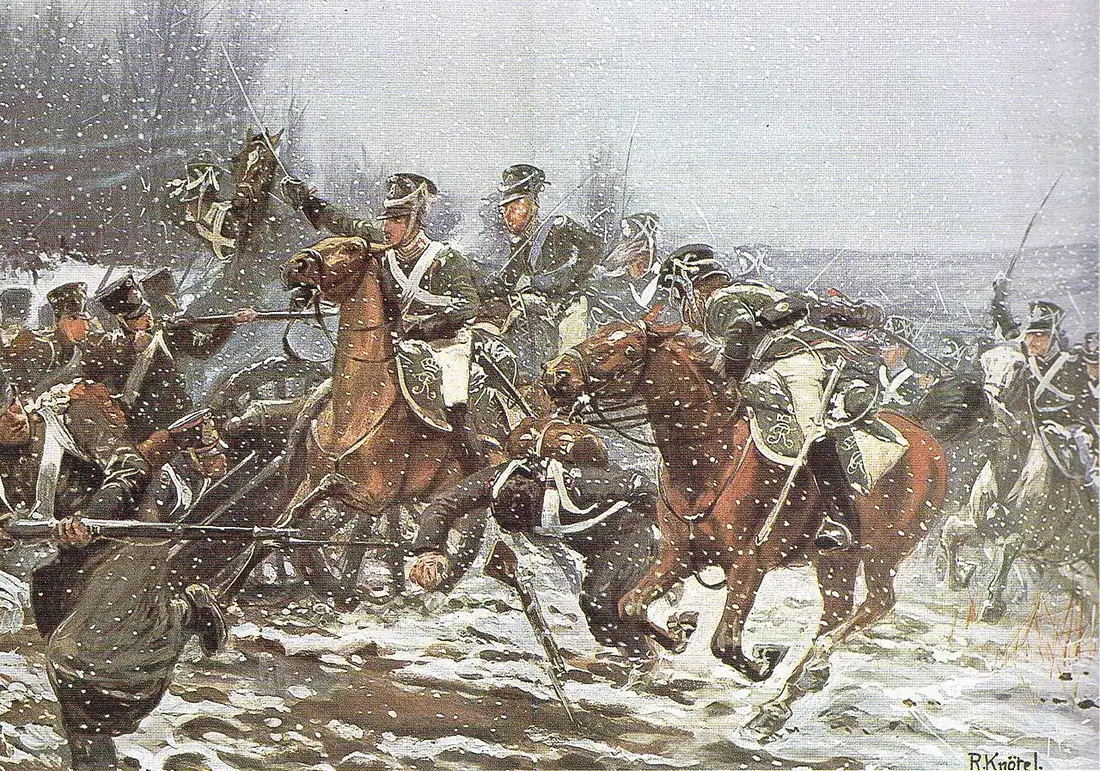
Early in the afternoon Nansouty twice launched the Guard cavalry in the centre. Russian cavalry reinforcements drove it back and carried off twenty-four pieces of the Guard horse artillery. The loss admitted of no remedy: guns of that quality could not be replaced in February 1814.
Four in the afternoon: La Rothière at bayonet point
Sacken's main attack went in around four o'clock. It was made with cold steel, wet snow having fouled too many muskets for firepower to be relied on. Duhesme's division was driven out of La Rothière; a few elements clung to the northern edge of the village. Napoleon committed Rottembourg's Young Guard division, which retook the place and then lost it again to Olsufiev's corps and the Russian grenadiers — Paskevich's 2nd Grenadier Division, the only reserve Blücher managed to obtain, his other reserve divisions having gone astray on the march. Petre absolves the Prussian of that confusion. At eight in the evening Rottembourg's men reformed north of La Rothière; the village would not be retaken.
Dienville, Chaumesnil, La Giberie
On the wings the day resolved into three separate affairs. On the right, Gyulai's Austrians crossed the Aube and seized the Dienville bridge for a moment before a French counterattack recovered it; their assaults on the village failed. The French gave it up of their own accord and the Austrians entered only around midnight, Gérard having been ordered to disengage.
On the left, Wrede's 5th Corps reached La Chaise at two o'clock, cleared the Bois d'Ajou at four and carried Chaumesnil. French counterattacks broke against it one after another and, about seven in the evening, the Bavarian cavalry gathered in twenty-one guns. In the right centre, the 4th Corps of the Crown Prince of Württemberg took Beaulieu Wood and La Giberie, which Victor's men wrested back; the Württembergers carried La Giberie a second time at five o'clock, then Petit-Mesnil soon afterwards.
Nine at night: a storm for cover
Darkness fell on a plain where no one could recognise his own any longer: in the blackness Bavarian and Württemberg horsemen charged one another. About nine o'clock a snow squall heavier than the rest at last allowed the French to break contact. Drouot's artillery covered the withdrawal, Marmont stayed behind to watch, and the army slipped away towards Lesmont, destroying the bridge there behind it. The allies lost touch and attempted no pursuit; on the morning of 2 February Blücher found the plain empty.
The retreat exacted its own price: some four thousand men deserted during the march on Troyes, where the townspeople showed little eagerness to help the imperial army. It is among the least disputable measures of the battle — Nafziger sees in it the second great defeat that began to shake the confidence of the troops.
Counting the losses
The figures diverge, and the spread says much about the sources of 1814. Digby Smith gives 4,600 French killed and wounded, about a thousand prisoners and seventy-three guns lost, against 6,000 to 7,000 for the allies. Bodart counts 3,000 killed and wounded, 3,000 prisoners and sixty-three guns on the French side, 6,000 men on the allied. Petre puts French losses at 6,000, including 2,000 prisoners, and fifty to sixty pieces, for 6,000 allies of whom nearly 4,000 fell to Sacken's corps alone. Chandler settles on 6,000 for each side and fifty French guns captured.
The count of men is arguable; the count of guns much less so. Between the twenty-four Guard pieces taken from Nansouty, the twenty-one gathered up by Wrede and the rest abandoned in the mud, Napoleon left on the field a considerable share of the arm that offset his inferiority in numbers. For the allies, comparable losses could be made good; for him they could not.
The first defeat on French soil
Here the historiography agrees, which is rare enough. Smith speaks of "a very significant Allied victory", Petre of a "notable victory", Gunther Rothenberg of a Blücher who beat Napoleon with roughly three-to-one numbers and took seventy-three of his guns. Henry Houssaye fastens on the moral effect: La Rothière gave the allies back the confidence they had lacked by showing that the Emperor was not invincible. Maude, for his part, observed that the allies had little choice but to fight, the roads behind them being too clogged to allow a withdrawal.
And yet the victory turned against its authors almost at once. At the council of war held at Brienne on 2 February, Schwarzenberg separated the two great armies to ease their supply: Blücher would move west up the Marne, the Army of Bohemia would march on Paris by way of Troyes. Around 4 February, Schwarzenberg and Barclay de Tolly moved Seslavin's Cossacks without telling Blücher, whose left flank thereby ceased to be watched. On 10 February Napoleon fell on his strung-out columns and all but annihilated Olsufiev's corps at Champaubert, before Montmirail and Vauchamps. The most brilliant week of the campaign of France was thus born of the battle he had lost.
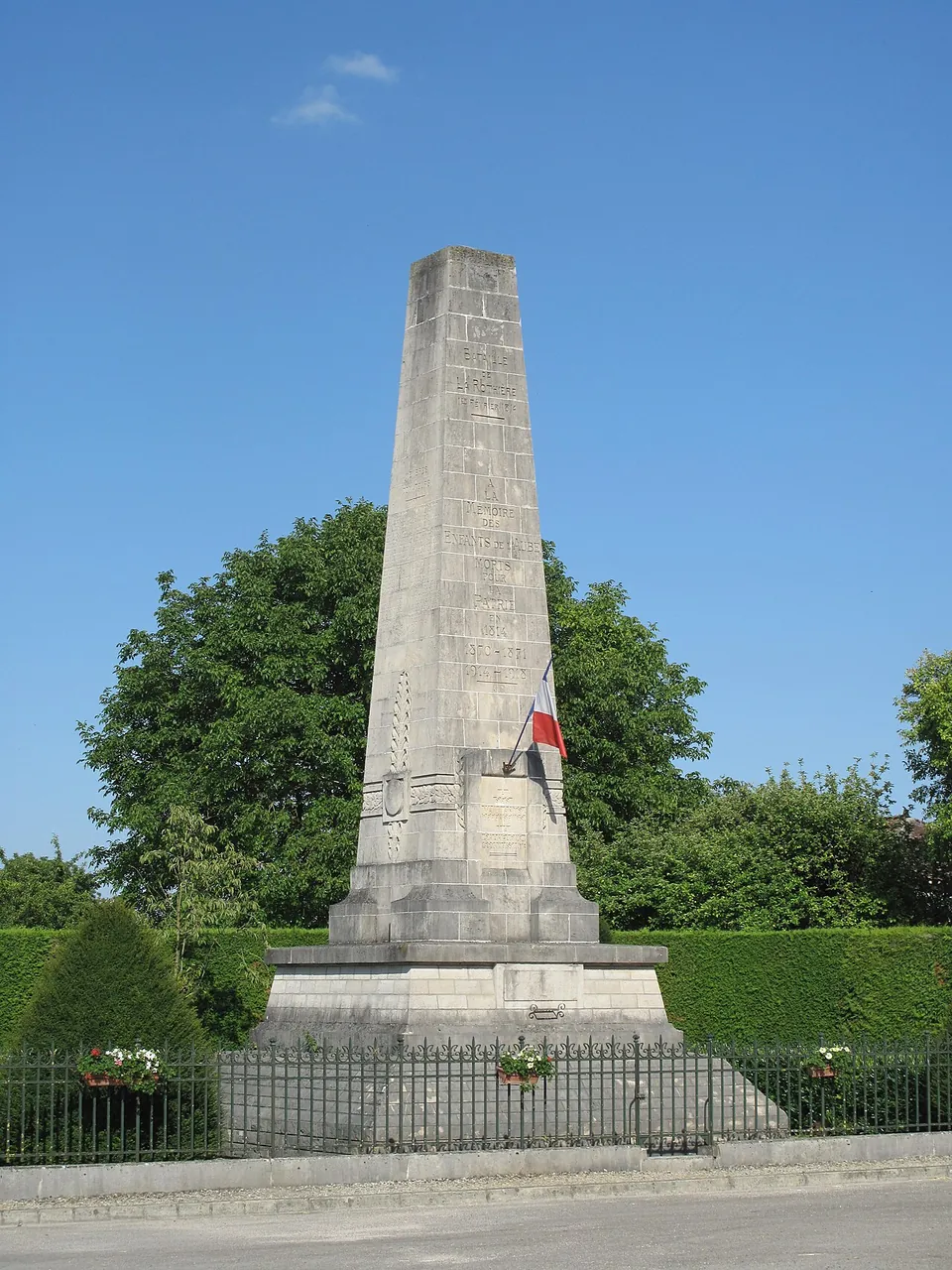
La Rothière remains a battle with a double bottom: the first Napoleon lost on French soil, and the one that, by persuading the allies they could divide without risk, handed him six days of victories. Two months later, on 31 March, those same armies entered Paris.
Discover other battles
Brienne
29 January 1814
Brienne-le-Château, Aube, Champagne
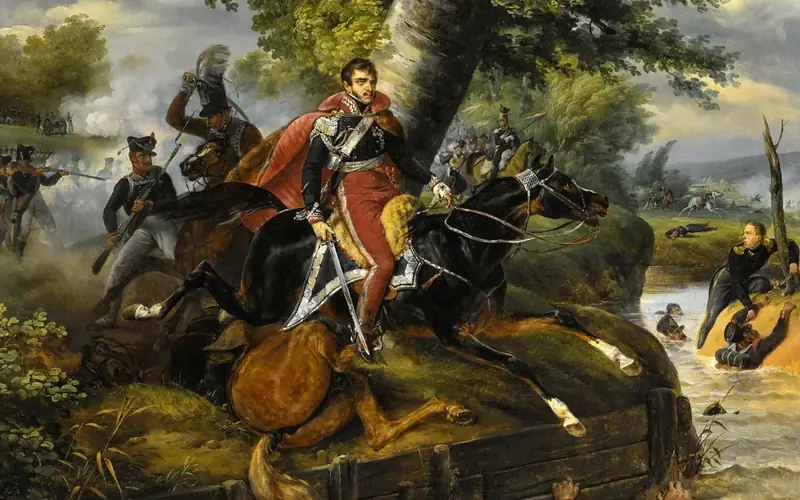 Defeat
 Read the account
Leipzig
16-19 October 1813
Leipzig, Saxony (Germany)
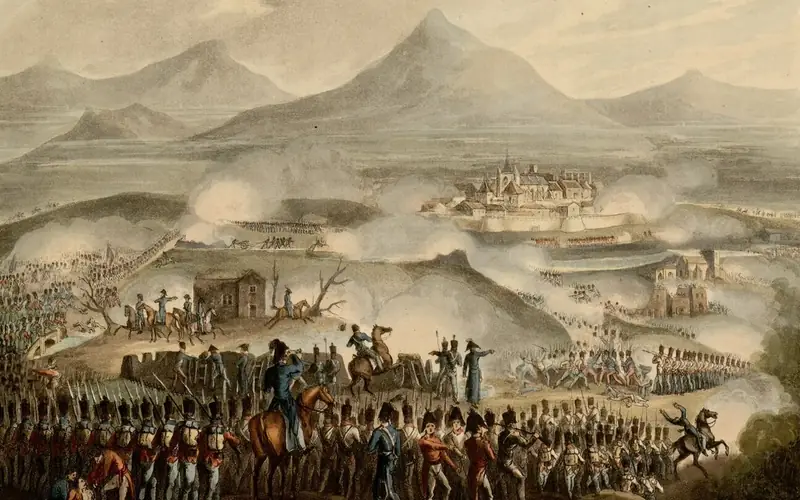 Inconclusive
 Read the account
Toulouse
10 April 1814
Toulouse, France
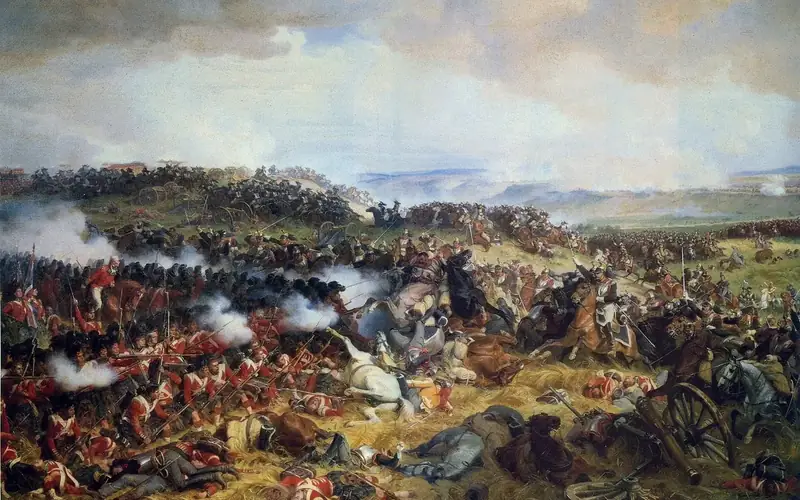 Defeat
 Read the account
Waterloo
18 June 1815
Mont-Saint-Jean, south of Brussels (Belgium)
Go further
Recommended books to dig deeper (affiliate links)

Napoleon the Great
Andrew Roberts · 2014
A monumental biography drawing on Napoleon’s 33,000 surviving letters, admiring but rigorous.
See on Amazon
Napoléon ou le mythe du sauveur
Jean Tulard · 1977
The book that reshaped how the man is read: how France gave itself a saviour, and what it cost.
See on Amazon
Nouvelle histoire du Premier Empire
Thierry Lentz · 2002-2010
Four reference volumes on institutions, diplomacy and collapse: the scholarly synthesis of the subject.
See on AmazonAs an Amazon Associate, this site earns from qualifying purchases.
Support the encyclopedia
Napoleon Empire is an independent project. Your contribution helps grow the content and keep the site running.
DonateSecure payment on the platform you choose.