Origins and the 1811 reform
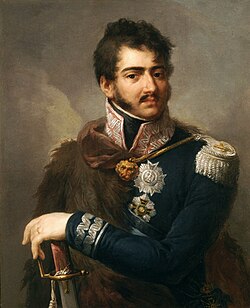
The lance regained interest in European armies in the early nineteenth century, notably under Polish uhlan and lancer influence. Napoleon already had Polish Guard light horse; he extended lance employment to line regiments.
In 1811 several dragoon regiments (and associated formations per period decisions) were converted or reorganised as chevau-légers lanciers. The reform aimed to give the line light cavalry able to match opposing lancers.
Exact conversions regiment by regiment deserve reference to orders of the day; the general direction — systematic introduction of line lancers — is well established.
Organisation
Chevau-légers lancer regiments organised in squadrons, employed as light cavalry: screening, flanks, pursuit, and shock against horse.
Some men bore the lance; others, by internal organisation, fought mainly with the sabre — sources often describe a distribution by ranks or companies. One should not imagine every trooper permanently lance in hand.
After 1812, rebuilding trained, mounted lancer regiments became difficult; the arm nonetheless remained present until 1815.
Uniform and armament
The lance, with its highly visible pennon, was the emblematic weapon. It offered greater reach than the sabre at first contact, especially against cavalry without lances.
Sabre, pistols and sometimes carbine completed the kit. Line chevau-légers lancer uniform featured elements recalling "Polish-style" models (czapka for some regiments, ornaments), without matching the Guard's.
Handling the lance at the gallop required specific training; a newly converted regiment did not at once match units long practised with the weapon.
Tactics
In shock, a line of lances could unhorse or pierce before the sabre came into play. Against infantry in square, the lance worked no miracle: fire and bayonet remained formidable.
In pursuit or against broken troops, the lancer was deadly. In light-cavalry duels he forced the opponent to pass the point's obstacle.
Chiefs had to manage formation break-up after first contact: the lance then became cumbersome, and the sabre regained its rights.
Battle honours
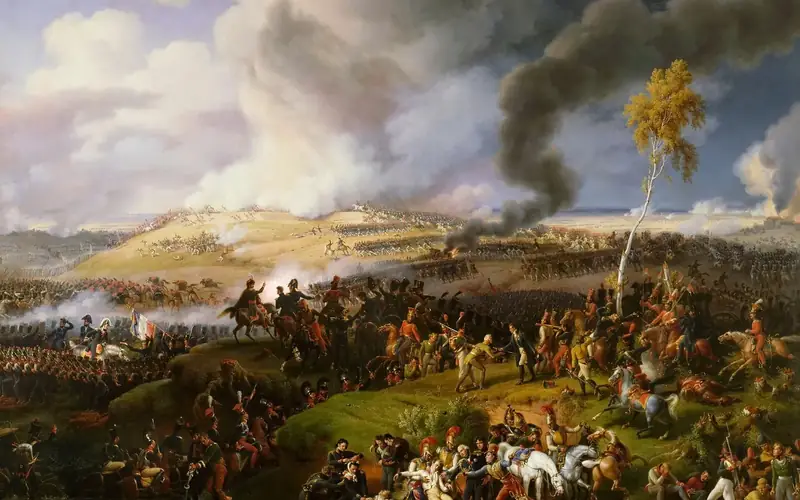
Line lancers mainly distinguished themselves in the 1812-1813 campaigns and through Waterloo — that is, after their generalisation. Borodino and the German fighting saw them engaged within light and reserve cavalry.
Their actions must not be confused with the Somosierra charge (30 November 1808), exploit of the Polish Guard light horse — another formation, another status.
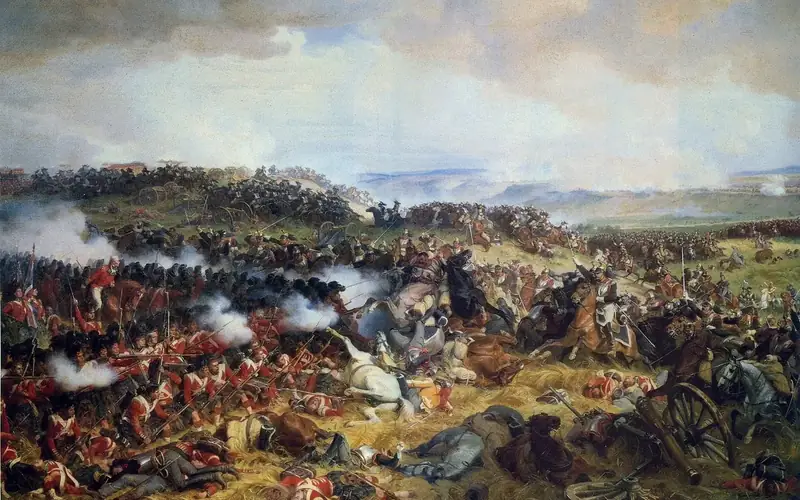
At Waterloo, French and Napoleonic allied lancers took part in the cavalry fighting; the day remained marked by the failure of charges against squares and the Prussian arrival.
Legacy
Nineteenth-century Europe multiplied lancer and uhlan regiments, heirs to this Napoleonic and Polish enthusiasm for the lance. The weapon faded with the end of shock cavalry.
For Empire Napoléon, line lancers recall that the Grande Armée knew how to import and adapt lessons from its allies — notably Poles — to modernise its light cavalry.