Remaking Europe among four
Opened in September 1814, the congress gathered sovereigns and two hundred delegations in Vienna, in a whirl of balls of which the Prince de Ligne said that it "dances but does not walk". Decisions were in fact taken between four powers: Metternich's Austria, Alexander's Russia, Hardenberg's Prussia and Castlereagh's Britain.
How Talleyrand got back into the game
Representing a defeated country and excluded from the directory of four, Talleyrand imposed the principle of legitimacy — thrones belong to dynasties, not to conquerors — which gave France a moral voice. The quarrel over Saxony and Poland did the rest: on 3 January 1815 he signed a secret alliance with London and Vienna directed against Russia and Prussia. France was once again a power of the concert.
The Final Act
The guiding principle was balance and the containment of France: a Kingdom of the Netherlands to the north, Prussia installed in the Rhineland, Piedmont enlarged by Genoa, Switzerland neutralised. Germany became a Confederation of thirty-nine states presided over by Austria; Lombardy-Venetia returned to Vienna; Poland became a kingdom tied to the tsar.
The Final Act was signed on 9 June 1815, nine days before Waterloo — whose outcome changed none of its clauses. This system, completed by the Holy Alliance, held until the revolutions of 1848 and, in essence, until 1914: there would be no general war in Europe for ninety-nine years.
See also
Go further
Recommended books to dig deeper (affiliate links)
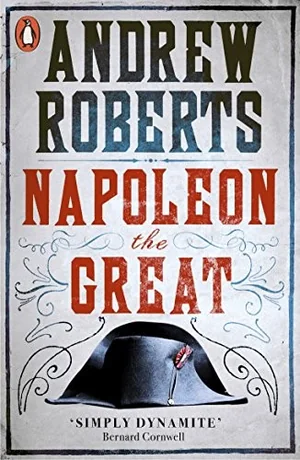
Napoleon the Great
Andrew Roberts · 2014
A monumental biography drawing on Napoleon’s 33,000 surviving letters, admiring but rigorous.
See on Amazon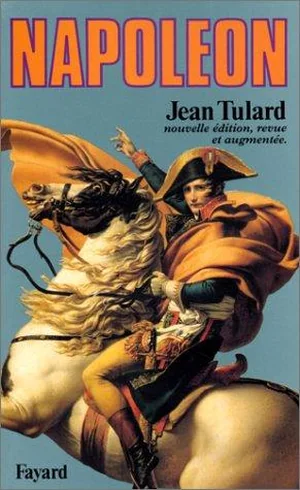
Napoléon ou le mythe du sauveur
Jean Tulard · 1977
The book that reshaped how the man is read: how France gave itself a saviour, and what it cost.
See on Amazon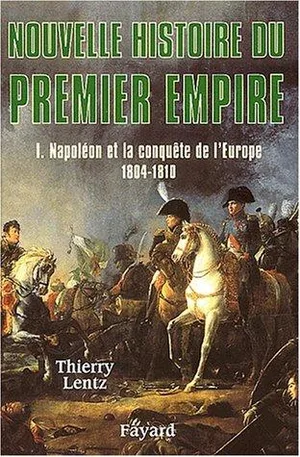
Nouvelle histoire du Premier Empire
Thierry Lentz · 2002-2010
Four reference volumes on institutions, diplomacy and collapse: the scholarly synthesis of the subject.
See on AmazonAs an Amazon Associate, this site earns from qualifying purchases.
Support the encyclopedia
Napoleon Empire is an independent project. Your contribution helps grow the content and keep the site running.
DonateSecure payment on the platform you choose.