Vienna learns of the landing
The congress had been sitting since the autumn and was tearing itself apart over Saxony and Poland; Talleyrand had restored France to the concert of the great powers by playing on the divisions. The news of the landing at Golfe-Juan arrived on 7 March and instantly closed every quarrel.
The question raised was legal as much as military: what to do with a sovereign recognised by a treaty who had just broken it? The answer was drafted within days, with Talleyrand holding the pen.
Outside civil and social relations
The declaration of 13 March 1815, signed by the eight powers, stated that by breaking the convention which had established him on Elba, Napoleon Bonaparte had destroyed the only legal title to which his existence was attached. It declared him placed 'outside civil and social relations' and, 'as enemy and disturber of the peace of the world', delivered 'to public vengeance'.
The formula was without precedent in the law of nations. It aimed not at a state but at a man, and set him outside all legal protection: neither sovereign, nor belligerent, nor even an ordinary prisoner of war.
A war impossible to negotiate
On 25 March the treaty of the Seventh Coalition bound each power to furnish a hundred and fifty thousand men and not to lay down arms before his fall. Napoleon, who multiplied peaceful messages and proclaimed that he wanted only the frontiers of 1814, received no answer: his letters were returned unopened.
Everything was therefore settled before Waterloo. And it was this declaration that would provide, after the surrender on the Bellerophon, the legal basis for deportation to Saint Helena: never having recognised him as a belligerent, London could treat him as a prisoner of state and not as a defeated sovereign.
See also
Go further
Recommended books to dig deeper (affiliate links)

Napoleon the Great
Andrew Roberts · 2014
A monumental biography drawing on Napoleon’s 33,000 surviving letters, admiring but rigorous.
See on Amazon
Napoléon ou le mythe du sauveur
Jean Tulard · 1977
The book that reshaped how the man is read: how France gave itself a saviour, and what it cost.
See on Amazon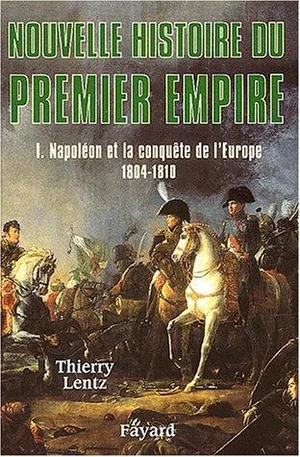
Nouvelle histoire du Premier Empire
Thierry Lentz · 2002-2010
Four reference volumes on institutions, diplomacy and collapse: the scholarly synthesis of the subject.
See on AmazonAs an Amazon Associate, this site earns from qualifying purchases.
Support the encyclopedia
Napoleon Empire is an independent project. Your contribution helps grow the content and keep the site running.
DonateSecure payment on the platform you choose.