Welcomed as a liberator in 1806, Napoleon created a Polish duchy without ever restoring Poland. A hundred thousand Poles would serve the Empire; the Congress of Vienna partitioned the country again.
Historical context
After Jena the pursuit of the Prussian remnants brought the army into Poland. The entry into Warsaw in December 1806 took place amid the cheers of a country partitioned since 1795 between Russia, Prussia and Austria, which saw in the victor the man who could bring it back to life. Napoleon let hopes grow without ever promising: Poland was a card, not a cause.
The Treaty of Tilsit created the Duchy of Warsaw in July 1807, formed from the Prussian spoils and entrusted to the King of Saxony. It received a constitution, the Napoleonic Code, and the abolition of serfdom — but without land for the peasants, which limited the reform's social reach. The duchy was enlarged in 1809 at Austria's expense and then counted over four million inhabitants.
It was in January 1807, at a posting stage near Warsaw, that Napoleon met Marie Walewska, married to an old nobleman and pushed towards him by patriots who hoped everything from the liaison. She would follow him to Vienna and then to Elba; their son Alexandre, born in 1810, would be Napoleon III's foreign minister.
The duchy paid dearly for its hope. It supplied a hundred thousand men to the campaign of 1812, officially called the second Polish war; Poniatowski, made a marshal in 1813, drowned in the Elster at Leipzig covering the retreat. The Congress of Vienna partitioned the country again in 1815. Of all the nations the Empire stirred, Poland gave the most and received the least.
Go further
Recommended books to dig deeper (affiliate links)
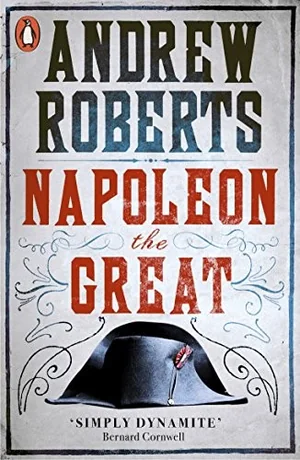
Napoleon the Great
Andrew Roberts · 2014
A monumental biography drawing on Napoleon’s 33,000 surviving letters, admiring but rigorous.
See on Amazon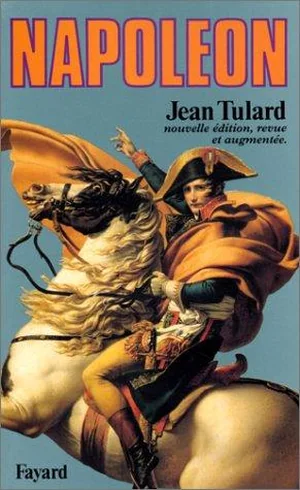
Napoléon ou le mythe du sauveur
Jean Tulard · 1977
The book that reshaped how the man is read: how France gave itself a saviour, and what it cost.
See on Amazon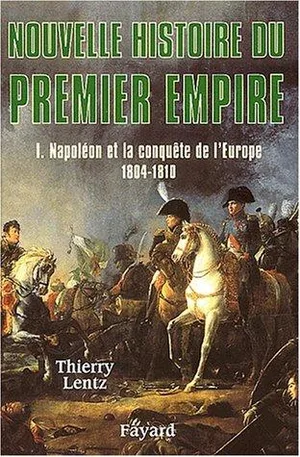
Nouvelle histoire du Premier Empire
Thierry Lentz · 2002-2010
Four reference volumes on institutions, diplomacy and collapse: the scholarly synthesis of the subject.
See on AmazonAs an Amazon Associate, this site earns from qualifying purchases.
Support the encyclopedia
Napoleon Empire is an independent project. Your contribution helps grow the content and keep the site running.
DonateSecure payment on the platform you choose.