Origins and creation
From 1809 Napoleon also created Guard voltigeur regiments, complementary to the tirailleurs within the Young Guard. The context was war that needed more elite battalions available quickly.
Voltigeurs cultivated, in French military vocabulary, skill in open-order fighting and covering columns. Integrated into the Guard, they combined that role with the institution's prestige and pay.
As with the tirailleurs, the years 1813-1814 saw a multiplication of Young Guard formations. The voltigeurs took part in that massive expansion meant to rebuild a reserve after Russia's losses.
Organisation and strength
Voltigeur-grenadiers and voltigeur-chasseurs: nomenclature followed that of the tirailleurs and varied by decree. Battalions were framed by officers often drawn from older Guard formations.
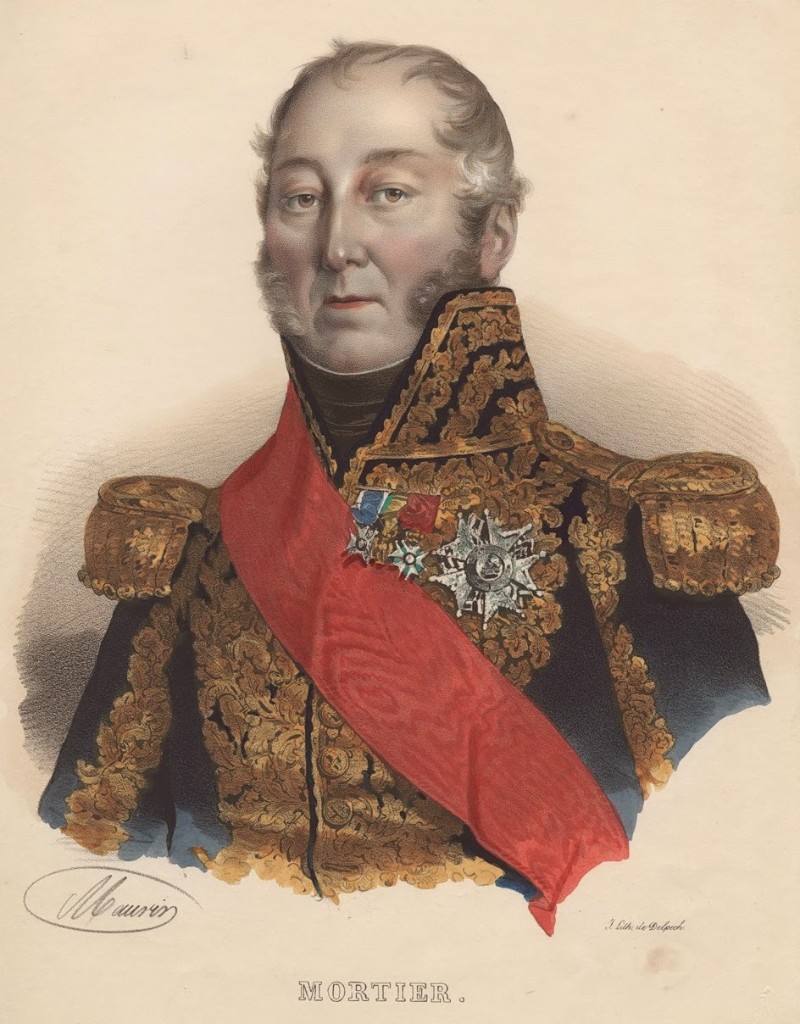
Marshal Mortier repeatedly commanded ensembles encompassing Young Guard divisions. Strengths grew sharply after 1812, at the cost of lower average individual experience.
In the military social hierarchy Guard voltigeurs remained clearly below the grognards, but above ordinary line troops for prestige and pay.
Uniform, arms and recruitment
The Guard voltigeur uniform took up Young Guard codes: shako, particular distinctives, production simplifications. The main weapon remained the infantry musket; the skirmisher role was added to line doctrine.
Recruitment selected promising young soldiers in depots and line regiments. Entry into the Guard voltigeurs remained an honour, even if the Old Guard kept the summit of prestige.
Instruction combined column manoeuvre and skirmisher drills. In 1813-1814 the urgency of campaigns accelerated incorporations and shortened training time.
Deeds of arms
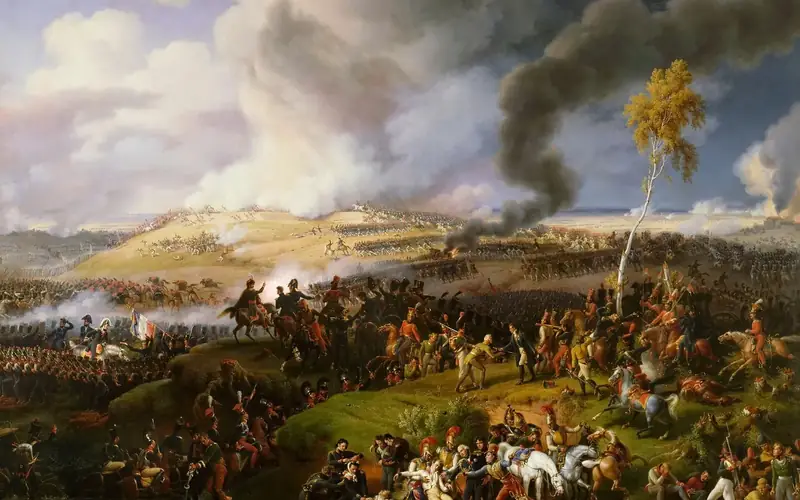
Young Guard voltigeur elements appear from the Austrian and Russian campaigns. At Borodino they formed part of the reserve mass and Young Guard forces available near the Emperor.
In 1813-1814 Guard voltigeurs fought almost without respite: Germany, then defence of French territory. Bulletins and memoirs stress their combativeness despite fatigue and melting strengths.
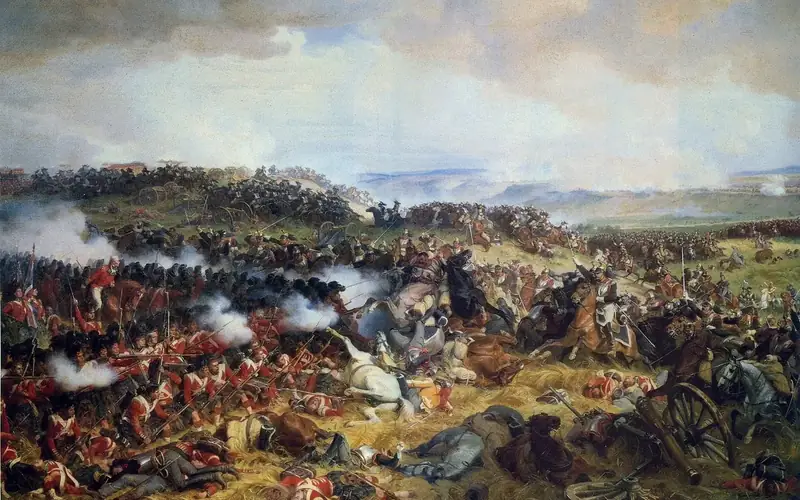
At Waterloo Young Guard formations including voltigeurs engaged especially at Plancenoit against Blücher's Prussians, while the Middle Guard attacked the Allied centre.
Their role at Plancenoit illustrates the Young Guard's real function in 1815: not mere parade, but crisis infantry on the threatened flank.
Legacy and memory
Guard voltigeurs share the Young Guard's memorial fate: long eclipsed by the grognards, rediscovered by historiography as major actors of 1813-1815.
They recall that the Napoleonic Guard was not reducible to the Old Guard: it was a multi-tier system, of which the Young Guard was the most heavily committed at the Empire's end.