Origins and creation
In 1810 the Kingdom of Holland was annexed to the French Empire. Part of the Dutch royal guard was then transformed into an Imperial Guard regiment: the 2nd light horse lancers.
The nickname 'Red Lancers' came from the scarlet coat inherited from Dutch traditions, which contrasted with the dark blue of many other French formations.
Their integration illustrated Napoleonic policy of absorbing satellite states' military elites into the Guard, a pool of prestige and loyalty.
Organisation and strength
The regiment organised as a light lance cavalry unit: squadrons, lances, sabres, pistols. Strengths evolved with campaigns and replacements after 1812.
Marshal Bessières commanded Guard cavalry as a whole; Napoleon decided major commitments. The Red Lancers formed part of that mounted reserve.
After Russia's losses the regiment was partly reconstituted for the 1813-1814 campaigns and then for the Hundred Days.
Uniform, arms and recruitment
The red coat, czapka and lance made the Red Lancers one of the most immediately recognisable silhouettes of Guard cavalry. The image struck contemporaries and uniformologists.
Initial recruitment rested on Dutch cadres and soldiers taken into the Guard; later French and other contingents filled the gaps. The lance required specific shock and handling training.
Like the rest of Guard cavalry, the Red Lancers enjoyed high pay and prestige, the counterpart of strict disciplinary demands.
Deeds of arms
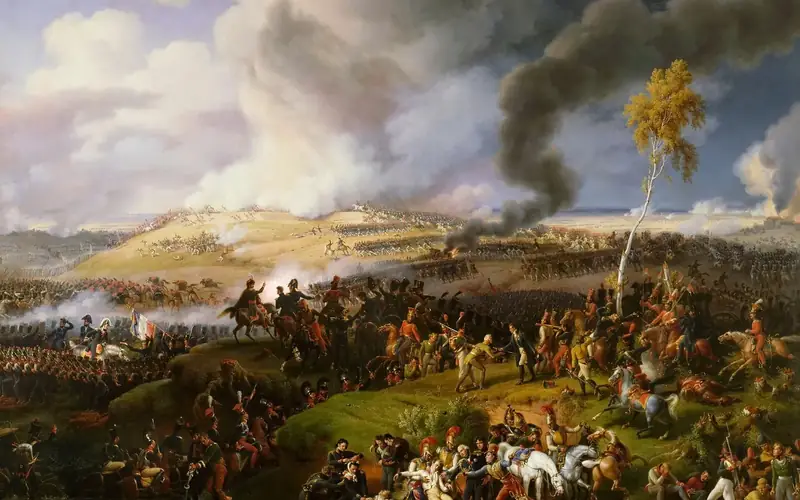
In 1812 the Red Lancers took part in the Russian campaign. At Borodino and during operations around Moscow, Guard cavalry long remained in reserve; the retreat decimated horses and riders.
In 1813-1814 the regiment rebuilt its ranks and fought in Germany then on French soil. Guard cavalry served as a mobile reserve and an instrument of pursuit or covering.
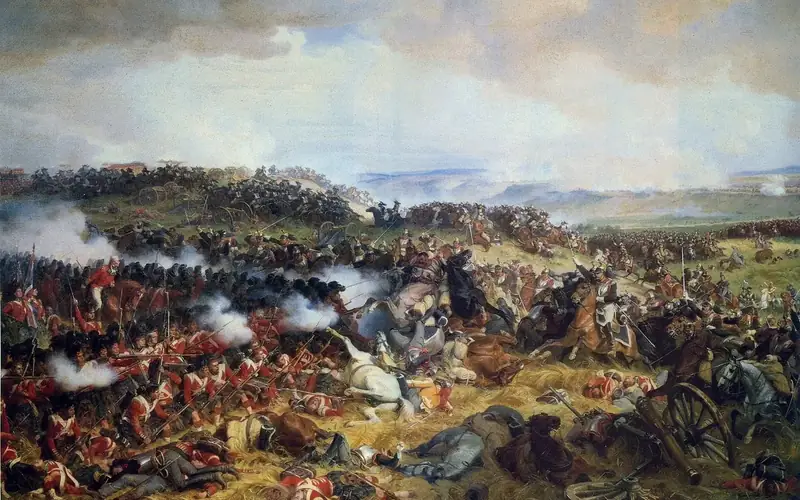
At Waterloo on 18 June 1815 the Red Lancers distinguished themselves in the French cavalry charges against Allied squares. Their red silhouette remains associated with those repeated, costly assaults.
The battle's overall failure does not erase the reputation gained: the Red Lancers remain, in iconography, one of the Guard's most famous foreign regiments.
Legacy and memory
The Red Lancers embody the Guard's Europeanisation: integrated Dutchmen, distinctive uniform, the lance arm associated with northern European cavalry traditions.
After 1815 the regiment vanished with the Guard. It survives in engravings, uniform collections and the memory of the Waterloo charges.