An empire already hollowed out
The Holy Roman Empire had long been no more than a legal architecture: three hundred entities, a permanent diet at Regensburg, an elected emperor with no army of his own. The Recess of 1803 had already suppressed one hundred and twelve ecclesiastical states and the free cities in favour of the lay princes; Pressburg had recognised the full sovereignty of Bavaria and Württemberg.
The summons
On 12 July 1806 sixteen princes signed the act of the Confederation of the Rhine in Paris and declared their withdrawal from the Empire. On 1 August the French ambassador at Regensburg notified the diet that his master no longer recognised the existence of the Holy Roman Empire and summoned Francis II to abdicate before 10 August, on pain of war.
On 6 August the emperor signed the act: he laid down the crown, released the states from their obligations and freed his officials from their oath. He kept only the title of Emperor of Austria, taken as a precaution in August 1804.
What was born of the disappearance
Eight hundred and forty-four years after Otto I, a political construction was extinguished by a chancery act, without a battle. The void released two opposing forces: modernisation through the Civil Code and French administration on one side, a German nationalism of reaction on the other — Fichte would deliver his Addresses to the German Nation in occupied Berlin.
The Congress of Vienna would not restore the Empire: it replaced it with a German Confederation of thirty-nine states, from which the unification of 1871 emerged.
See also
Go further
Recommended books to dig deeper (affiliate links)
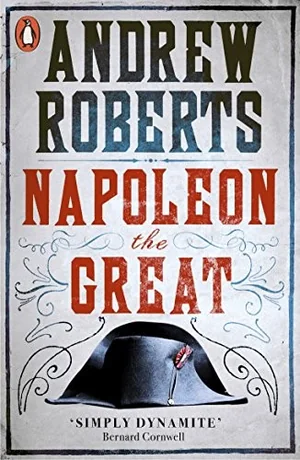
Napoleon the Great
Andrew Roberts · 2014
A monumental biography drawing on Napoleon’s 33,000 surviving letters, admiring but rigorous.
See on Amazon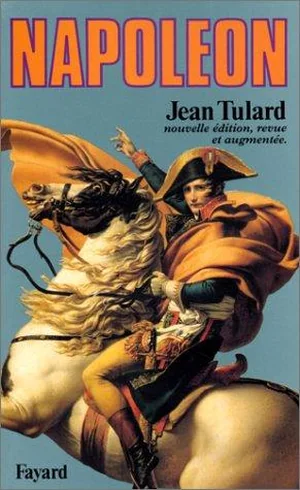
Napoléon ou le mythe du sauveur
Jean Tulard · 1977
The book that reshaped how the man is read: how France gave itself a saviour, and what it cost.
See on Amazon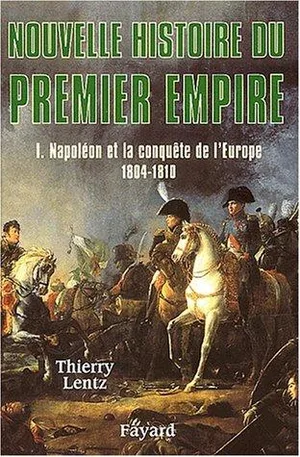
Nouvelle histoire du Premier Empire
Thierry Lentz · 2002-2010
Four reference volumes on institutions, diplomacy and collapse: the scholarly synthesis of the subject.
See on AmazonAs an Amazon Associate, this site earns from qualifying purchases.
Support the encyclopedia
Napoleon Empire is an independent project. Your contribution helps grow the content and keep the site running.
DonateSecure payment on the platform you choose.