Sieyès dispossessed of his own project
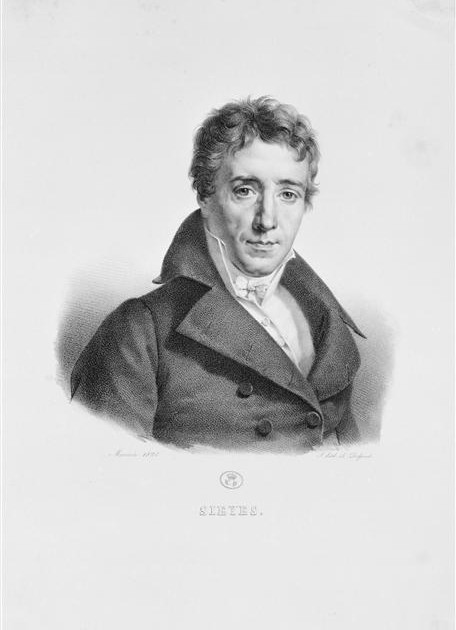
For years Sieyès had been sketching a constitution in which the executive, reduced to a "Grand Elector" with no troops or budget of his own, would do no more than appoint two consuls to run the actual government, before fading into a gilded retirement himself. Bonaparte, who had staged the Brumaire coup alongside him but meant to reap its fruits alone, flatly refused the decorative post: he compared it, in a phrase that has stuck, to fattening a "pig" fed on millions for doing nothing. Sieyès gave way. The Grand Elector vanished from the final text; his electoral prerogatives passed to the brand-new Conservative Senate, where Sieyès himself and Roger-Ducos, the outgoing second and third consuls, sat as founding members — an honorific reward for a project stripped of its substance. The constitution, completed on 22 Frimaire Year VIII and promulgated on 24 December 1799, kept his institutional architecture but not his idea of power.
Three consuls, one master
The text entrusted the executive to three consuls elected for ten years, but the equality stopped at the word: Bonaparte, First Consul, alone proposed laws and alone appointed and dismissed ministers, generals, judges and prefects, while Cambacérès and Lebrun, Second and Third Consul, had only a consultative voice recorded in a register. Legislative power was split into four bodies so that none could become a rival assembly: the Council of State drafted bills under the First Consul's direction, the Tribunate debated them without voting, the Legislative Body voted them without debating, and the Conservative Senate, eighty members co-opted for life, merely vouched for their constitutionality. This calculated fragmentation, in which deliberating and deciding never met, sums up the spirit of the regime: Sieyès himself had coined its maxim — "trust comes from below, power from above" — never suspecting it would benefit someone else.
A suffrage emptied of its purpose
On paper, the constitution restored universal male suffrage. In practice, citizens no longer voted for candidates but for lists of trust: a tenth of communal voters made up the communal list, a tenth of that list the departmental list, a tenth of that in turn the national list — a pool of a few thousand names from which the government then chose, without further consultation, the members of the Tribunate, the Legislative Body and the great public offices. The text was put to a plebiscite in February 1800; on 7 February, Lucien Bonaparte, Minister of the Interior and the First Consul's brother, proclaimed a crushing result: 3,011,007 in favour against 1,562 against. The historian Claude Langlois showed in 1972 that these figures had been inflated — the real total of "yes" votes cast was closer to 1.55 million — a fraud that carried no consequence, since the outcome, either way, had never been in doubt.
See also
Go further
Recommended books to dig deeper (affiliate links)

Napoleon the Great
Andrew Roberts · 2014
A monumental biography drawing on Napoleon’s 33,000 surviving letters, admiring but rigorous.
See on Amazon
Napoléon ou le mythe du sauveur
Jean Tulard · 1977
The book that reshaped how the man is read: how France gave itself a saviour, and what it cost.
See on Amazon
Nouvelle histoire du Premier Empire
Thierry Lentz · 2002-2010
Four reference volumes on institutions, diplomacy and collapse: the scholarly synthesis of the subject.
See on AmazonAs an Amazon Associate, this site earns from qualifying purchases.
Support the encyclopedia
Napoleon Empire is an independent project. Your contribution helps grow the content and keep the site running.
DonateSecure payment on the platform you choose.