Under the Empire the deputies voted without debating: the Legislative Body was nicknamed the body of mutes. In 1810 Napoleon gave it a Greek temple façade — a décor for a silent chamber.
Historical context
Built in the eighteenth century for the Duchess of Bourbon, the palace became national property and from 1798 housed the assemblies: the Council of Five Hundred, then, from the Constitution of Year VIII, the Legislative Body. The institutional device imagined by Sieyès and turned around by Bonaparte carefully separated the functions.
The principle was simple and empty: the Tribunate discussed bills but did not vote, the Legislative Body voted but did not discuss. Its three hundred members listened to the government's orators and cast a ballot. They were called the mutes. In 1807, judging the Tribunate still too talkative, Napoleon abolished it outright: all that remained was a chamber that approved.
It was to this assembly that he gave, in 1806-1810, a monumental façade of twelve Corinthian columns designed by Bernard Poyet to face, across the Seine, the Madeleine turned into a temple of Glory. The setting of national representation was completed before the representation itself existed.
The mutes spoke once. In December 1813, as the allies drew near, a commission of the Legislative Body drafted a report calling for peace and respect for civil and political liberties. Napoleon had the text seized, adjourned the chamber and called its authors factious before the court. It was the Empire's only parliamentary revolt, three months before its fall. The palace houses the National Assembly today.
Go further
Recommended books to dig deeper (affiliate links)

Napoleon the Great
Andrew Roberts · 2014
A monumental biography drawing on Napoleon’s 33,000 surviving letters, admiring but rigorous.
See on Amazon
Napoléon ou le mythe du sauveur
Jean Tulard · 1977
The book that reshaped how the man is read: how France gave itself a saviour, and what it cost.
See on Amazon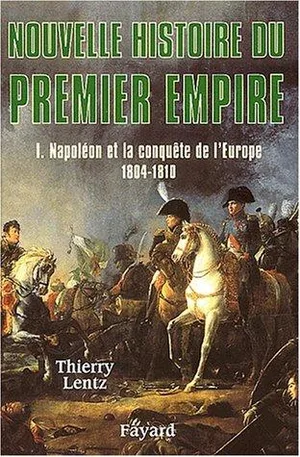
Nouvelle histoire du Premier Empire
Thierry Lentz · 2002-2010
Four reference volumes on institutions, diplomacy and collapse: the scholarly synthesis of the subject.
See on AmazonAs an Amazon Associate, this site earns from qualifying purchases.
Support the encyclopedia
Napoleon Empire is an independent project. Your contribution helps grow the content and keep the site running.
DonateSecure payment on the platform you choose.