What was left of the Holy Roman Empire
The Imperial Recess of 1803 had already wiped the ecclesiastical principalities and most of the free cities off the map, to the profit of Bavaria, Baden, Württemberg and Hesse. After Austerlitz, the Peace of Pressburg had made Bavaria and Württemberg kingdoms. The Holy Roman Empire was no more than a legal shell.
The treaty signed in Paris on 12 July 1806 united sixteen German princes under Napoleon's protectorate. On 1 August they formally declared their withdrawal from the Empire; on 6 August Francis II abdicated its crown and the thousand-year Reich ceased to exist.
A military protectorate
The Confederation had neither parliament nor common administration: Dalberg, prince-primate, presided over a diet that would never really meet. What worked was the military clause: the confederated states had to furnish a contingent, initially fixed at sixty-three thousand men.
The territory served as a glacis against Austria and Prussia and as a market closed to English goods. Enlarged after Jena and again after Wagram, the Confederation would count more than thirty states and nearly fifteen million subjects.
Reform and rupture
The member states received, in very unequal degrees, the Napoleonic Code, civil equality, the end of feudal dues — the kingdom of Westphalia being meant as the showcase. They also received conscription, contributions and campaigns: in 1812 the German contingents were among the most heavily bled.
After Leipzig, in October 1813, the Confederation broke up within weeks, each prince joining the coalition to keep his crown. The Congress of Vienna would not restore the Holy Roman Empire: in 1815 it replaced it with the German Confederation.
Go further
Recommended books to dig deeper (affiliate links)
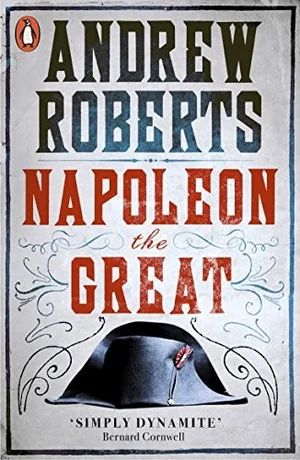
Napoleon the Great
Andrew Roberts · 2014
A monumental biography drawing on Napoleon’s 33,000 surviving letters, admiring but rigorous.
See on Amazon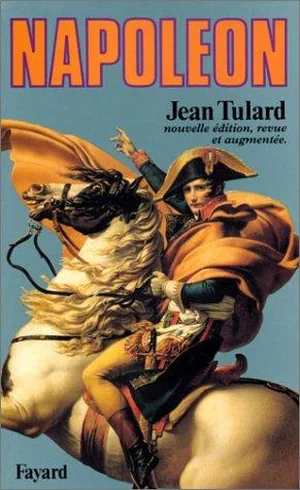
Napoléon ou le mythe du sauveur
Jean Tulard · 1977
The book that reshaped how the man is read: how France gave itself a saviour, and what it cost.
See on Amazon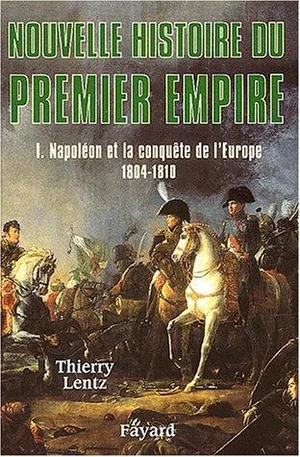
Nouvelle histoire du Premier Empire
Thierry Lentz · 2002-2010
Four reference volumes on institutions, diplomacy and collapse: the scholarly synthesis of the subject.
See on AmazonAs an Amazon Associate, this site earns from qualifying purchases.
Support the encyclopedia
Napoleon Empire is an independent project. Your contribution helps grow the content and keep the site running.
DonateSecure payment on the platform you choose.