On 16 and 17 August 1812 Napoleon attacked Smolensk, where the two Russian armies of Barclay de Tolly and Bagration had just joined forces. Bombarded and in flames, the city was evacuated during the night; but the Russian army withdrew intact, and the decisive battle the Emperor was seeking eluded him once again.
Forces at play
Outcome: French victory without strategic result
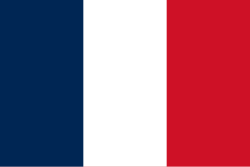

France · Confederation of the Rhine · Duchy of Warsaw
- Napoléon
- Ney
- Davout
- Murat
- Poniatowski
45,000 to 50,000 men engaged, out of about 180,000
Casualties: 9,000 to 10,000 men according to most historians
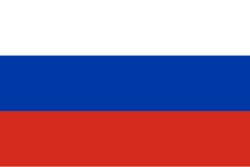
Russia
- Barclay de Tolly
- Bagration
- Raïevski
- Dokhtourov
About 30,000 men engaged, out of 120,000 to 130,000
Casualties: 6,000 to 14,000 men according to the sources
Flags: TRAJAN 117, CC BY-SA 3.0, Wikimedia Commons
Battle coordinates
Smolensk
Coordinates 54.7820° N · 32.0450° E
Battle narrative
An army that slips away
Since crossing the Niemen in June 1812, the Grande Armée had been pushing deep into Russia without managing to fight the decisive battle Napoleon was seeking. The two Russian Western armies, Barclay de Tolly's and Bagration's, fell back while keeping their cohesion. This retreat caused sharp tensions in the Russian camp: Bagration and many of the officers demanded battle, while Barclay wanted to wear the invader down. At Vitebsk, at the end of July, Barclay slipped away again, and the two Russian armies joined up around Smolensk.
The Grande Armée, meanwhile, was melting away without fighting. Detachments, garrisons left behind, desertion, hunger and disease — above all dysentery — had reduced the main striking force from 375,000 men at the start of the campaign to about 185,000. Horses died in great numbers for lack of fodder.
The Smolensk manoeuvre
In early August Barclay, pressed by his staff and by the Tsar, attempted an offensive towards Rudnya, which bogged down in hesitation. Napoleon seized the chance to launch a vast manoeuvre: cross the Dnieper downstream, advance up the south bank to Smolensk, then cut the Moscow road behind the Russians. Hidden by a thick cavalry screen, the Grande Armée crossed the river in mid-August.
On 14 August, at Krasnoi, the vanguard of Murat and Ney fell upon General Neverovsky's 27th Division, a few thousand men strong. Poorly coordinated, the French cavalry charges failed to destroy it: Neverovsky fell back in good order towards Smolensk, at a cost of 1,500 to 2,300 men and seven guns. Raevsky's corps hurried up to defend the city. Surprise was lost.
16 August: before the walls
Smolensk, on the south bank of the Dnieper, was an old fortress town, girdled by a medieval wall flanked with towers and fronted by suburbs. On 16 August the corps of Ney, Davout and Poniatowski closed in and attacked the suburbs; the French artillery took up position on the heights. Raevsky's Russians held firm, while the bulk of the Russian armies arrived on the north bank. Napoleon hoped the Russians would come out and give battle before the city; Barclay refused and confined himself to defending it.
17 August: assault and fire
During the night Bagration left eastwards to cover the Moscow road, and the defence of Smolensk was entrusted to other troops, among them those of Dokhturov, Konovnitsyn and Prince Eugen of Württemberg. On 17 August Napoleon ordered the assault: Ney, Davout and Poniatowski's Poles attacked the suburbs and the gates. The fighting was fierce, the suburbs taken and retaken; lacking ladders, the French could not scale the walls. In the afternoon the French artillery, massed before the city, bombarded it; fires broke out everywhere, started by shells or by the Russians themselves, and Smolensk vanished in smoke.
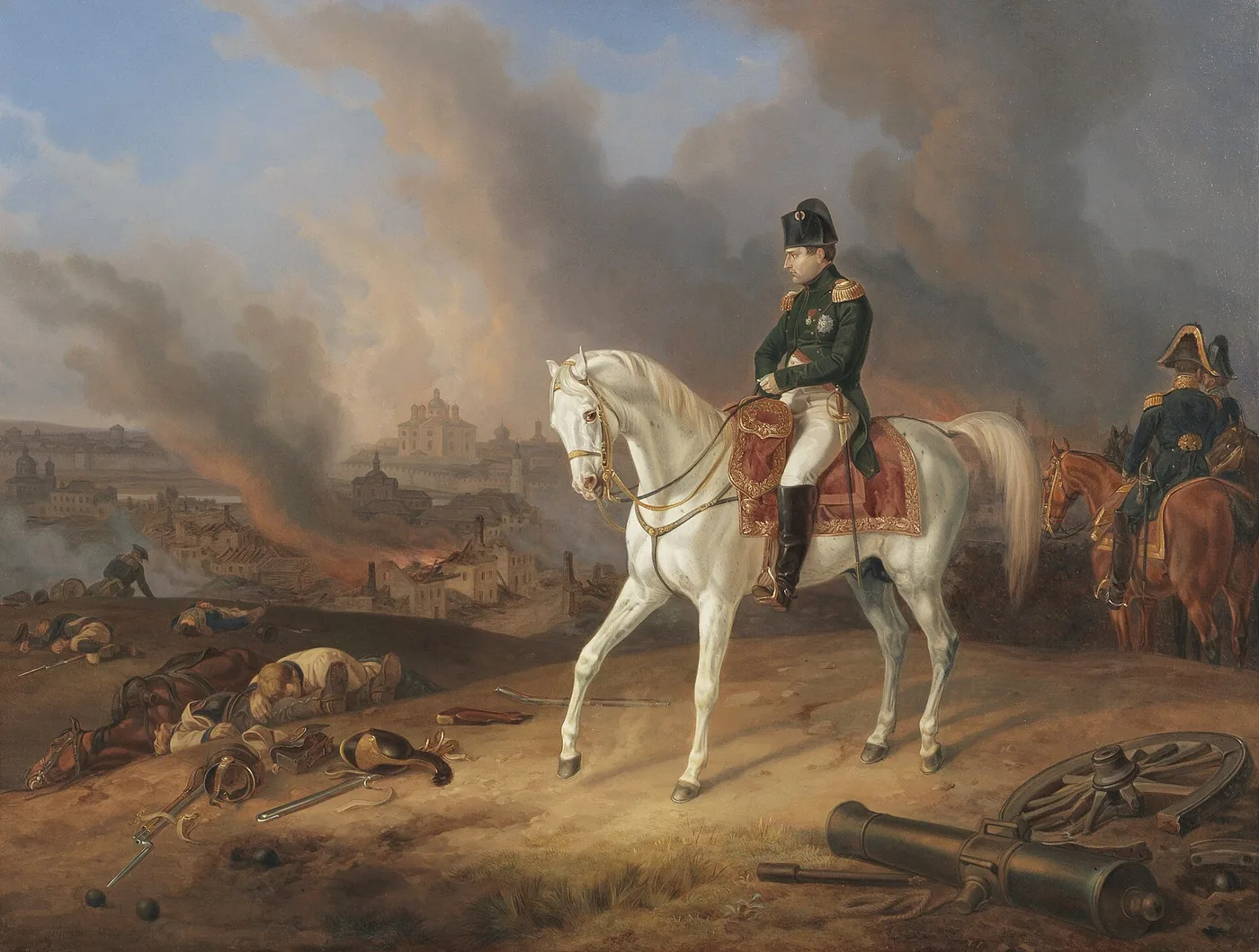
Several witnesses would judge these assaults pointless. According to General Dedem van Gelder, many men were sent to their deaths when, from four in the afternoon, the enemy already seemed to be preparing to evacuate the city. Indeed, on the night of 17 to 18 August Barclay abandoned Smolensk: his troops recrossed the Dnieper, destroying the bridges and the magazines, and a rearguard still held the suburb on the north bank to cover the retreat.
A city in ruins
On 18 August the French entered a devastated city. The extent of the destruction is disputed: according to some estimates more than three quarters of the houses burned, while Jomini wrote that barely half of the city was destroyed. The magazines were empty, and the city could not serve as a major supply base. The surgeon Larrey treated some 10,000 wounded, French and Russian, in about fifteen buildings turned into hospitals; for lack of linen, he reports, he used paper and parchment from the archives for dressings.
Outcome
Losses are much disputed. Napoleon admitted only 700 killed and just over 3,000 wounded; historians generally put French losses at 9,000 or 10,000 men, and Russian authors go as high as 20,000. Russian losses are estimated, according to the sources, at 6,000 to 14,000 men.
Napoleon had taken Smolensk, but he had missed his aim: the Russian army had escaped him once more. Immediately afterwards, at Valutina Gora on the Moscow road, the Russian rearguard fought another bloody action. In Russia, the abandonment of Smolensk made any further retreat unacceptable to the army and to public opinion alike: the Tsar replaced Barclay with Kutuzov, who took command on 29 August and looked for a battlefield. It would be Borodino, on the Moskva, on 7 September. In Warsaw, the Tomb of the Unknown Soldier bears the inscription "SMOLENSK 17 VIII 1812", recalling the part the Poles played in the assault.
Go further
Recommended books to dig deeper (affiliate links)

Napoleon the Great
Andrew Roberts · 2014
A monumental biography drawing on Napoleon’s 33,000 surviving letters, admiring but rigorous.
See on Amazon
Napoléon ou le mythe du sauveur
Jean Tulard · 1977
The book that reshaped how the man is read: how France gave itself a saviour, and what it cost.
See on Amazon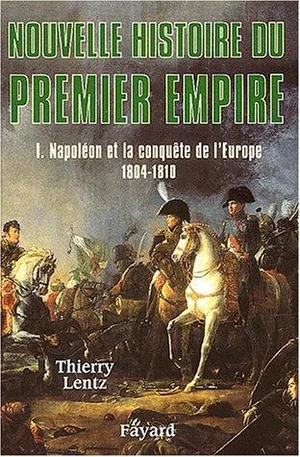
Nouvelle histoire du Premier Empire
Thierry Lentz · 2002-2010
Four reference volumes on institutions, diplomacy and collapse: the scholarly synthesis of the subject.
See on AmazonAs an Amazon Associate, this site earns from qualifying purchases.
Support the encyclopedia
Napoleon Empire is an independent project. Your contribution helps grow the content and keep the site running.
DonateSecure payment on the platform you choose.