Rewarding without restoring the orders
The Revolution had abolished the orders of chivalry as marks of privilege. The Consulate had nothing left to distinguish merit but arms of honour given to the brave. Bonaparte wanted a single order, open to soldiers and civilians alike, founded on merit rather than birth: "It is with baubles that men are led."
A close debate
The bill passed with difficulty: the Tribunate denounced a disguised aristocracy; the Council of State adopted it by fourteen votes to ten, the Legislative Body by one hundred and sixty-six to one hundred and ten. The law of 29 Floréal Year X organised sixteen cohorts endowed with national lands, with legionaries, officers, commanders and grand officers, all bound by an oath of loyalty.
An institution that outlived every regime
The first investiture took place at the Invalides on 15 July 1804, the second at the camp of Boulogne on 16 August before the massed army. By 1808 the order counted more than twenty thousand members, an overwhelming majority of them soldiers — social promotion through bravery became visible fact.
Abolished by no regime, the Legion of Honour remains France's foremost distinction, with the same motto engraved on the star: Honneur et Patrie.
Go further
Recommended books to dig deeper (affiliate links)

Napoleon the Great
Andrew Roberts · 2014
A monumental biography drawing on Napoleon’s 33,000 surviving letters, admiring but rigorous.
See on Amazon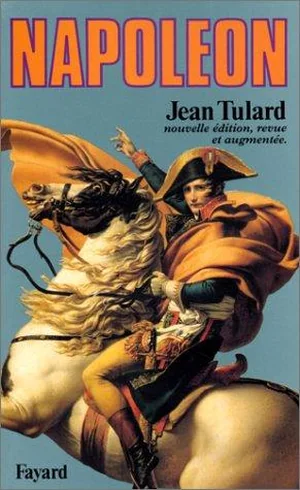
Napoléon ou le mythe du sauveur
Jean Tulard · 1977
The book that reshaped how the man is read: how France gave itself a saviour, and what it cost.
See on Amazon
Nouvelle histoire du Premier Empire
Thierry Lentz · 2002-2010
Four reference volumes on institutions, diplomacy and collapse: the scholarly synthesis of the subject.
See on AmazonAs an Amazon Associate, this site earns from qualifying purchases.
Support the encyclopedia
Napoleon Empire is an independent project. Your contribution helps grow the content and keep the site running.
DonateSecure payment on the platform you choose.