Created in 1802 despite the Council of State's opposition, the Legion of Honour was the first order open to civilians and to every rank. In 1804 it moved into a mansion whose façade Jefferson had copied.
Historical context
The plan was debated in the Council of State in the spring of 1802 and passed narrowly. The objections were strong: the Revolution had abolished orders of chivalry, a distinction looked like a privilege, people spoke of baubles. Bonaparte's answer has stuck, and it embraces the cynicism: it is with baubles that men are led.
What was new about the order comes down to three features. It was open to civilians as much as soldiers; it ignored birth, a drummer could receive it like a marshal; and it carried an income, which made it a pension too. The first great distribution took place at the camp of Boulogne on 16 August 1804, before a hundred thousand men; the one at the Invalides had come first, in July.
The grand chancellery moved in 1804 into the Hôtel de Salm, built shortly before the Revolution for a German prince guillotined in 1794. Its river front, colonnade and rotunda, had so pleased Thomas Jefferson, then ambassador in Paris, that he drew on it for Monticello. The order also created boarding schools for the daughters and sisters of legionnaires, including Écouen in 1805.
The mansion burned during the Commune in 1871 and was rebuilt identically thanks to subscriptions from the legionnaires. The order itself was never interrupted: monarchies, republics and empires all kept it. Of all the institutions created between 1800 and 1804, it is the one whose form has changed least in two centuries.
Go further
Recommended books to dig deeper (affiliate links)
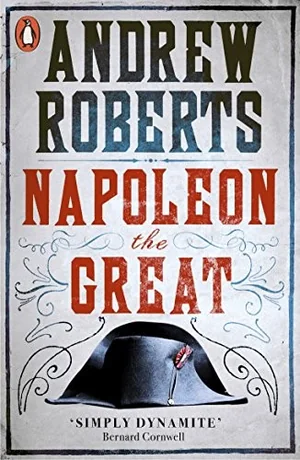
Napoleon the Great
Andrew Roberts · 2014
A monumental biography drawing on Napoleon’s 33,000 surviving letters, admiring but rigorous.
See on Amazon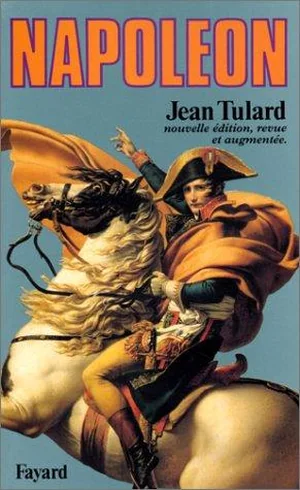
Napoléon ou le mythe du sauveur
Jean Tulard · 1977
The book that reshaped how the man is read: how France gave itself a saviour, and what it cost.
See on Amazon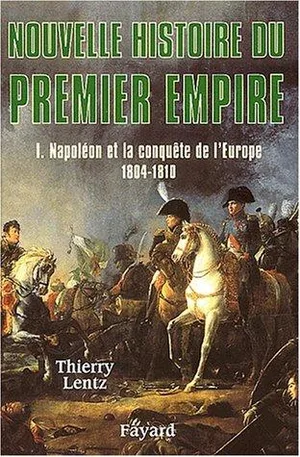
Nouvelle histoire du Premier Empire
Thierry Lentz · 2002-2010
Four reference volumes on institutions, diplomacy and collapse: the scholarly synthesis of the subject.
See on AmazonAs an Amazon Associate, this site earns from qualifying purchases.
Support the encyclopedia
Napoleon Empire is an independent project. Your contribution helps grow the content and keep the site running.
DonateSecure payment on the platform you choose.