Origins and creation
The elite gendarmes originated under the Consulate, when the regime gave the executive a highly reliable military police and escort troop. With the Empire they were integrated into the Imperial Guard.
Their mission was not that of a line regiment meant for mass assault: they watched over headquarters security, column order and the escort of dignitaries.
In the Guard's symbolic economy their presence signalled continuity between the military household and the imperial state's security apparatus.
Organisation and strength
The unit deliberately remained small: a few companies or squadrons by period, far from the strengths of Guard infantry or cavalry regiments.
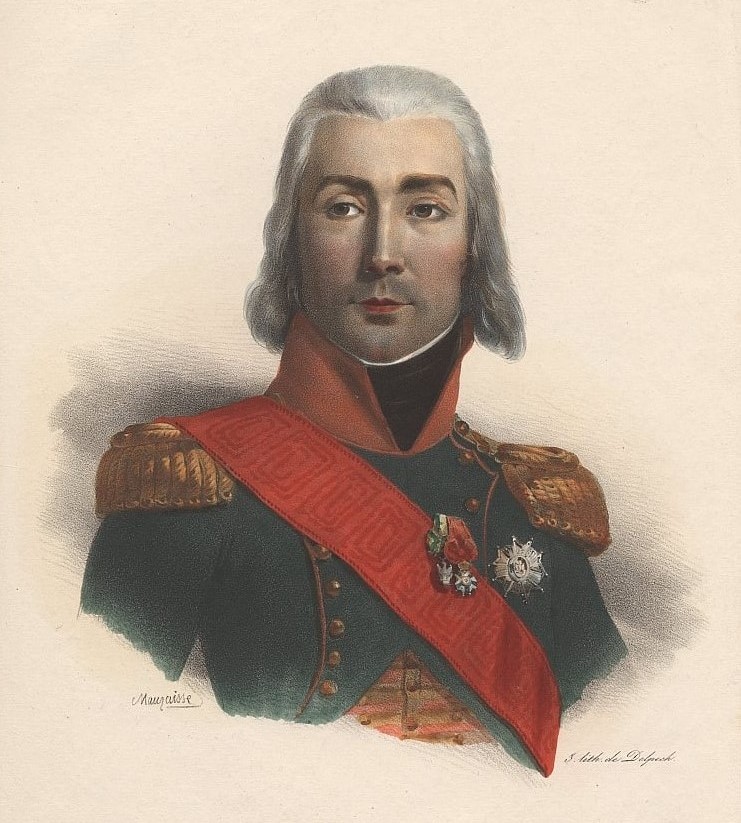
Marshal Bessières, colonel-general of Guard cavalry, appears in the command sphere close to these elite mounted or escort formations. Napoleon decided their use nearest the headquarters.
This reduced size explains why the elite gendarmes rarely stand at the centre of battle narratives: their role was structural, not spectacular.
Uniform, arms and recruitment
The carefully finished, recognisable elite gendarme uniform stressed ceremonial function as much as service. Arms matched a mounted or mixed troop according to the organisation of the moment: sabre, sidearms, escort equipment.
Recruitment was selective: exemplary conduct, political and military reliability, prior experience. Belonging to the elite gendarmes meant the direct trust of power.
Internal discipline mixed military-police demands with Guard codes. The unit had to be visible, correct and immediately available.
Deeds of arms
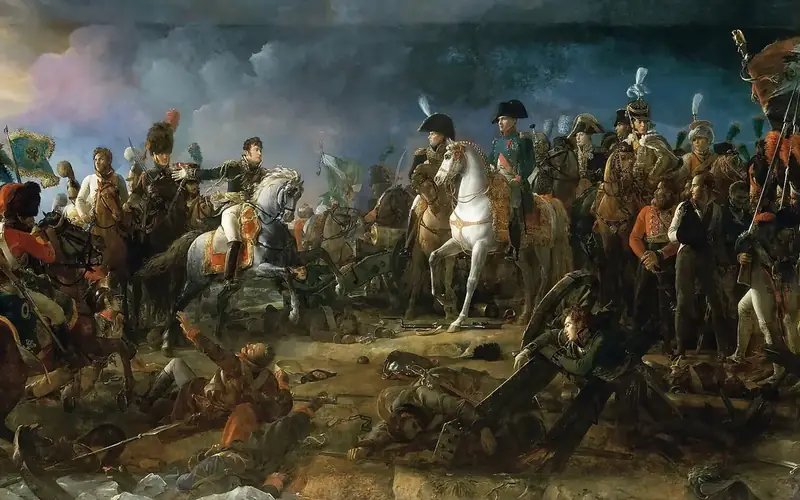
In the 1805 campaign the elite gendarmes accompanied headquarters and the Guard. At Austerlitz they formed part of the reserve and security deployment around Napoleon more than an autonomous assault mass.
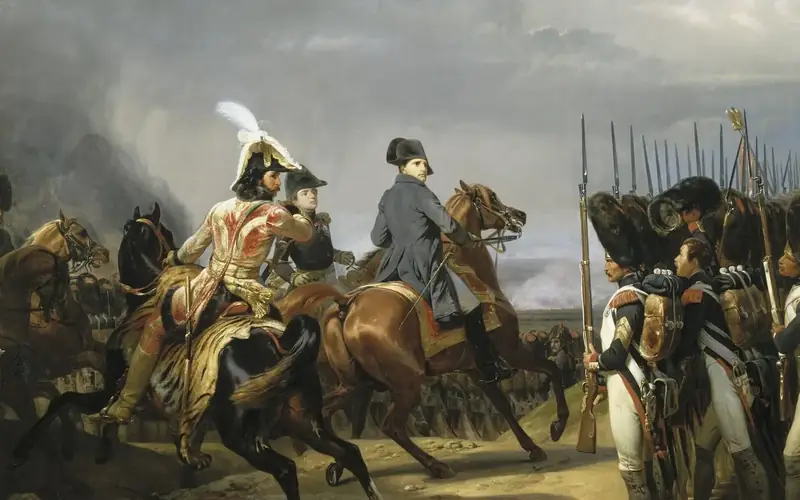
In 1806, during the Prussian campaign, they followed the Grande Armée in the wake of Jena and the pursuit. Their role remained that of an elite accompanying unit.
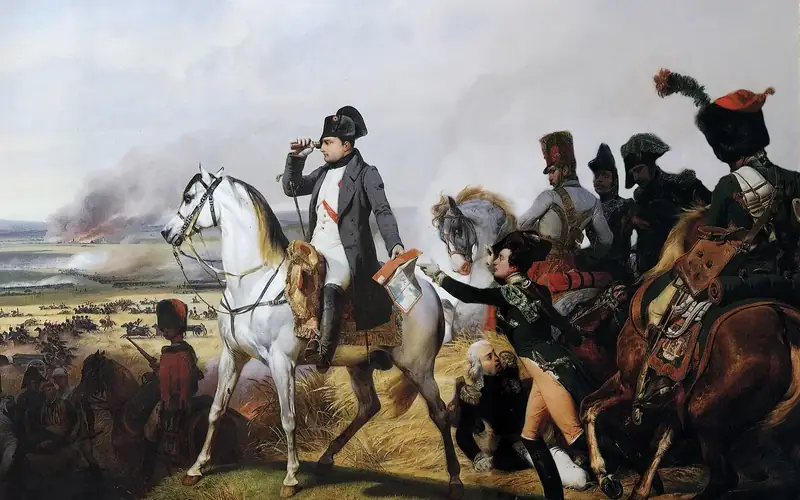
At Wagram in 1809 the Guard and its escort units were present in the imperial deployment. The elite gendarmes continued to provide security and prestige around the command.
Historiography stresses that their importance is measured less by combat losses than by the trust placed in them for protecting the command apparatus.
Legacy and memory
In collective memory the elite gendarmes remain a discreet unit: few popular legends, much institutional presence. They recall that the Guard was not only a shock reserve.
For the historian of the First Empire they illustrate the fusion of military prestige, campaign police and the Emperor's household — a distinctive trait of the Napoleonic system.