Unifying three hundred customs
Before 1789 northern France lived under customary law, the south under written Roman law; Voltaire quipped that one changed laws more often than horses. Four revolutionary attempts at codification had failed. In August 1800 Cambacérès and the First Consul entrusted the work to a commission of four jurists — Portalis, Tronchet, Bigot de Préameneu, Maleville — who delivered their draft in four months.
The Council of State and the Emperor
Discussion filled one hundred and two sittings of the Council of State, fifty-seven of which Bonaparte chaired. He intervened on adoption, divorce, paternal authority and the civil status of soldiers; his often blunt interventions shaped the family articles. The thirty-six separately voted laws were gathered on 21 March 1804 under the title Civil Code of the French, renamed the Napoleonic Code in 1807.
A compromise frozen for a century
The Code enshrined the gains of 1789: equality before the law, freedom of conscience, property "inviolable and sacred", a secular civil registry, the abolition of feudalism. It also enshrined a reaction: the married woman was legally incapable, placed under her husband's authority; paternity suits were forbidden; the natural child inherited only half.
Carried by the armies, adopted or imitated in Belgium, the Netherlands, the Rhineland, Italy, Poland and Louisiana, it would inspire the codes of Latin America, Quebec and Japan. "My true glory," Napoleon said at Saint Helena, "is not having won forty battles… it is my Civil Code."
See also
Go further
Recommended books to dig deeper (affiliate links)
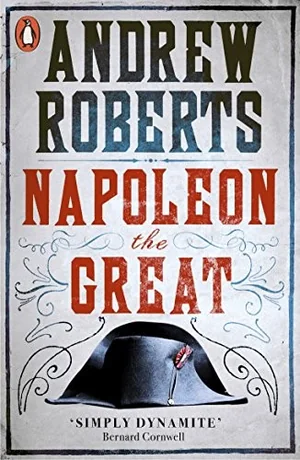
Napoleon the Great
Andrew Roberts · 2014
A monumental biography drawing on Napoleon’s 33,000 surviving letters, admiring but rigorous.
See on Amazon
Napoléon ou le mythe du sauveur
Jean Tulard · 1977
The book that reshaped how the man is read: how France gave itself a saviour, and what it cost.
See on Amazon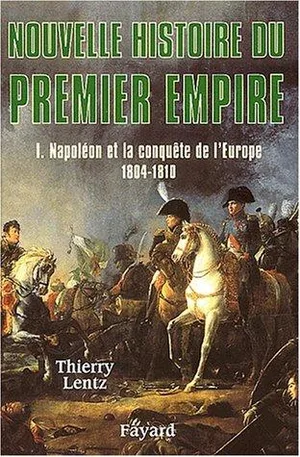
Nouvelle histoire du Premier Empire
Thierry Lentz · 2002-2010
Four reference volumes on institutions, diplomacy and collapse: the scholarly synthesis of the subject.
See on AmazonAs an Amazon Associate, this site earns from qualifying purchases.
Support the encyclopedia
Napoleon Empire is an independent project. Your contribution helps grow the content and keep the site running.
DonateSecure payment on the platform you choose.