This is where Napoleon actually governed for fourteen years, and where the King of Rome was born. Burned in 1871 and demolished in 1883, the Empire's central palace no longer exists: only the garden remains.
Historical context
On 19 February 1800 the First Consul left the Luxembourg for the Tuileries. The gesture was calculated: he moved into the palace of the kings, empty since 10 August 1792 and defiled by insurrection. To Bourrienne, riding with him, he is said to have remarked that getting in was not enough — one had to stay. The palace was cleaned, refurnished, repainted; the revolutionary traces disappeared.
For fourteen years everything happened there. The study where he dictated to Méneval until the middle of the night; the Council of State room where the articles of the Civil Code were argued; the Diana gallery for receptions; the etiquette drawn up by Ségur, taken from Versailles and shortened. Imperial power had an address, and that was it.
On 20 March 1811 the King of Rome was born there, after a difficult delivery in which Napoleon ordered the mother saved before the child. A hundred and one guns announced it; from the twenty-second shot, Paris knew it was a boy and that the dynasty held. On 20 March 1815, the same date, he returned from the Hundred Days and the crowd carried him up the staircase to his apartments.
The palace did not survive the century. The Commune burned it in May 1871; the ruins stood for twelve years, the subject of a national debate on preserving them, then were demolished in 1883. Of the residence where the Empire was written day by day, only the garden remains, a few stones re-erected elsewhere, and the vast gap between the two wings of the Louvre.
Go further
Recommended books to dig deeper (affiliate links)

Napoleon the Great
Andrew Roberts · 2014
A monumental biography drawing on Napoleon’s 33,000 surviving letters, admiring but rigorous.
See on Amazon
Napoléon ou le mythe du sauveur
Jean Tulard · 1977
The book that reshaped how the man is read: how France gave itself a saviour, and what it cost.
See on Amazon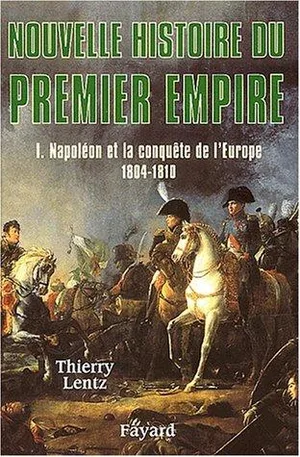
Nouvelle histoire du Premier Empire
Thierry Lentz · 2002-2010
Four reference volumes on institutions, diplomacy and collapse: the scholarly synthesis of the subject.
See on AmazonAs an Amazon Associate, this site earns from qualifying purchases.
Support the encyclopedia
Napoleon Empire is an independent project. Your contribution helps grow the content and keep the site running.
DonateSecure payment on the platform you choose.