Rose de Beauharnais
Born in Martinique in 1763, Marie-Josèphe-Rose de Tascher de La Pagerie had married Alexandre de Beauharnais in 1779; he was guillotined in July 1794. She herself was imprisoned at the Carmes and owed her life to Thermidor. A widow with two children, Eugène and Hortense, she held a place in the salons of the Directory under Barras's protection.
She met Bonaparte in the autumn of 1795, after 13 Vendémiaire. He would call her Joséphine — a name she did not bear and which he gave her.
A ten-minute wedding
The civil ceremony took place on 9 March 1796 at the town hall of the second arrondissement, Rue d'Antin. Barras and Tallien were among the witnesses. The bridegroom arrived nearly two hours late and woke the registrar, who had fallen asleep.
The register carries adjusted ages: Bonaparte made himself older, Joséphine younger, so that the six years between them vanished from the record. There was no religious contract — it would take until the eve of the coronation, in December 1804, for Cardinal Fesch to marry them in haste.
Two days later, Italy
Appointed commander-in-chief of the Army of Italy on 2 March, a week before his wedding, Bonaparte left Paris on 11 March. The campaign that began would make him, within a year, the most famous man in France.
From Nice, Milan and Verona he wrote burning letters to a woman who answered little and deceived him with Lieutenant Hippolyte Charles. The divorce, pronounced on 15 December 1809 for want of an heir, would not end their bond: it was at Malmaison, four years later, that she died an empress in title.
See also
Go further
Recommended books to dig deeper (affiliate links)

Napoleon the Great
Andrew Roberts · 2014
A monumental biography drawing on Napoleon’s 33,000 surviving letters, admiring but rigorous.
See on Amazon
Napoléon ou le mythe du sauveur
Jean Tulard · 1977
The book that reshaped how the man is read: how France gave itself a saviour, and what it cost.
See on Amazon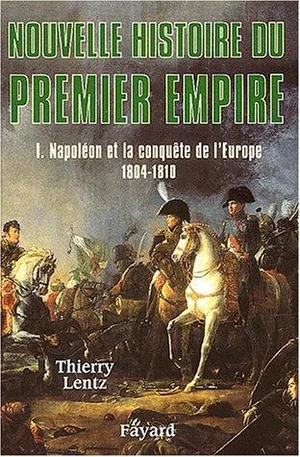
Nouvelle histoire du Premier Empire
Thierry Lentz · 2002-2010
Four reference volumes on institutions, diplomacy and collapse: the scholarly synthesis of the subject.
See on AmazonAs an Amazon Associate, this site earns from qualifying purchases.
Support the encyclopedia
Napoleon Empire is an independent project. Your contribution helps grow the content and keep the site running.
DonateSecure payment on the platform you choose.