A road junction held by Wellington while Napoleon beat Blücher fifteen kilometres away. Ney, ordered to take it, did not — and the two allied armies stayed connected.
Historical context
The place owes its name only to its function: the crossing of the Brussels-Charleroi highway and the Nivelles-Namur road, four arms of road and an inn. Whoever holds this junction holds the link between the Anglo-Dutch army and the Prussian army. That is why, on 16 June 1815, two battles were fought the same day fifteen kilometres apart.
Ney, ordered to take the position, attacked late and piecemeal, against troops arriving in reinforcement hour by hour. The Duke of Brunswick was killed at the head of his black hussars; the Scots held the rye fields by the Bossu wood. By nightfall the allies still held the crossroads, and d'Erlon's corps had spent the day marching between the two fields without fighting on either.
The junction still exists, commonplace and busy, at the intersection of the N5 and the N93. Three monuments stand there: to the Duke of Brunswick, to the Belgo-Dutch, and to the Highlanders, added in 1990. The farms of Gemioncourt and La Bergerie, strongpoints of the day, are still standing in the fields.
Nothing was decisively won or lost there, which is precisely the problem. Having failed to take the crossroads, the French army did not separate its two opponents; Wellington was able to fall back in order on the plateau of Mont-Saint-Jean, and Blücher knew where to join him. Waterloo is partly decided here, two days earlier.
Go further
Recommended books to dig deeper (affiliate links)
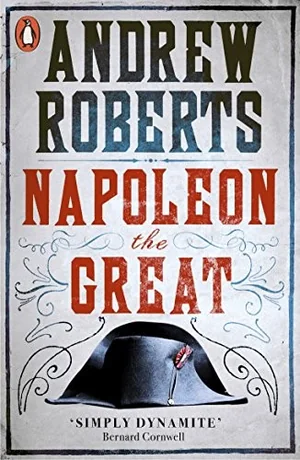
Napoleon the Great
Andrew Roberts · 2014
A monumental biography drawing on Napoleon’s 33,000 surviving letters, admiring but rigorous.
See on Amazon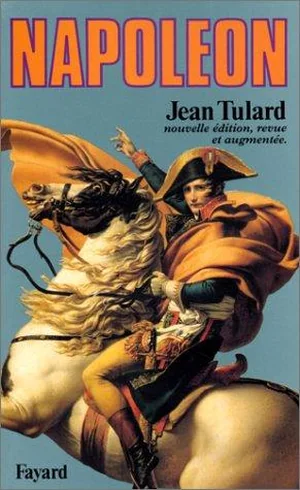
Napoléon ou le mythe du sauveur
Jean Tulard · 1977
The book that reshaped how the man is read: how France gave itself a saviour, and what it cost.
See on Amazon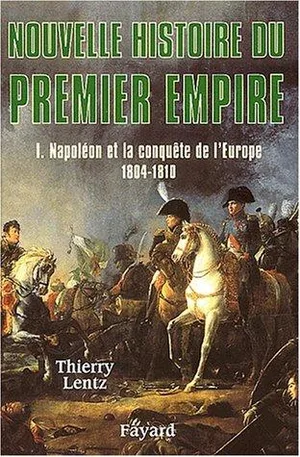
Nouvelle histoire du Premier Empire
Thierry Lentz · 2002-2010
Four reference volumes on institutions, diplomacy and collapse: the scholarly synthesis of the subject.
See on AmazonAs an Amazon Associate, this site earns from qualifying purchases.
Support the encyclopedia
Napoleon Empire is an independent project. Your contribution helps grow the content and keep the site running.
DonateSecure payment on the platform you choose.