Two days before Waterloo, Napoleon beat Blücher in a Walloon village — but did not destroy him. The Ligny museum occupies a farm on the battlefield.
Historical context
On 16 June 1815 the Army of the North attacked the Prussians positioned along the Ligny brook, between Fleurus and Sombreffe. The fighting went house by house through the villages of Ligny and Saint-Amand, in thundery heat. The Guard broke the centre late in the day; Blücher, unhorsed and trampled by cavalry, was picked up unconscious by his aide-de-camp.
It was a victory, the last of his life. It was incomplete: d'Erlon's corps, sent and recalled several times between the two battlefields, took part in neither, and the Prussian army withdrew northwards eighty per cent intact. Two days later it would arrive on the right flank at Waterloo at seven in the evening.
The site today is a little-altered Walloon farming landscape: the villages have kept their square stone-and-brick farms, several still bearing bullet marks. The Ferme d'En-Haut at Ligny has housed the Centre Général Gérard, the battle museum, since 1985; the Bussy mill, Napoleon's observation post, still overlooks the plain.
Ligny is the least visited battlefield of the Belgian campaign, fifteen kilometres from Waterloo, which receives hundreds of thousands. Yet it is there that the campaign was decided: a victory too partial, and an opponent who walked away fit to come back.
Go further
Recommended books to dig deeper (affiliate links)
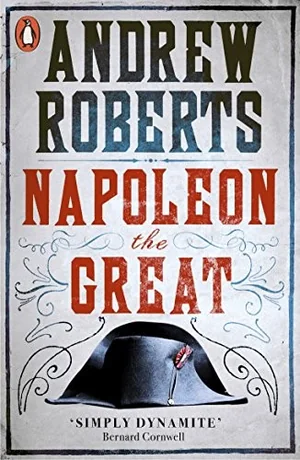
Napoleon the Great
Andrew Roberts · 2014
A monumental biography drawing on Napoleon’s 33,000 surviving letters, admiring but rigorous.
See on Amazon
Napoléon ou le mythe du sauveur
Jean Tulard · 1977
The book that reshaped how the man is read: how France gave itself a saviour, and what it cost.
See on Amazon
Nouvelle histoire du Premier Empire
Thierry Lentz · 2002-2010
Four reference volumes on institutions, diplomacy and collapse: the scholarly synthesis of the subject.
See on AmazonAs an Amazon Associate, this site earns from qualifying purchases.
Support the encyclopedia
Napoleon Empire is an independent project. Your contribution helps grow the content and keep the site running.
DonateSecure payment on the platform you choose.